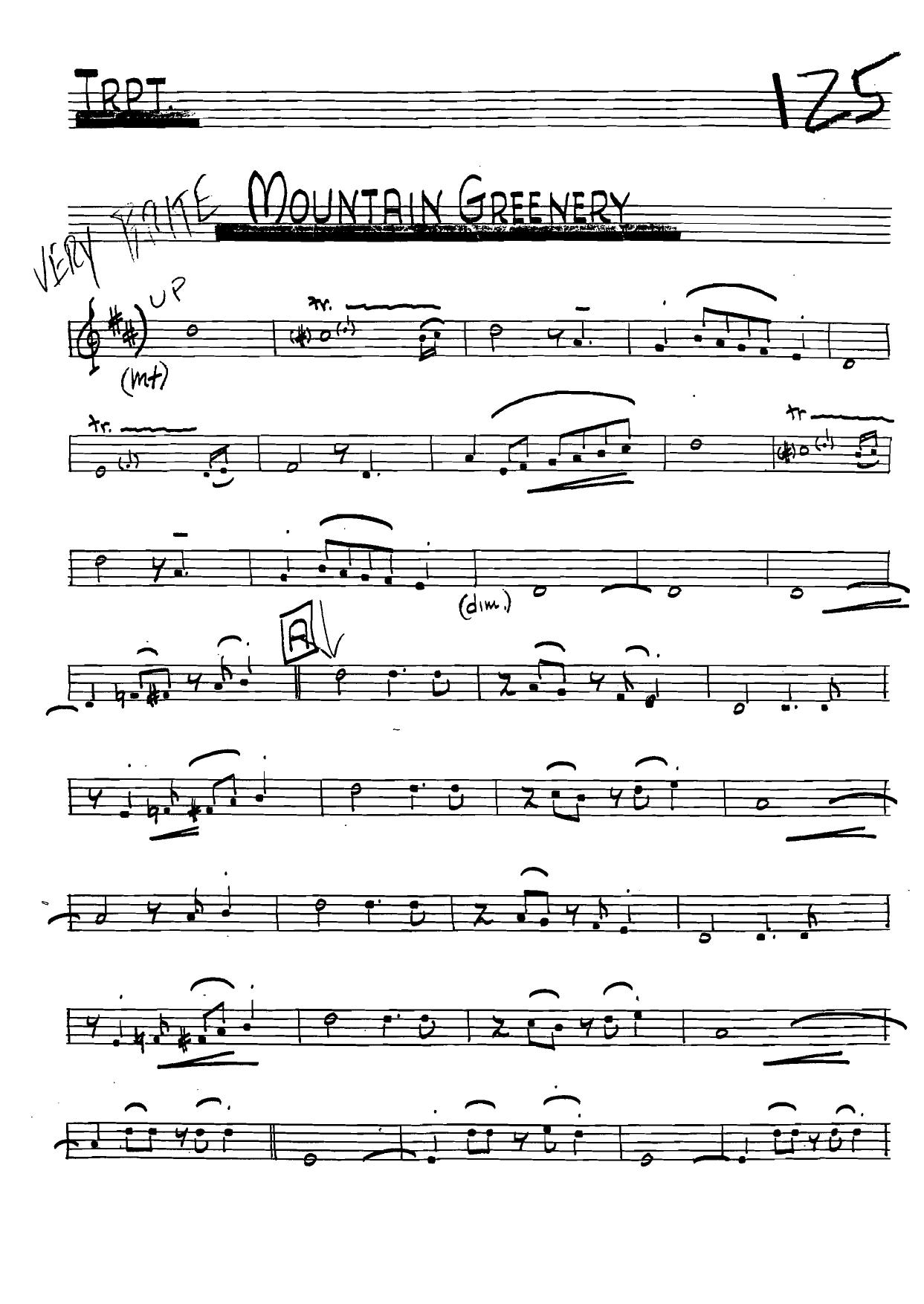
Mountain Greenery - M. Paich - Dave Pell Octet - Ts,Bs,Trp,Trb+Rhythm
Composed by Richard Rodgers
- Ensemble: Small Ensemble
- Pages: 35
- Instruments (8): Trumpet, Tenor Saxophone, Trombone, Baritone Saxophone, Guitar, Piano, Bass, Drums
- Difficulty: easy
- Content: Individual Parts
- Format: PDF Download (Instant)
- Price: $12.99
Richard Rodgers' timeless melody "Mountain Greenery," originally penned with Lorenz Hart for the 1926 Broadway musical *The Garrick Gaieties*, emerged from the golden age of American musical theater. While initially a charming show tune, its sophisticated harmonic structure and memorable, lilting melody quickly transcended the stage, becoming a beloved standard in the Great American Songbook. Over the decades, it has been embraced by countless vocalists and instrumentalists, its enduring appeal lying in its cheerful optimism and inherent swingability. This particular arrangement, inspired by the iconic Dave Pell Octet's rendition, channels the cool, West Coast jazz aesthetic of the mid-20th century, an era defined by meticulous arrangements, polished ensemble playing, and a relaxed yet swinging groove. This arrangement of "Mountain Greenery" settles into a comfortable medium-swing tempo, typically around 120-140 BPM, in the key of C major. The mood is undeniably bright and effervescent, evoking a sense of carefree joy and sophisticated charm. The musical character is defined by its clean lines, interplay between the horns, and a subtle yet driving rhythm section. It's a masterclass in ensemble precision, where each voice contributes to a larger, cohesive sound. The arrangement captures the essence of the Dave Pell Octet's signature sound: a highly polished, chamber-jazz approach that prioritizes clarity, balance, and understated swing over overt virtuosity. While the arranger is listed as unknown, the stylistic fingerprints of Marty Paich are unmistakable, echoing his renowned work for artists like Art Pepper, Mel Tormé, and the Dave Pell Octet itself. Paich's approach is characterized by intelligent counterpoint, harmonically rich voicings that often feature close-knit horn sections, and a masterful use of dynamics to shape the musical narrative. Expect intricate soli sections where the tenor sax, baritone sax, trumpet, and trombone weave together seamlessly, creating a dense yet transparent texture. The melody is predominantly carried by the trumpet and tenor sax, often in unison or harmonized lines, with the full horn section contributing to powerful, yet controlled, shout choruses. Featured solos are typically allocated to the tenor sax and trumpet, providing opportunities for improvisation over the standard AABA form. The technical challenges lie in achieving precise articulation, impeccable blend within the horn section, and maintaining a consistent, relaxed swing feel. The rewarding aspect is the sheer joy of performing such a well-crafted piece, where every part feels essential and contributes to a sophisticated, cohesive sound. This arrangement is ideally suited for college-level jazz ensembles, advanced community bands, or professional small groups seeking to explore the nuanced world of West Coast cool jazz. Its demands for ensemble precision, harmonic awareness, and stylistic authenticity make it an excellent teaching tool for developing musicians, while its inherent musicality ensures a rewarding performance for experienced players and an engaging experience for audiences. Conductors should emphasize a relaxed, medium-swing feel, avoiding any tendency to rush or push the tempo. Articulation is key; ensure horns articulate cleanly and precisely, particularly in the intricate soli passages, aiming for a light, detached sound where appropriate. Blend and balance within the four-horn section (Tenor Sax, Baritone Sax, Trumpet, Trombone) are paramount; encourage listening across the section to achieve a unified sound. Dynamics should be carefully observed to highlight the arrangement's subtle contours. Soloists should focus on melodic improvisation that complements the cool jazz aesthetic rather than aggressive, high-energy playing. Rehearsal time should be dedicated to perfecting the ensemble voicings and ensuring the rhythm section provides a steady, unobtrusive foundation. Q: What specific instruments are included in this arrangement? A: This arrangement is scored for a small ensemble featuring Tenor Saxophone, Baritone Saxophone, Trumpet, Trombone, Piano, Bass, and Drums, for a total of seven instruments. Q: What is the difficulty level of this arrangement? A: This arrangement is considered advanced intermediate to advanced, suitable for college-level jazz ensembles, advanced community bands, or professional small groups due to its demands for precise articulation, ensemble blend, and stylistic authenticity. Q: What musical style and historical context does "Mountain Greenery" represent in this arrangement? A: This arrangement embodies the cool, West Coast jazz style of the mid-20th century, specifically inspired by the Dave Pell Octet's approach, which emphasizes meticulous arrangements, polished ensemble playing, and a relaxed medium-swing groove. Q: What makes this particular arrangement unique or distinctive? A: This arrangement showcases the sophisticated voicings and intricate counterpoint characteristic of Marty Paich's style, featuring seamless soli sections, harmonically rich horn lines, and a focus on clarity and balance within the small ensemble. Q: What is the typical performance duration and tempo for this piece? A: The typical performance duration for this arrangement is approximately 3-4 minutes, performed at a comfortable medium-swing tempo, generally ranging from 120-140 beats per minute.
Questions and answers
- What is included in the Mountain Greenery - M. Paich - Dave Pell Octet - Ts,Bs,Trp,Trb+Rhythm PDF?
- The verified current file contains individual parts across 35 pages.
- How many instruments or parts are listed for Mountain Greenery - M. Paich - Dave Pell Octet - Ts,Bs,Trp,Trb+Rhythm?
- The verified instrumentation list contains 8 entries for this Small Ensemble arrangement.
- Who is credited for Mountain Greenery - M. Paich - Dave Pell Octet - Ts,Bs,Trp,Trb+Rhythm?
- Composer: Richard Rodgers.
- What difficulty is listed for Mountain Greenery - M. Paich - Dave Pell Octet - Ts,Bs,Trp,Trb+Rhythm?
- The verified difficulty level is easy.
- Can I preview Mountain Greenery - M. Paich - Dave Pell Octet - Ts,Bs,Trp,Trb+Rhythm before buying?
- Yes. The product page provides a preview generated from the current PDF file.
- How is Mountain Greenery - M. Paich - Dave Pell Octet - Ts,Bs,Trp,Trb+Rhythm delivered?
- After successful payment, the digital PDF is made available for download. The displayed price is $12.99.
Musicians Also Search For
Mountain Greenery - M. Paich - Dave Pell Octet - Ts,Bs,Trp,Trb+Rhythm Richard Rodgers sheet music • Mountain Greenery - M. Paich - Dave Pell Octet - Ts,Bs,Trp,Trb+Rhythm Richard Rodgers small ensemble arrangements • Richard Rodgers small ensemble charts • Mountain Greenery - M. Paich - Dave Pell Octet - Ts,Bs,Trp,Trb+Rhythm small ensemble arrangements • Mountain Greenery - M. Paich - Dave Pell Octet - Ts,Bs,Trp,Trb+Rhythm small ensemble PDF download • Mountain Greenery - M. Paich - Dave Pell Octet - Ts,Bs,Trp,Trb+Rhythm jazz sheet music • small ensemble sheet music download • Mountain Greenery - M. Paich - Dave Pell Octet - Ts,Bs,Trp,Trb+Rhythm individual parts download • Mountain Greenery - M. Paich - Dave Pell Octet - Ts,Bs,Trp,Trb+Rhythm sheet music PDF • buy Mountain Greenery - M. Paich - Dave Pell Octet - Ts,Bs,Trp,Trb+Rhythm sheet music • download Mountain Greenery - M. Paich - Dave Pell Octet - Ts,Bs,Trp,Trb+Rhythm PDF • Mountain Greenery - M. Paich - Dave Pell Octet - Ts,Bs,Trp,Trb+Rhythm jazz charts • Mountain Greenery - M. Paich - Dave Pell Octet - Ts,Bs,Trp,Trb+Rhythm printable sheet music • small ensemble repertoire PDF