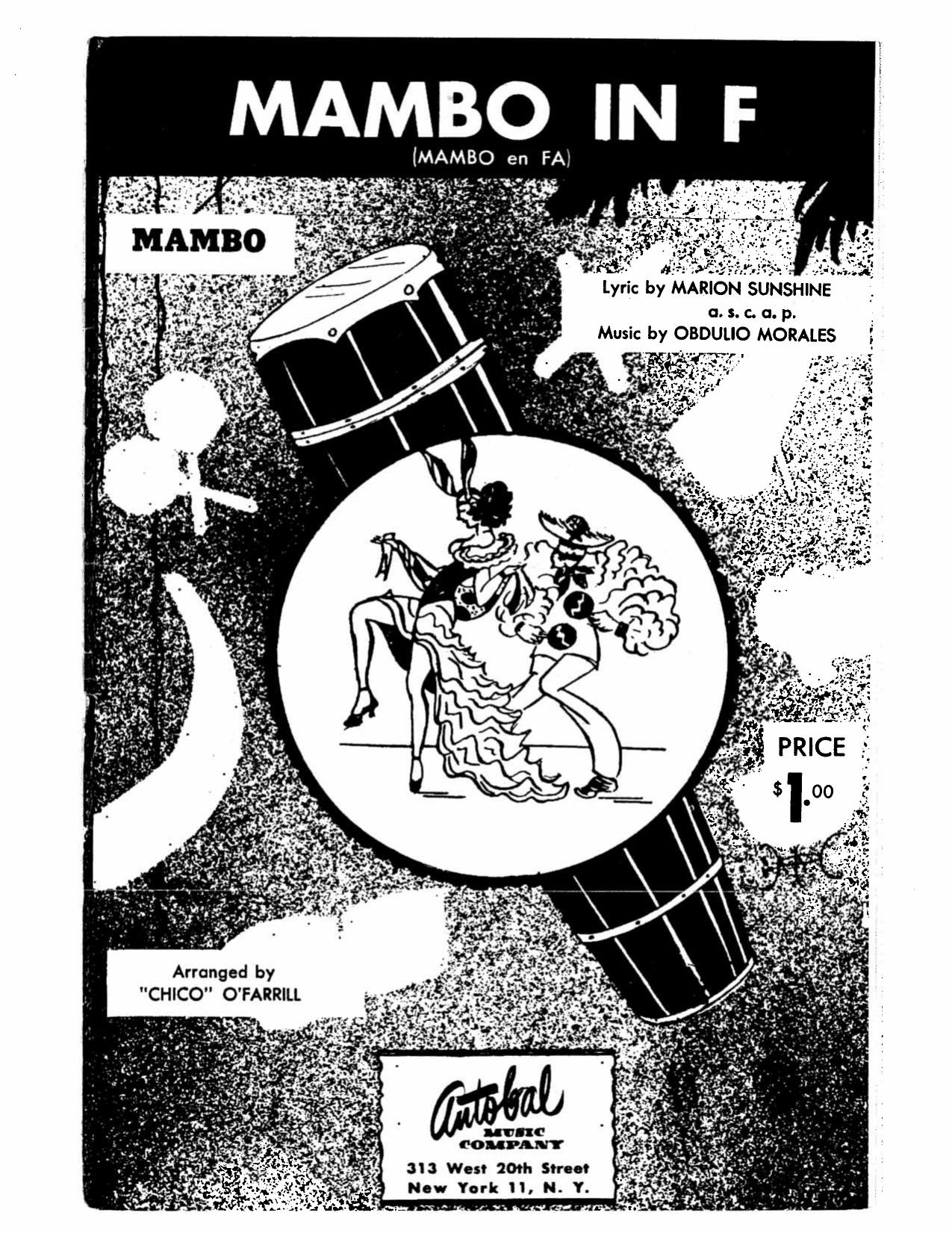
Mambo In F (C.O'Farrill)
Composed by Chico O'Farrill
Arranged by Chico O'Farrill
- Ensemble: Big Band
- Pages: 29
- Instruments (13): 1st Sax. Eb Alto, 2nd Sax. Bb Tenor, 3rd Sax. Eb Alto, 4th Sax. Bb Tenor, 5th Sax. Eb Baritone, 1st Trombone, 2nd Trombone, 1st Trumpet in Bb, 2nd Trumpet in Bb, 3rd Trumpet in Bb, Bass, Drums, Piano
- Difficulty: medium
- Content: Individual Parts
- Format: PDF Download (Instant)
- Price: $24.99
Afro-Cuban jazz pioneer Chico O'Farrill stands as one of the towering architects who successfully bridged the gap between authentic Cuban rhythmic structures and modern American big band orchestration. Composed during a golden era when Latin jazz was exploding onto the international scene in New York City, "Mambo In F" captures the vibrant energy, sophisticated harmonic palette, and rhythmic complexity that defined O'Farrill's legendary writing for titans like Machito and Dizzy Gillespie. This chart serves as a masterclass in blending the relentless, syncopated drive of traditional Afro-Cuban mambo with the advanced, bebop-infused harmonic sensibilities of the mid-20th-century jazz orchestra. Driven by an infectious, high-energy Latin percussion groove in 4/4 time, "Mambo In F" bursts forward with a blazing tempo and an electric, celebratory mood. The harmonic framework brilliantly exploits the bright, resonant key of F major, utilizing extended and altered chords that give the brass and reed sections a sharp, biting edge. The emotional trajectory shifts seamlessly from relentless, rhythmic intensity during the heavy ensemble montunos to moments of cool, sophisticated release. The textures are thick and driving, characterized by interlocking horn parts that create a dense wall of sound, evoking the sweaty, electric atmosphere of the mid-century Palladium Ballroom. O'Farrill's distinct arranging approach is immediately evident in the ingenious counterpoint and rich, transparent voicings across the nine-instrument ensemble. Rather than relying on simple call-and-response formulas, O'Farrill weaves independent melodic lines through the saxophones and brass, creating a dense polyphonic texture that honors Cuban tradition while pushing big band modernism forward. The arrangement features tightly knit horn solis that demand absolute rhythmic precision, alongside explosive shout choruses where the brass cuts through the heavy percussion bed with brilliant, brassy defiance. The dynamic interplay between the rhythm section's montuno patterns and the horns' staccato, syncopated stabs forms the structural backbone of the chart. Carrying the melodic weight is a shared responsibility across the horn section, with standout unison lines moving fluidly between the alto, tenor, and baritone saxophones before opening up for inspired improvised solo sections. Technically, the arrangement demands crisp articulation, agile fingerwork in the fast reed passages, and strong endurance from the trumpet and trombone players, particularly when navigating the high-register accents and dynamic swells. Performers will find immense satisfaction in unlocking the subtle swing-versus-clave micro-timing required to make the groove breathe authentically. Advanced college ensembles, elite community big bands, and professional repertory orchestras will find "Mambo In F" an exhilarating challenge and a vital addition to any program exploring the Latin jazz canon. Because of its demanding rhythmic synchronization—especially the precise execution of off-beat accents and cross-rhythms—it requires an ensemble with mature listening skills and a rhythm section deeply comfortable with Afro-Cuban stylistic nuances. Conductors tackling "Mambo In F" must prioritize the rhythmic integrity of the percussion groove, ensuring the rhythm section locks into an unyielding, forward-moving Afro-Cuban feel before the horns enter. The tempo must remain brisk and steady; avoid dragging during dense ensemble passages or rushing the transitions into the shout choruses. Technically, the primary challenge lies in the execution of syncopated figures that often land on the "and" of the beat or cross the bar line. Horn players should utilize short, crisp articulations for all staccato mambo stabs, avoiding heavy tonguing that can bog down the rapid-fire momentum. Trumpets and trombones must manage their air support carefully through the sustained high-register dynamic peaks to maintain a warm, focused tone without forcing the sound. Rehearsals should initially separate the rhythm section and horns to master the interlocking montunos. Practice the horn solis at a slower tempo with a metronome clicking on beats two and four to tighten sectional intonation and articulation before bringing the full ensemble together at performance speed. Q: What instruments and parts are included in this arrangement? A: This 29-page arrangement is scored for a 9-instrument ensemble, specifically featuring Alto Saxophone, Tenor Saxophone, Baritone Saxophone, Trumpet, Trombone, and a complete rhythm section framework. Q: What is the difficulty level of this chart? A: This arrangement is calibrated for advanced high school, college, and professional jazz ensembles due to its intricate syncopated rhythms, fast tempo, and demanding stylistic integration. Q: What is the historical style and context of "Mambo In F"? A: Composed by Chico O'Farrill, this piece represents the pinnacle of the Afro-Cuban jazz movement, fusing traditional Latin percussion grooves with sophisticated bebop-era big band orchestration. Q: What makes this Chico O'Farrill arrangement unique? A: It showcases O'Farrill's signature polyphonic writing, complex counterpoint, and innovative voicings that give a 9-horn ensemble the immense, driving power of a full-sized big band. Q: What is the performance duration and tempo feel of the piece? A: The arrangement is built around a fast, high-energy Latin mambo groove in 4/4 time, typically clocking in at around 3 to 4 minutes of relentless, rhythmic intensity depending on solo extensions.
Questions and answers
- What is included in the Mambo In F (C.O'Farrill) PDF?
- The verified current file contains individual parts across 29 pages.
- How many instruments or parts are listed for Mambo In F (C.O'Farrill)?
- The verified instrumentation list contains 13 entries for this Big Band arrangement.
- Who is credited for Mambo In F (C.O'Farrill)?
- Composer: Chico O'Farrill. Arranger: Chico O'Farrill.
- What difficulty is listed for Mambo In F (C.O'Farrill)?
- The verified difficulty level is medium.
- Can I preview Mambo In F (C.O'Farrill) before buying?
- Yes. The product page provides a preview generated from the current PDF file.
- How is Mambo In F (C.O'Farrill) delivered?
- After successful payment, the digital PDF is made available for download. The displayed price is $24.99.
Musicians Also Search For
Mambo In F Chico O'Farrill PDF • Mambo In F Chico O'Farrill sheet music • Mambo In F arranged by Chico O'Farrill • Chico O'Farrill big band charts • Chico O'Farrill jazz arrangements PDF • Mambo In F Chico O'Farrill big band arrangements • Mambo In F big band arrangements • Mambo In F big band PDF download • Mambo In F jazz sheet music • big band sheet music download • Mambo In F individual parts download • Mambo In F sheet music PDF • buy Mambo In F sheet music • download Mambo In F PDF • Mambo In F jazz charts • best Chico O'Farrill big band arrangements • Mambo In F printable sheet music • big band repertoire PDF