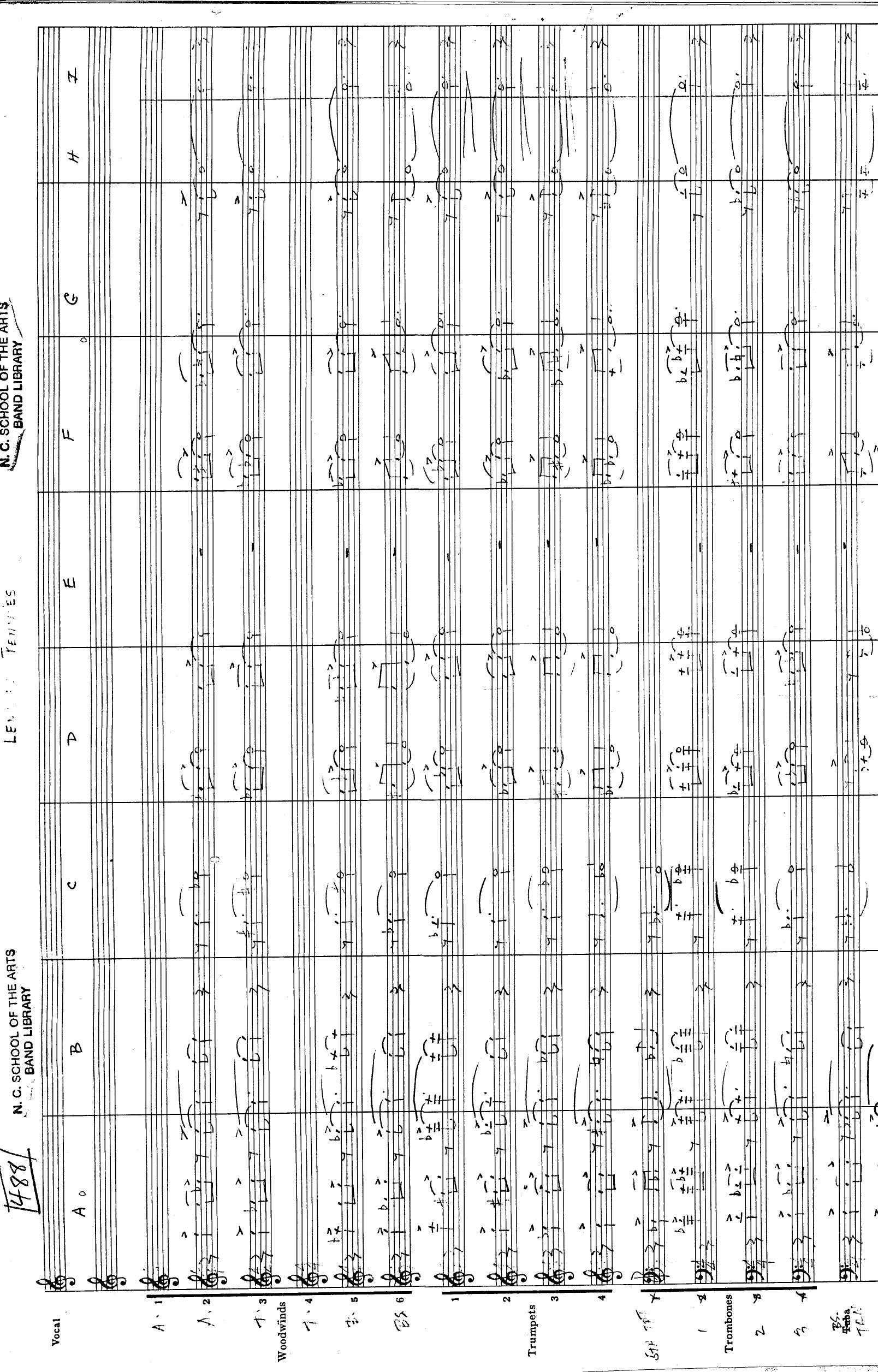
Lennie's Pennies (C.Fischer) sheet music preview

Lennie's Pennies (C.Fischer)

Composed by Lennie Tristano

Arranged by C.Fischer

  • Ensemble: Big Band
  • Style: Jazz Standard
  • Pages: 55
  • Instruments (18): Alto Saxophone 1, Alto Saxophone 2, Tenor Saxophone 1, Tenor Saxophone 2, Baritone Saxophone, Bass Saxophone, Trumpet 1, Trumpet 2, Trumpet 3, Trumpet 4, Trumpet 5, Trombone 1, Trombone 2, Trombone 3, Bass Trombone, Piano/Guitar, Bass, Drums
  • Difficulty: easy
  • Content: Individual Parts
  • Format: PDF Download (Instant)
  • Price: $24.99

Lennie Tristano’s ingenious 1949 contrafact "Lennie’s Pennies"—built upon the lightning-fast chord progression of the 1930 pop standard "Pennies from Heaven"—stands as a monumental achievement of cool jazz and bebop ingenuity. Tristano’s original concept subverted traditional swing-era expectations by introducing labyrinthine, linear counterpoint, advanced chromatic voice-leading, and a detached, cerebral intensity that revolutionized how modern improvisers approached standard forms. This landmark composition captures the intellectual vanguard of late-1940s New York jazz, where bebop’s fiery urgency collided with Tristano’s avant-garde penchant for modal exploration, cross-rhythms, and deeply sophisticated harmonic substitutions. Driving forward at a brisk, unrelenting up-tempo bebop clip, this big band interpretation crackles with electric energy while maintaining the cool, architectural precision inherent to Tristano’s aesthetic. The arrangement opens with a high-velocity harmonic landscape in a challenging key center, immediately establishing a mood of sophisticated urgency. The emotional arc shifts seamlessly from breathless, fleet-fingered unison bebop lines to expansive, harmonically rich ensemble textures that evoke the smoky, intellectual atmosphere of mid-century Manhattan jazz cellos and clubs. The tension-and-release cycles are razor-sharp, relying on dense, altered dominant chords and linear momentum rather than simple blues-based release patterns. Arranger C.Fischer masterfully translates Tristano’s inherently linear, piano-centric and small-group concepts into a massive 23-instrument orchestral palette without losing the transparent, contrapuntal clarity required by the style. Fischer utilizes intricate sectional interweaving, pitting the woodwinds against crisp brass block-voicings, and incorporates interlocking soli passages that demand absolute rhythmic unison. Rather than relying on a generic big band shout chorus, Fischer constructs a developmental tour-de-force that mirrors Tristano’s obsession with horizontal melody, weaving secondary countermelodies beneath the primary thematic material and utilizing modern extended harmonies—including sharp-11s, flat-9s, and altered tensions—that push the ensemble to think like a collective of modern improvisers. The primary melodic weight rests heavily on the woodwind and trumpet sections, which must execute lightning-fast bebop heads with pristine articulation and feather-light staccato phrasing. Featured solo space allows advanced improvisers to stretch out over the rapid-fire "Pennies from Heaven" changes, testing their command of chromatic scale work and chord-scale relationships. Technically demanding due to its blistering tempo, dense accidentals, and intricate ensemble synchronization, this 14-page chart offers an immensely rewarding challenge for advanced college ensembles, top-tier high school jazz bands, and professional repertory orchestras looking to honor the cooler, more cerebral side of bebop history. Conductors tackling this arrangement must prioritize ultra-clean articulation and strict tempo control, as the primary challenge lies in maintaining a relaxed, driving swing feel at a rapid-fire clip without rushing. Ensure the rhythm section keeps the ride cymbal driving and the bass line walking with a feather-light, pulse-oriented approach reminiscent of early cool jazz rhythm sections; heavy, bombastic drumming will obscure the intricate harmonic motion. Woodwinds and brass should spend dedicated rehearsal time isolating the fast, chromatic unison lines at half-tempo, gradually building speed while maintaining strict dynamic balance across the 23-piece ensemble. Pay close attention to the delicate dynamic shifts written in the inner voicings; letting the background figures overpower the primary melodic lines will muddy Fischer’s transparent counterpoint. Encourage soloists to study Tristano’s linear phrasing concepts, emphasizing horizontal melodic development over vertical chord-scale plugging. Q: What specific instruments and parts are included in this 23-instrument configuration? A: The arrangement is scored for a comprehensive 23-instrument big band lineup, featuring specialized woodwind doublings, a full brass section including trumpets and trombones, a foundational tuba part to anchor the low end, and a dedicated vocal score alongside the standard rhythm section. Q: What is the difficulty level of this C.Fischer arrangement? A: This chart is pitched firmly at the advanced to professional level (Grade 5–6), primarily due to its blistering up-tempo velocity, complex chromatic voice-leading, and the high demand for precision ensemble execution across 14 pages of intricate scoring. Q: What is the historical style and background of the music? A: It is rooted in the 1949 cool jazz and bebop movement, serving as a big band adaptation of pianist Lennie Tristano’s famous contrafact built on the chord changes of "Pennies from Heaven." Q: What makes this specific arrangement by C.Fischer unique? A: Fischer successfully scales down Tristano’s notoriously cerebral, linear small-group counterpoint into a massive 23-piece orchestral framework, utilizing transparent textures, interlocking woodwind-brass solis, and advanced altered harmonies instead of a conventional swing shout chorus. Q: What is the expected performance duration and tempo feel? A: The arrangement is set to a brisk, high-velocity up-tempo bebop swing feel, with a typical performance duration running around 3.5 to 4.5 minutes depending on the number and length of open improvised solos.

Questions and answers

What is included in the Lennie's Pennies (C.Fischer) PDF?
The verified current file contains a conductor score and individual parts across 55 pages.
How many instruments or parts are listed for Lennie's Pennies (C.Fischer)?
The verified instrumentation list contains 18 entries for this Big Band arrangement.
Who is credited for Lennie's Pennies (C.Fischer)?
Composer: Lennie Tristano. Arranger: C.Fischer.
What difficulty is listed for Lennie's Pennies (C.Fischer)?
The verified difficulty level is easy.
What style is listed for Lennie's Pennies (C.Fischer)?
The catalog lists the style as Jazz Standard.
Can I preview Lennie's Pennies (C.Fischer) before buying?
Yes. The product page provides a preview generated from the current PDF file.
How is Lennie's Pennies (C.Fischer) delivered?
After successful payment, the digital PDF is made available for download. The displayed price is $24.99.

Musicians Also Search For

Lennie's Pennies C.Fischer PDFLennie's Pennies C.Fischer sheet musicLennie's Pennies arranged by C.FischerC.Fischer big band chartsC.Fischer jazz arrangements PDFLennie's Pennies Lennie Tristano sheet musicLennie's Pennies Lennie Tristano big band arrangementsLennie Tristano big band chartsLennie's Pennies big band arrangementsLennie's Pennies big band PDF downloadLennie's Pennies jazz sheet musicbig band sheet music downloadLennie's Pennies conductor score PDFLennie's Pennies individual parts downloadLennie's Pennies sheet music PDFLennie's Pennies Jazz Standard chartsJazz Standard big band arrangementsbuy Lennie's Pennies sheet musicdownload Lennie's Pennies PDFLennie's Pennies jazz chartsbest C.Fischer big band arrangementsLennie Tristano arranged by C.FischerLennie's Pennies printable sheet musicbig band repertoire PDF

All arrangements by C.Fischer All Lennie Tristano sheet music