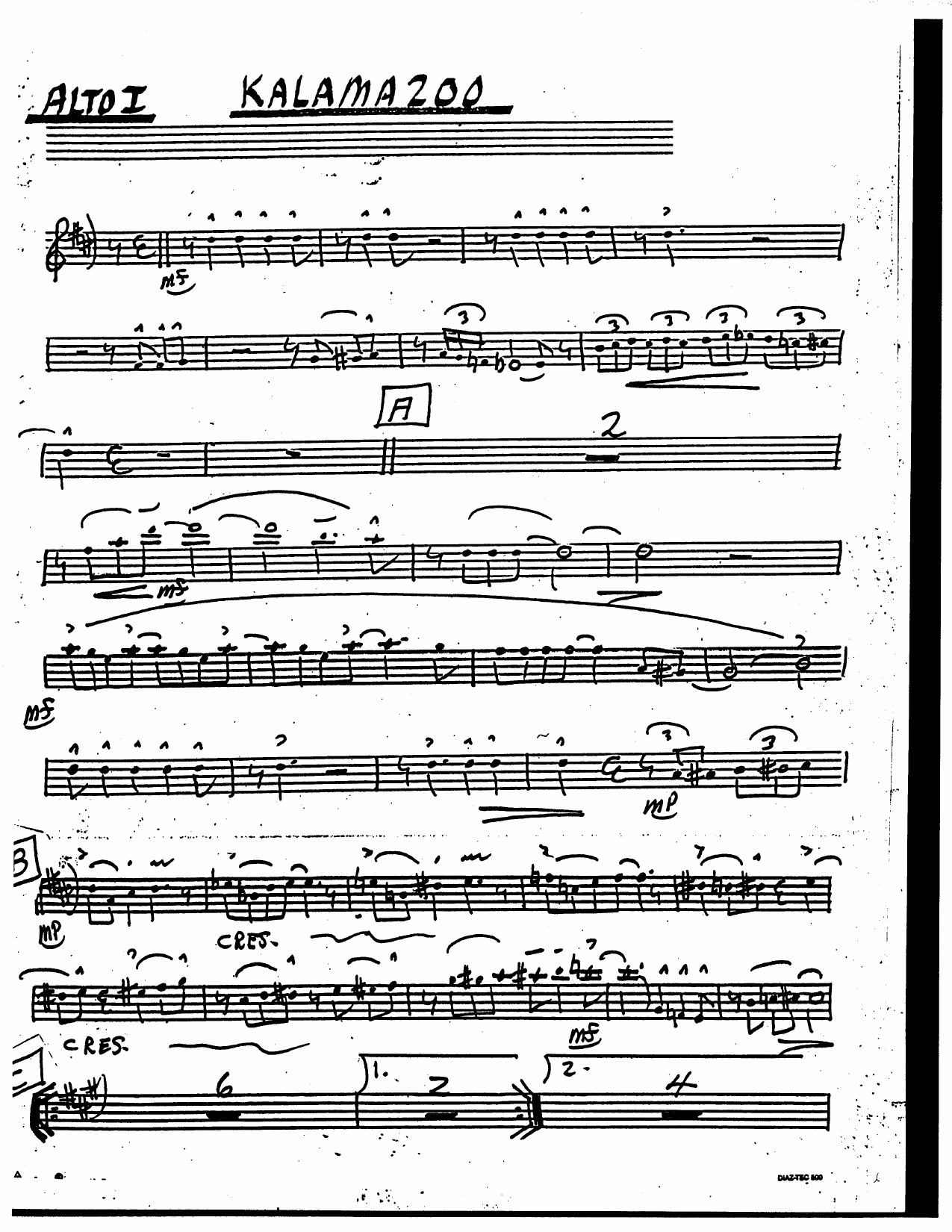
I'Ve Got A Gal In Kalamazoo (W.Stuart) vocal sheet music preview

I'Ve Got A Gal In Kalamazoo (W.Stuart) vocal

Composed by Harry Warren

Arranged by Walt Stuart

  • Ensemble: Big Band
  • Pages: 50
  • Instruments (18): Alto Saxophone 1, Alto Saxophone 2, Tenor Saxophone 1, Tenor Saxophone 2, Baritone Saxophone, Trumpet 1, Trumpet 2, Trumpet 3, Trumpet 4, Trombone 1, Trombone 2, Trombone 3, Trombone 4, Piano, Guitar, Bass, Drums, Vocal Group
  • Difficulty: advanced
  • Content: Individual Parts
  • Format: PDF Download (Instant)
  • Price: $24.99

Harry Warren and Mack Gordon penned "I've Got a Gal in Kalamazoo" for the 1942 musical film *Orchestra Wives*, immortalizing the tune through Glenn Miller and His Orchestra's iconic, chart-topping recording. Representing the pinnacle of the classic swing era, the composition captures the infectious optimism and high-energy drive of wartime America, blending a catchy twelve-bar blues-influenced verse structure with a jubilant, hook-laden chorus. Its enduring status as a big band staple stems from its irresistible train-rhythm momentum and nostalgic lyrical charm, making it an absolute crowd-pleaser that bridges the gap between sophisticated jazz harmony and accessible popular songcraft. Driving forward with a bright, buoyant medium-swing feel in 4/4 time, Walt Stuart’s arrangement radiates exuberant energy and nostalgic warmth. The chart opens with a crisp, rhythmically precise introduction that immediately establishes the locomotive groove before handing the spotlight to the vocalist. Throughout the arrangement, the mood is celebratory, lighthearted, and rhythmically electric, evoking the bustling atmosphere of a 1940s USO dance. Stuart employs clever harmonic twists beneath the familiar melody, utilizing crisp brass stabs, lush sax solis, and tight voicings that give the 10-piece instrumentation the sonic weight and punch of a full seventeen-piece orchestra without sacrificing transparency. Stuart’s custom tailoring for a 10-instrument ensemble is a masterclass in economic orchestration, ensuring every voice plays a vital structural and coloristic role. The vocal line sits comfortably in a versatile register, framed dynamically by responsive counter-melodies in the trumpet and saxophone sections. A standout feature of this chart is the cleverly constructed shout chorus, which builds organic tension through dynamic contrast and syncopated rhythmic unisons before resolving into a roaring final climax. The arrangement also includes designated solo space for horns to stretch out over authentic blues changes, allowing improvisers to showcase their phrasing within a traditional swing vocabulary. Advanced high school ensembles, collegiate jazz bands, and professional community groups will find this chart to be an ideal vehicle for developing tight ensemble cohesion and stylistic authenticity. While the technical demands require solid command of swing articulation, syncopated rhythms, and sectional balance, the payoff is an immensely rewarding performance experience that connects instantly with audiences of all generations. Directors will appreciate how naturally the 50-page score and parts lay out on the stand, providing a polished, professional-grade addition to any concert program seeking genuine golden-era flair. Achieving the authentic, high-energy drive of this arrangement demands rigorous attention to light-and-crisp swing phrasing, particularly in the lower brass and reed sections. The tempo should remain steady and forward-moving—avoid rushing the dotted eighth-sixteenth figures that give the melody its characteristic bounce. Rhythm section players must lock in tightly: the drummer should emulate a classic train-style ride cymbal pattern with a crisp 2-and-4 backbeat on the hi-hat, while the bass player maintains a steady, walking acoustic feel that anchors the harmony. Horn players must execute all staccato markings with a definitive tongue-and-release, avoiding heavy accents unless specifically indicated by the arranger. During the vocal sections, brass and reeds should dynamically tuck underneath the soloist, keeping background figures transparent and well-balanced. In the shout chorus, let the brass open up with bright, brassy timbres while maintaining pitch center control through the altered dominant chords. Rehearsals should initially focus on slow-tempo sectional isolation of the syncopated ensemble hits before assembling the full groove at performance speed. Q: What instruments and parts are included in this arrangement? A: Scored for a compact 10-instrument big band, the arrangement includes parts for Vocal, Alto Saxophone, Tenor Saxophone, Baritone Saxophone, Trumpet, and a complete rhythm section. Q: What is the difficulty level of this chart? A: This arrangement is graded as intermediate to advanced (suitable for skilled high school, collegiate, and professional ensembles), primarily requiring strong swing articulation, tight sectional blend, and confident vocal accompaniment skills. Q: What is the historical context and style of "I've Got A Gal In Kalamazoo"? A: Originally written by Harry Warren and made famous by Glenn Miller in 1942, this piece is an iconic swing-era standard characterized by its infectious train-rhythm momentum and upbeat, nostalgic charm. Q: What makes Walt Stuart's arrangement unique? A: Walt Stuart expertly condenses the massive, dense sound of a traditional 17-piece big band into a nimble 10-instrument configuration without sacrificing harmonic richness, featuring custom shout choruses, clever vocal framing, and tight horn voicings. Q: What is the recommended performance duration and tempo for this arrangement? A: The chart is designed to be played at a bright, energetic medium-swing tempo of approximately 144 to 152 beats per minute, resulting in a performance duration of roughly 3 to 4 minutes depending on solo choruses.

Questions and answers

What is included in the I'Ve Got A Gal In Kalamazoo (W.Stuart) vocal PDF?
The verified current file contains individual parts across 50 pages.
How many instruments or parts are listed for I'Ve Got A Gal In Kalamazoo (W.Stuart) vocal?
The verified instrumentation list contains 18 entries for this Big Band arrangement.
Who is credited for I'Ve Got A Gal In Kalamazoo (W.Stuart) vocal?
Composer: Harry Warren. Arranger: Walt Stuart.
What difficulty is listed for I'Ve Got A Gal In Kalamazoo (W.Stuart) vocal?
The verified difficulty level is advanced.
Can I preview I'Ve Got A Gal In Kalamazoo (W.Stuart) vocal before buying?
Yes. The product page provides a preview generated from the current PDF file.
How is I'Ve Got A Gal In Kalamazoo (W.Stuart) vocal delivered?
After successful payment, the digital PDF is made available for download. The displayed price is $24.99.

Musicians Also Search For

I'Ve Got A Gal In Kalamazoo Walt Stuart PDFI'Ve Got A Gal In Kalamazoo Walt Stuart sheet musicI'Ve Got A Gal In Kalamazoo arranged by Walt StuartWalt Stuart big band chartsWalt Stuart jazz arrangements PDFI'Ve Got A Gal In Kalamazoo Harry Warren sheet musicI'Ve Got A Gal In Kalamazoo Harry Warren big band arrangementsHarry Warren big band chartsI'Ve Got A Gal In Kalamazoo big band arrangementsI'Ve Got A Gal In Kalamazoo big band PDF downloadI'Ve Got A Gal In Kalamazoo jazz sheet musicbig band sheet music downloadI'Ve Got A Gal In Kalamazoo individual parts downloadI'Ve Got A Gal In Kalamazoo sheet music PDFbuy I'Ve Got A Gal In Kalamazoo sheet musicdownload I'Ve Got A Gal In Kalamazoo PDFI'Ve Got A Gal In Kalamazoo jazz chartsbest Walt Stuart big band arrangementsHarry Warren arranged by Walt StuartI'Ve Got A Gal In Kalamazoo printable sheet musicbig band repertoire PDF

All arrangements by Walt Stuart All Harry Warren sheet music