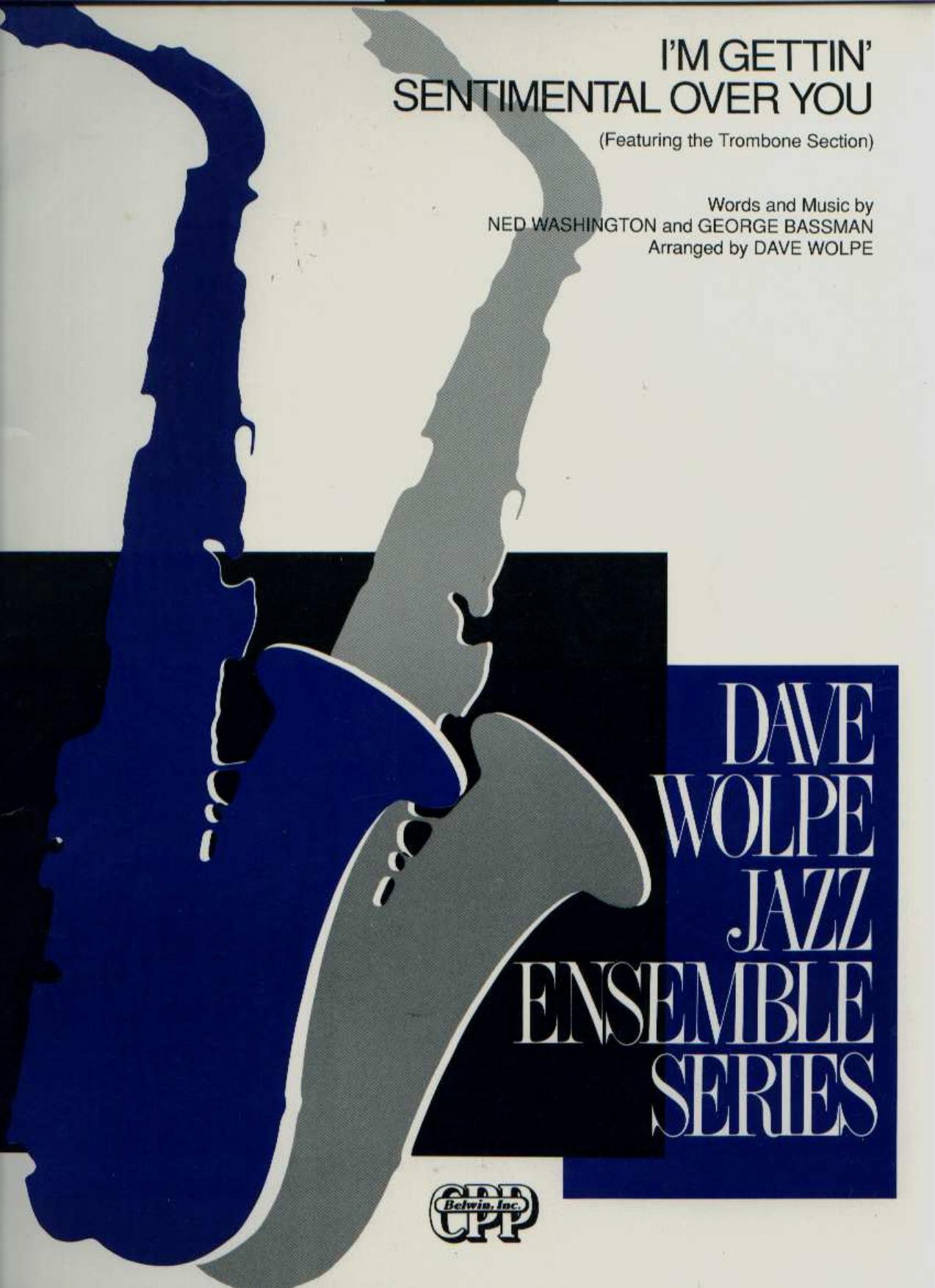
Im Gettin Sentimental Over You (D.Wolpe)
Composed by George Bassman
Arranged by Dave Wolpe
- Ensemble: Big Band
- Pages: 52
- Instruments (18): Conductor, 1st Eb Alto Saxophone, 2nd Eb Alto Saxophone, 1st Bb Tenor Saxophone, 2nd Bb Tenor Saxophone, Eb Baritone Saxophone, 1st Bb Trumpet, 2nd Bb Trumpet, 3rd Bb Trumpet, 4th Bb Trumpet, 1st Trombone, 2nd Trombone, 3rd Trombone, Bass Trombone, Guitar, Piano, Bass, Drums
- Difficulty: advanced
- Content: Individual Parts
- Format: PDF Download (Instant)
- Price: $24.99
Written by George Bassman with lyrics by Ned Washington in 1932, "I’m Gettin’ Sentimental Over You" achieved immortality as the definitive theme song of Tommy Dorsey and His Orchestra. Emerging from the golden age of the big band era, Dorsey’s signature recording established a masterclass in trombone lyricism, characterized by a smooth, creamy legato tone and extraordinary breath control. As a quintessential American jazz standard, the composition bridges the gap between early 1930s popular song construction and the sophisticated ballad playing that defined the swing era. Its enduring appeal lies in its lush harmonic progression and a melody that invites profound expressive interpretation, making it a staple for jazz orchestras seeking to capture the authentic warmth and romantic elegance of the 1930s and 1940s. Master arranger Dave Wolpe breathes fresh vitality into this timeless classic through a sophisticated medium-tempo swing chart that balances nostalgic reverence with crisp, contemporary big band pacing. The arrangement opens with an inviting atmosphere before settling into a relaxed, infectious groove anchored by a steady walking bassline and subtle drummer hi-hat accents on two and four. Wolpe utilizes rich, expanded chord voicings in the brass and saxophones to create a thick, warm harmonic cushion reminiscent of the classic Basie and Dorsey voicings, yet sharpened with modern jazz color tones. The dynamic arc builds organically, moving from intimate, textured ensemble interplay to a robust, soaring shout chorus that showcases the full dynamic spectrum of a 17-piece jazz orchestra. The melodic narrative is shared judiciously across the ensemble, featuring a prominent lead alto saxophone and lush saxophone solis that demand precise intonation, seamless blend, and unified phrasing. Solo opportunities are integrated naturally within the form, allowing a featured soloist—traditionally trombone or alto saxophone—to stretch out over accessible, traditional changes. Technical challenges center primarily on stylistic cohesion: achieving the exact articulation required for authentic swing eighth notes, maintaining consistent breath support during extended ballad-like lyrical phrases, and balancing the inner voices so that the counter-melodies weave cleanly beneath the primary thematic statements. The rhythm section plays a pivotal role, requiring a polished pocket, steady time-keeping, and sensitive dynamic shading to support the horn sections without overpowering them. Advanced high school ensembles, collegiate jazz bands, and professional community big bands will find this arrangement an ideal vehicle for developing stylistic maturity, section blending, and expressive phrasing. Because it avoids ultra-fast tempos or hyper-complex modern alterations, it allows developing groups to focus heavily on the nuances of swing feel, vibrato control, and stylistic authenticity. At the same time, its sophisticated harmonic underpinnings and rewarding soli sections offer collegiate and professional groups plenty of musical depth to craft a polished, crowd-pleasing performance that highlights the timeless appeal of the swing era. Rehearsing this Dave Wolpe chart requires meticulous attention to the stylistic nuances of medium-swing phrasing. The conductor should ensure that all eighth-note lines are swung naturally, avoiding an overly clipped bebop articulation or a lazy triplet feel; the style lives in a relaxed, forward-moving 4/4 groove. Pay close attention to dynamic markings, particularly during the transition from muted brass statements to open ensemble passages, ensuring the rhythm section keeps the underlying pulse buoyant and transparent. Section leaders must unify their vibrato usage, especially in the saxophone soli, keeping it warm and controlled to match the sentimental character of the original Dorsey recording. Trumpets and trombones should approach mutes with precision, ensuring quick, clean changes where indicated, while maintaining a rich core sound even when playing softly. Emphasize horizontal linear momentum over vertical chord-bashing to keep the ballad-esque elements breathing organically throughout the chart. Q: What instrumentation and parts are included in this arrangement? A: This chart is scored for a standard 17-instrument big band lineup, comprising 5 saxophones (Alto 1, Alto 2, Tenor 1, Tenor 2, Baritone), 4 trumpets, 4 trombones, guitar, piano, bass, and drums, along with a comprehensive conductor score. Q: What is the difficulty level of this Dave Wolpe arrangement? A: It is graded as medium, making it highly accessible for proficient high school jazz ensembles while offering enough harmonic and stylistic depth to challenge collegiate and professional community big bands. Q: What is the historical style and feel of this piece? A: The arrangement is set in a medium swing style that pays homage to the classic Tommy Dorsey and His Orchestra aesthetic, blending romantic 1930s ballad lyricism with a driving, relaxed swing groove. Q: What makes this specific arrangement unique? A: Dave Wolpe’s chart stands out for its lush, idiomatic chord voicings, beautifully constructed saxophone solis, and an organic dynamic arc that culminates in a powerful yet tasteful shout chorus without over-complicating the original melody. Q: What is the approximate performance duration and tempo? A: While performance time varies based on the chosen tempo and the length of improvised solo sections, the chart is designed to sit comfortably at a medium swing tempo, typically lasting around 3 to 4 minutes.
Questions and answers
- What is included in the Im Gettin Sentimental Over You (D.Wolpe) PDF?
- The verified current file contains a conductor score and individual parts across 52 pages.
- How many instruments or parts are listed for Im Gettin Sentimental Over You (D.Wolpe)?
- The verified instrumentation list contains 18 entries for this Big Band arrangement.
- Who is credited for Im Gettin Sentimental Over You (D.Wolpe)?
- Composer: George Bassman. Arranger: Dave Wolpe.
- What difficulty is listed for Im Gettin Sentimental Over You (D.Wolpe)?
- The verified difficulty level is advanced.
- Can I preview Im Gettin Sentimental Over You (D.Wolpe) before buying?
- Yes. The product page provides a preview generated from the current PDF file.
- How is Im Gettin Sentimental Over You (D.Wolpe) delivered?
- After successful payment, the digital PDF is made available for download. The displayed price is $24.99.
Musicians Also Search For
Im Gettin Sentimental Over You Dave Wolpe PDF • Im Gettin Sentimental Over You Dave Wolpe sheet music • Im Gettin Sentimental Over You arranged by Dave Wolpe • Dave Wolpe big band charts • Dave Wolpe jazz arrangements PDF • Im Gettin Sentimental Over You George Bassman sheet music • Im Gettin Sentimental Over You George Bassman big band arrangements • George Bassman big band charts • Im Gettin Sentimental Over You big band arrangements • Im Gettin Sentimental Over You big band PDF download • Im Gettin Sentimental Over You jazz sheet music • big band sheet music download • Im Gettin Sentimental Over You conductor score PDF • Im Gettin Sentimental Over You individual parts download • Im Gettin Sentimental Over You sheet music PDF • buy Im Gettin Sentimental Over You sheet music • download Im Gettin Sentimental Over You PDF • Im Gettin Sentimental Over You jazz charts • best Dave Wolpe big band arrangements • George Bassman arranged by Dave Wolpe • Im Gettin Sentimental Over You printable sheet music • big band repertoire PDF