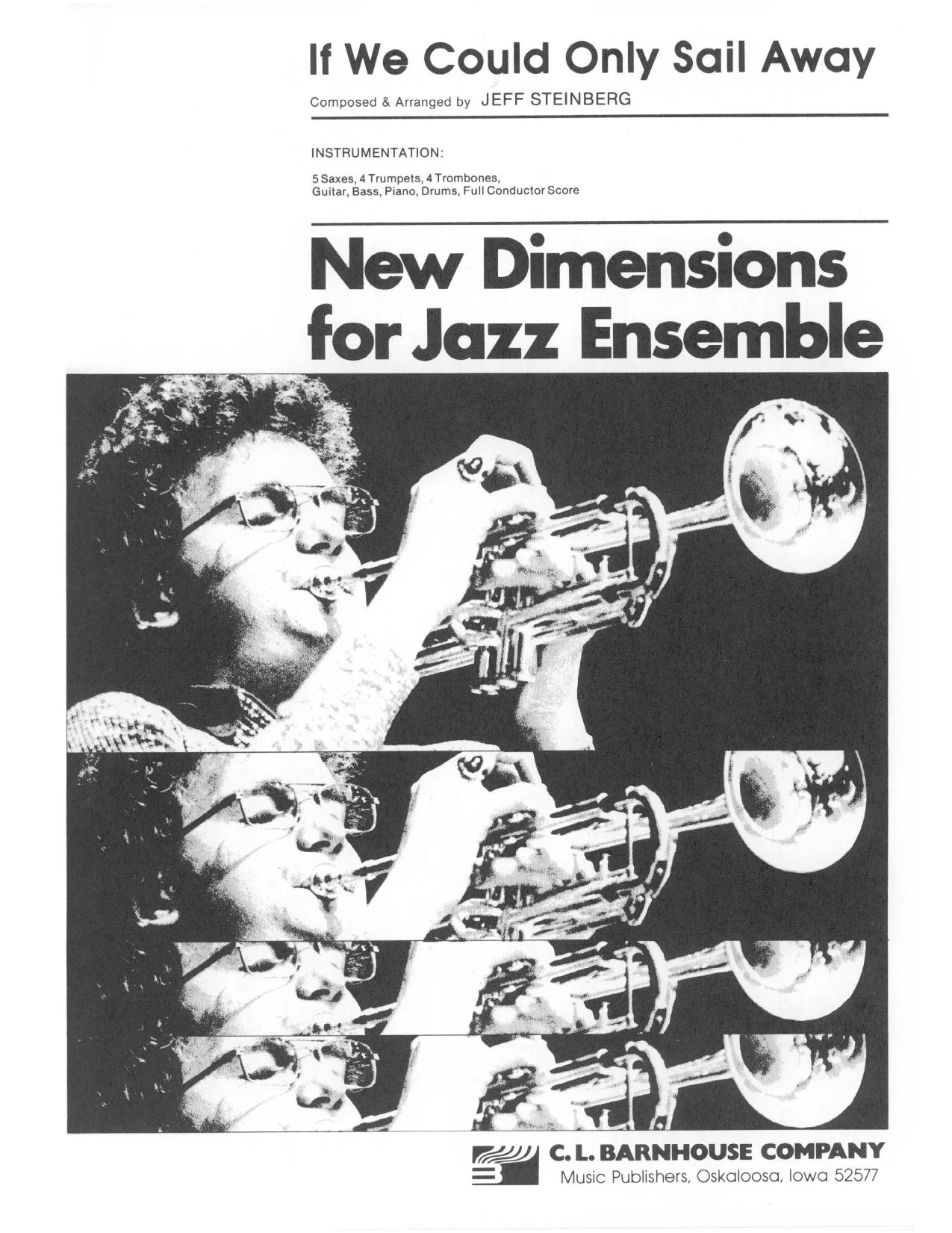
If We Could Only Sail Away (J.Steinberg) sheet music preview

If We Could Only Sail Away (J.Steinberg)

Composed by Jeff Steinberg

Arranged by Jeff Steinberg

  • Ensemble: Big Band
  • Pages: 55
  • Instruments (17): 1st Eb Alto Saxophone, 2nd Eb Alto Saxophone, 1st Bb Tenor Saxophone, 2nd Bb Tenor Saxophone, Eb Baritone Saxophone, 1st Bb Trumpet, 2nd Bb Trumpet, 3rd Bb Trumpet, 4th Bb Trumpet, 1st Trombone, 2nd Trombone, 3rd Trombone, 4th Trombone, Piano, Bass, Drums, Guitar
  • Difficulty: advanced
  • Content: Individual Parts
  • Format: PDF Download (Instant)
  • Price: $24.99

Jeff Steinberg’s sophisticated composition "If We Could Only Sail Away" stands as a masterclass in modern big band writing, capturing the expansive, lyrical warmth of contemporary jazz orchestration. Emerging from the rich lineage of late-20th-century jazz composition where lush European-influenced harmonies intersect with traditional American swing and modal concepts, this work showcases Steinberg’s renowned gift for evocative storytelling through sound. While paying homage to the lush balladry pioneered by arrangers like Sammy Nestico and Bob Mintzer, Steinberg infuses the piece with a distinct harmonic palette characterized by extended tertian structures, subtle chromatic mediant shifts, and sweeping, cinematic contours that evoke the quiet majesty of open waters. Musically, the piece unfolds as a flowing, expressive medium-tempo ballad or floating double-time feel that balances rubato-leaning rubrics with an underlying, gentle pulse. The mood shifts effortlessly from introspective melancholy to soaring optimism, driven by rich saxophone solis and lush, open-brass voicings that give the ensemble a massive, warm acoustic footprint. Steinberg’s arrangement avoids predictable cadence points, instead utilizing deceptive resolutions and fluid modulation to keep both the performers and the audience actively engaged. The woodwind doublings and subtle background figures behind the soloist create an atmospheric canvas reminiscent of the finest West Coast contemporary big band recordings. Throughout the chart, melody and countermelody are distributed thoughtfully across the entire ensemble. The saxophones—featuring parts for two altos, two tenors, and a baritone—frequently carry dense, harmonized lines that demand precise intonation and a seamless blend, particularly during the intricate soli sections. Trumpets and trombones are utilized not merely as dynamic punctuation, but as coloristic extensions of the harmony, occasionally employing warm, open tones or muted textures to color the background. Featured solo sections provide an ideal vehicle for a lyrical tenor saxophonist or flugelhorn player to stretch out over sophisticated changes, supported by a rhythm section that must maintain a delicate balance between rhythmic elasticity and firm timekeeping. Advanced high school ensembles, collegiate jazz orchestras, and professional freelance big bands will find this 55-page comprehensive arrangement an ideal centerpiece for festival programs or formal concert settings. While the technical demands are moderate in terms of sheer velocity, the true challenge lies in the realm of ensemble maturity: balancing dense chord clusters, maintaining a unified concept of time during rubato transitions, and executing dynamic swells with absolute control. For conductors seeking a work that tests a band's expressive range rather than just its technical horsepower, "If We Could Only Sail Away" delivers an unforgettable musical journey. Achieving success with "If We Could Only Sail Away" requires a mature approach to blend, intonation, and dynamic shading from the entire ensemble. The primary technical challenge lies in navigating Steinberg’s rich, extended harmonies without letting the inner voices overpower the principal melody. Conductors should spend early rehearsal fractions isolating the saxophone and brass sections to balance chord clusters, ensuring that major sevenths and ninths speak clearly without abrasive edge. The tempo should be kept fluid yet grounded, maintaining a relaxed, breathing pulse that mimics the motion of ocean tides. Rhythm section players—particularly the pianist and guitarist—must exercise restraint, voicing chords sparsely to leave ample sonic space for the horns. The drummer should utilize brushes or light stick work on the cymbals, emphasizing a subtle, undulating pulse rather than a heavy swing drive. Pay close attention to the dynamic markings; the emotional impact of this arrangement relies heavily on seamless crescendos leading into the primary thematic peaks and absolute silence on the subito piano releases. No special mutes or extended brass effects are required, allowing the natural, warm acoustic resonance of the ensemble to carry the weight of the performance. Q: What instruments and parts are included in this arrangement? A: This complete 17-instrument big band arrangement includes parts for two alto saxophones, two tenor saxophones, baritone saxophone, standard brass instrumentation, and a full rhythm section, accompanied by a comprehensive 55-page conductor score. Q: What is the difficulty level of this chart? A: This arrangement is graded as advanced, making it best suited for collegiate jazz orchestras, advanced high school bands, and professional ensembles capable of handling sophisticated harmonic structures and subtle expressive control. Q: What is the musical style and background of this piece? A: Composed and arranged by Jeff Steinberg, the piece is a contemporary jazz ballad/medium-groove work that blends lush, cinematic harmonies with traditional big band orchestration techniques. Q: What makes this specific arrangement unique? A: Steinberg’s distinct writing style shines through its deceptive cadences, fluid modulations, and rich, layered voicings that treat the big band as a singular, expressive color palette rather than distinct brass and reed sections. Q: What is the performance duration and tempo feel of the arrangement? A: The piece is structured around a relaxed, flowing medium tempo with an expressive, ballad-esque feel, designed to run approximately 5 to 6 minutes depending on the length of the featured solo sections.

Questions and answers

What is included in the If We Could Only Sail Away (J.Steinberg) PDF?
The verified current file contains a conductor score and individual parts across 55 pages.
How many instruments or parts are listed for If We Could Only Sail Away (J.Steinberg)?
The verified instrumentation list contains 17 entries for this Big Band arrangement.
Who is credited for If We Could Only Sail Away (J.Steinberg)?
Composer: Jeff Steinberg. Arranger: Jeff Steinberg.
What difficulty is listed for If We Could Only Sail Away (J.Steinberg)?
The verified difficulty level is advanced.
Can I preview If We Could Only Sail Away (J.Steinberg) before buying?
Yes. The product page provides a preview generated from the current PDF file.
How is If We Could Only Sail Away (J.Steinberg) delivered?
After successful payment, the digital PDF is made available for download. The displayed price is $24.99.

Musicians Also Search For

If We Could Only Sail Away Jeff Steinberg PDFIf We Could Only Sail Away Jeff Steinberg sheet musicIf We Could Only Sail Away arranged by Jeff SteinbergJeff Steinberg big band chartsJeff Steinberg jazz arrangements PDFIf We Could Only Sail Away Jeff Steinberg big band arrangementsIf We Could Only Sail Away big band arrangementsIf We Could Only Sail Away big band PDF downloadIf We Could Only Sail Away jazz sheet musicbig band sheet music downloadIf We Could Only Sail Away conductor score PDFIf We Could Only Sail Away individual parts downloadIf We Could Only Sail Away sheet music PDFbuy If We Could Only Sail Away sheet musicdownload If We Could Only Sail Away PDFIf We Could Only Sail Away jazz chartsbest Jeff Steinberg big band arrangementsIf We Could Only Sail Away printable sheet musicbig band repertoire PDF

All arrangements by Jeff Steinberg All Jeff Steinberg sheet music