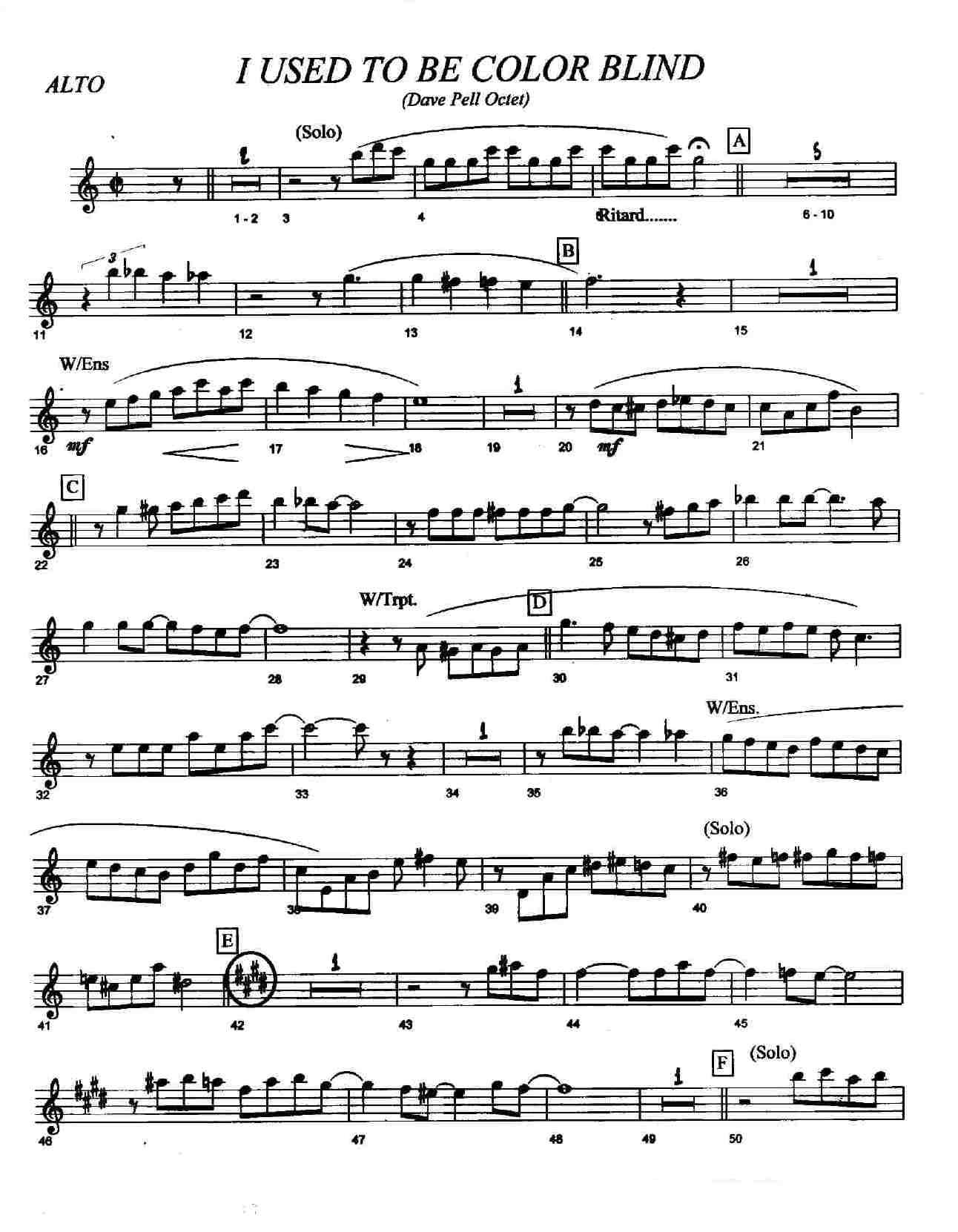
I Used To Be Color Blind - Dave Pell Octet - Ts,Bs,Trp,Trb+Rhythm (Dave Pell Octet)
Composed by Irving Berlin
- Ensemble: Small Ensemble
- Pages: 20
- Instruments (9): Alto Saxophone, Tenor Saxophone, Trumpet, Trombone, Baritone Saxophone, Piano, Bass, Drums, Guitar
- Difficulty: easy
- Content: Individual Parts
- Format: PDF Download (Instant)
- Price: $12.99
Irving Berlin’s timeless ballad, "I Used To Be Color Blind," emerges from the golden age of American songwriting, originally penned for the 1938 Fred Astaire and Ginger Rogers film *Carefree*. While not as frequently performed as some of Berlin's other standards, its elegant melody and poignant lyrics have long appealed to sophisticated interpreters. The Dave Pell Octet, a West Coast Cool Jazz ensemble that gained prominence in the 1950s, was renowned for its meticulously crafted arrangements and polished, understated sound. Their approach to standards often involved intricate voicings and a relaxed, swinging feel, making their interpretations highly influential in the small-group jazz landscape. This arrangement captures the essence of that era, offering a glimpse into the sophisticated, melodic jazz that defined the West Coast sound. This particular arrangement of "I Used To Be Color Blind" is presented as a medium-slow swing ballad, maintaining the original's tender sentiment while infusing it with a cool jazz sensibility. The key of F Major provides a warm, accessible foundation for the ensemble, allowing the melodic lines to unfold with clarity. The overall mood is one of gentle introspection and understated elegance, evoking the smoky, intimate atmosphere of a 1950s jazz club. The arrangement prioritizes melodic integrity and harmonic richness over virtuosic display, focusing instead on blend, balance, and a cohesive ensemble sound. This makes it an excellent choice for bands looking to explore the nuances of ballad playing and the specific aesthetic of the Dave Pell Octet. The arranger, though unknown, masterfully emulates the Dave Pell Octet's signature style. Expect beautifully crafted soli sections where the horn voices (Tenor Sax, Baritone Sax, Trumpet, Trombone) intertwine in close harmony, creating a rich, blended timbre. The melody is typically introduced by a lead horn, often the trumpet or tenor sax, supported by lush, moving counter-melodies and pads from the other instruments. There are designated solo sections, likely for a melodic instrument like the tenor saxophone or trumpet, providing opportunities for improvisation within the ballad's contemplative framework. The rhythm section (Piano, Bass, Drums) provides a steady, understated swing feel, driving the piece forward without overpowering the delicate horn voicings. Technical challenges lie primarily in achieving precise intonation, maintaining a consistent legato phrasing, and executing the nuanced dynamics required for a truly expressive ballad performance. The rewarding aspect is the opportunity to create a cohesive, beautiful sound that honors both Berlin's original composition and the classic West Coast Octet tradition. This arrangement is ideally suited for college-level jazz ensembles, advanced high school groups, or community bands with strong lead players and a commitment to musical subtlety. Professional groups will also appreciate its authentic nod to a classic era of jazz. The focus on blend, balance, and expressive phrasing makes it a valuable teaching tool for developing ensemble musicianship, while its inherent beauty ensures an engaging experience for both performers and audiences. Approach "I Used To Be Color Blind" with a relaxed, medium-slow swing feel, aiming for a consistent quarter note at approximately 80-90 BPM. The primary technical challenge lies in achieving seamless legato phrasing and precise intonation within the close voicings, especially in the horn soli sections. Encourage players to listen across the section for blend and balance, ensuring no single voice dominates. Dynamics are crucial; emphasize subtle crescendos and diminuendos to shape melodic lines and add emotional depth. The rhythm section should provide a light, supportive foundation, with the bass walking smoothly and the drums utilizing brushes or light stick work to maintain the ballad feel. Pay close attention to articulation markings, particularly sustained notes and gentle releases, to preserve the tender mood. Rehearsal should focus on sectionals to perfect intonation and blend, followed by full ensemble run-throughs to integrate dynamics and overall musicality. Q: What instruments are included in this arrangement? A: This arrangement is scored for a 7-instrument small ensemble: Tenor Saxophone, Baritone Saxophone, Trumpet, Trombone, Piano, Bass, and Drums. All parts are included. Q: What is the difficulty level of this arrangement? A: This arrangement is rated as Medium-Difficult. It requires proficient instrumentalists capable of executing nuanced phrasing, precise intonation, and expressive dynamics, making it suitable for advanced high school, college, or community jazz ensembles. Q: What is the musical style and historical context of this piece? A: This arrangement is in the West Coast Cool Jazz style, specifically emulating the sound of the Dave Pell Octet from the 1950s. The original song, "I Used To Be Color Blind," was composed by Irving Berlin for the 1938 film *Carefree*. Q: What makes this arrangement unique? A: This arrangement is unique for its authentic recreation of the Dave Pell Octet's signature sound, featuring intricate, close horn voicings, a sophisticated medium-slow swing feel, and a focus on melodic integrity and ensemble blend over overt virtuosity. Q: What is the typical performance duration and tempo of this arrangement? A: The typical performance duration for this arrangement is approximately 3-4 minutes. It should be performed at a medium-slow swing tempo, generally around 80-90 beats per minute.
Questions and answers
- What is included in the I Used To Be Color Blind - Dave Pell Octet - Ts,Bs,Trp,Trb+Rhythm (Dave Pell Octet) PDF?
- The verified current file contains individual parts across 20 pages.
- How many instruments or parts are listed for I Used To Be Color Blind - Dave Pell Octet - Ts,Bs,Trp,Trb+Rhythm (Dave Pell Octet)?
- The verified instrumentation list contains 9 entries for this Small Ensemble arrangement.
- Who is credited for I Used To Be Color Blind - Dave Pell Octet - Ts,Bs,Trp,Trb+Rhythm (Dave Pell Octet)?
- Composer: Irving Berlin.
- What difficulty is listed for I Used To Be Color Blind - Dave Pell Octet - Ts,Bs,Trp,Trb+Rhythm (Dave Pell Octet)?
- The verified difficulty level is easy.
- Can I preview I Used To Be Color Blind - Dave Pell Octet - Ts,Bs,Trp,Trb+Rhythm (Dave Pell Octet) before buying?
- Yes. The product page provides a preview generated from the current PDF file.
- How is I Used To Be Color Blind - Dave Pell Octet - Ts,Bs,Trp,Trb+Rhythm (Dave Pell Octet) delivered?
- After successful payment, the digital PDF is made available for download. The displayed price is $12.99.
Musicians Also Search For
I Used To Be Color Blind - Dave Pell Octet - Ts,Bs,Trp,Trb+Rhythm Irving Berlin sheet music • I Used To Be Color Blind - Dave Pell Octet - Ts,Bs,Trp,Trb+Rhythm Irving Berlin small ensemble arrangements • Irving Berlin small ensemble charts • I Used To Be Color Blind - Dave Pell Octet - Ts,Bs,Trp,Trb+Rhythm small ensemble arrangements • I Used To Be Color Blind - Dave Pell Octet - Ts,Bs,Trp,Trb+Rhythm small ensemble PDF download • I Used To Be Color Blind - Dave Pell Octet - Ts,Bs,Trp,Trb+Rhythm jazz sheet music • small ensemble sheet music download • I Used To Be Color Blind - Dave Pell Octet - Ts,Bs,Trp,Trb+Rhythm individual parts download • I Used To Be Color Blind - Dave Pell Octet - Ts,Bs,Trp,Trb+Rhythm sheet music PDF • buy I Used To Be Color Blind - Dave Pell Octet - Ts,Bs,Trp,Trb+Rhythm sheet music • download I Used To Be Color Blind - Dave Pell Octet - Ts,Bs,Trp,Trb+Rhythm PDF • I Used To Be Color Blind - Dave Pell Octet - Ts,Bs,Trp,Trb+Rhythm jazz charts • I Used To Be Color Blind - Dave Pell Octet - Ts,Bs,Trp,Trb+Rhythm printable sheet music • small ensemble repertoire PDF