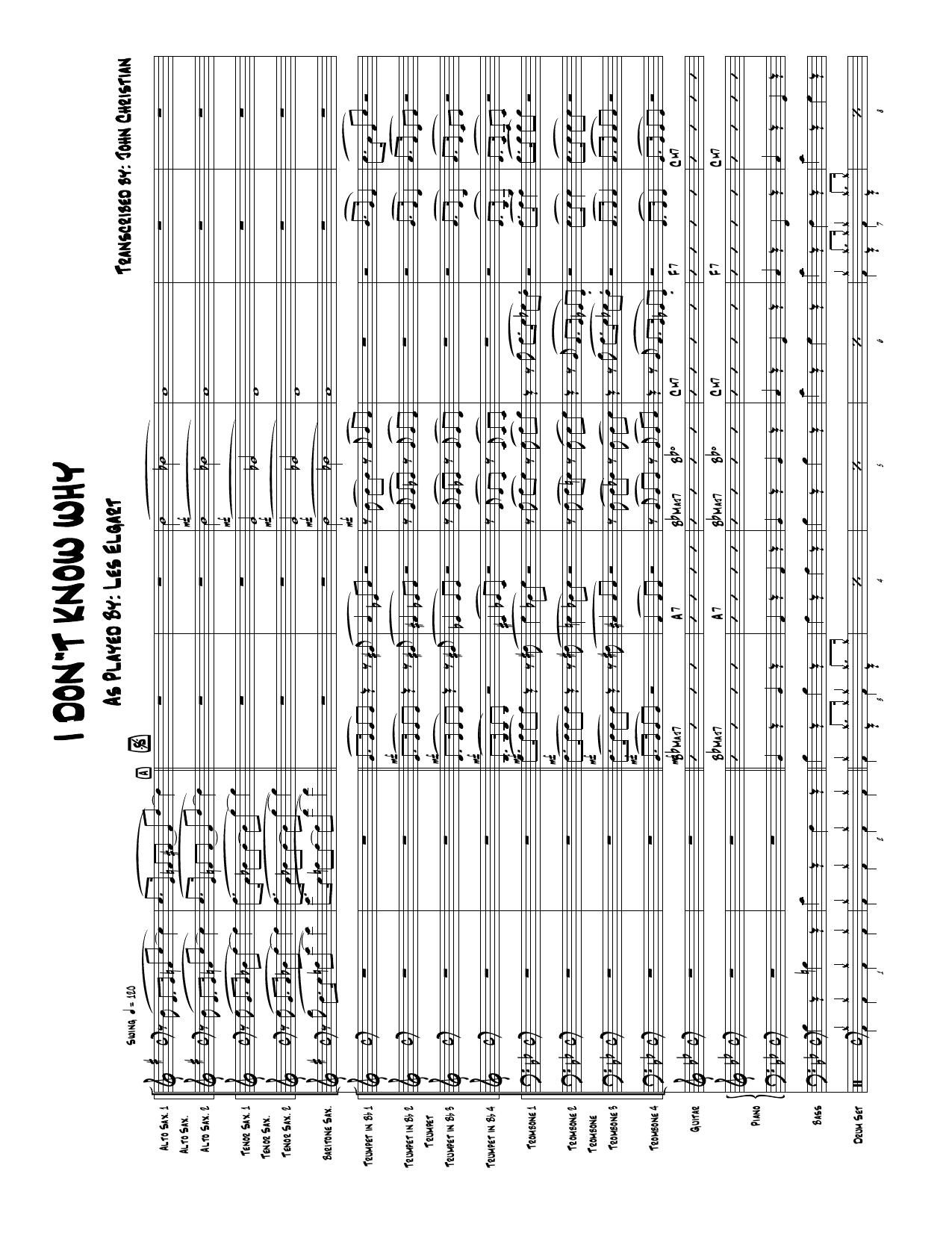
I Don't Know Why (J.Christian) sheet music preview

I Don't Know Why (J.Christian)

Composed by Mitch Miller, Ben Raleigh

Arranged by J.Christian

  • Ensemble: Big Band
  • Pages: 22
  • Instruments (17): Alto Saxophone 1, Alto Saxophone 2, Tenor Saxophone 1, Tenor Saxophone 2, Baritone Saxophone, Trumpet 1, Trumpet 2, Trumpet 3, Trumpet 4, Trombone 1, Trombone 2, Trombone 3, Trombone 4, Guitar, Piano, Bass, Drum Set
  • Difficulty: medium
  • Content: Individual Parts
  • Format: PDF Download (Instant)
  • Price: $24.99

Originating from the mid-century intersection of traditional pop craftsmanship and burgeoning jazz idioms, "I Don't Know Why," composed by Mitch Miller and Ben Raleigh, channels the sophisticated melancholia characteristic of the late Great American Songbook era. While initially captured in various vocal iterations that defined post-war radio programming, the underlying harmonic framework of the composition contains an inherent plasticity that invites adventurous jazz interpretation. The tune bridges the gap between structured popular song forms and the expressive freedom of mid-century modern jazz, making it a timeless vehicle for ensembles looking to explore nuanced dynamic shading and lyrical phrasing within a traditional framework. Constructed around a comfortable medium-swing groove, the arrangement unfolds with an engaging warmth, balancing buoyant rhythmic momentum with moments of introspection. The emotional palette shifts effortlessly from playful, driving syncopation to lush, cinematic vulnerability. The foundational harmony is enriched through expanded extensions, yielding a sophisticated sonic landscape that evokes the smoky ambiance of an intimate jazz club while retaining the expansive punch characteristic of a full-scale horn section. Arranger J.Christian approaches the score with a meticulous ear for coloristic balance, capitalizing on the full 17-instrument big band palette. Rather than relying on predictable tutti blocks, the arrangement features intricate counterpoint, cleverly interwoven sax solis, and dynamic conversational interplay between the brass and reed sections. Voicings utilize upper-structure triads and modern chromatic passing tones that revitalize the familiar melody without losing its signature melodic identity. A carefully constructed shout chorus serves as the structural climax, building tension through clever rhythmic displacement before opening cleanly into a triumphant final release. Melodic duties are distributed fluidly across the ensemble, giving both the woodwinds and brass an opportunity to shape the core themes. Dedicated solo space is integrated naturally into the chart's architecture, allowing featured performers room for improvisational storytelling. While rhythmically accessible, the chart demands precise articulation, acute intonation in the dense chordal clusters, and stylistic cohesion, particularly during transitional tempo-feel shifts. Advanced high school, collegiate, and professional community big bands will find this arrangement an exceptionally rewarding addition to their repertoire, as it challenges players to elevate their ensemble listening skills while offering an undeniable crowd-pleasing aesthetic. Navigating this arrangement successfully relies heavily on achieving a unified, relaxed medium-swing feel. Conductors should ensure the underlying eighth-note pulse remains horizontal rather than vertical, keeping the quarter notes buoyant and avoiding any tendency to rush the tempo. Key technical challenges involve the execution of tightly knit chromatic voicings in the saxophones and upper brass. Intonation on altered dominants requires careful sectional tuning; spend dedicated rehearsal time isolating chord fragments before running them in context. The brass section should approach punchy dynamic hits with a warm, rounded tone rather than a harsh edge, ensuring that accents support the forward motion of the swing groove rather than clipping the rhythm. Pay close attention to dynamic markings written below the mezzo-forte threshold, as the chart's emotional impact stems largely from its contrast between whisper-quiet comping and full-ensemble swells. Section leaders should coordinate articulation styles—specifically the length of accented notes and the placement of upbeat staccatos—to guarantee crisp execution across the entire big band. Q: What instruments and parts are included in this arrangement? A: This chart is scored for a standard 17-instrument big band lineup, including 2 alto saxophones, 2 tenor saxophones, 1 baritone saxophone, 4 trumpets, 4 trombones, guitar, piano, bass, and drums, and is accompanied by a full conductor score. Q: What is the difficulty level of this chart? A: It is designated as a medium-level arrangement, making it well-suited for proficient high school ensembles, collegiate jazz bands, and professional community big bands looking for engaging, sophisticated repertoire. Q: What is the historical background and musical style of the piece? A: The composition was originally written by Mitch Miller and Ben Raleigh during the classic pop era, and this big band adaptation translates its timeless melodic appeal into a sophisticated, swinging jazz idiom. Q: What makes J.Christian’s arrangement unique? A: J.Christian elevates the familiar melody through imaginative section interplay, modern extended harmonic voicings, cleverly integrated sax solis, and a dynamically expressive shout chorus that avoids predictable arranging clichés. Q: What is the performance duration and tempo feel? A: The arrangement is built around a relaxed, driving medium-swing groove and spans 22 pages of comprehensive score and part materials, translating to a standard festival or concert performance length of approximately 3 to 4 minutes.

Questions and answers

What is included in the I Don't Know Why (J.Christian) PDF?
The verified current file contains a conductor score and individual parts across 22 pages.
How many instruments or parts are listed for I Don't Know Why (J.Christian)?
The verified instrumentation list contains 17 entries for this Big Band arrangement.
Who is credited for I Don't Know Why (J.Christian)?
Composer: Mitch Miller, Ben Raleigh. Arranger: J.Christian.
What difficulty is listed for I Don't Know Why (J.Christian)?
The verified difficulty level is medium.
Can I preview I Don't Know Why (J.Christian) before buying?
Yes. The product page provides a preview generated from the current PDF file.
How is I Don't Know Why (J.Christian) delivered?
After successful payment, the digital PDF is made available for download. The displayed price is $24.99.

Musicians Also Search For

I Don't Know Why J.Christian PDFI Don't Know Why J.Christian sheet musicI Don't Know Why arranged by J.ChristianJ.Christian big band chartsJ.Christian jazz arrangements PDFI Don't Know Why Mitch Miller, Ben Raleigh sheet musicI Don't Know Why Mitch Miller, Ben Raleigh big band arrangementsMitch Miller, Ben Raleigh big band chartsI Don't Know Why big band arrangementsI Don't Know Why big band PDF downloadI Don't Know Why jazz sheet musicbig band sheet music downloadI Don't Know Why conductor score PDFI Don't Know Why individual parts downloadI Don't Know Why sheet music PDFbuy I Don't Know Why sheet musicdownload I Don't Know Why PDFI Don't Know Why jazz chartsbest J.Christian big band arrangementsMitch Miller, Ben Raleigh arranged by J.ChristianI Don't Know Why printable sheet musicbig band repertoire PDF

All arrangements by J.Christian All Mitch Miller, Ben Raleigh sheet music