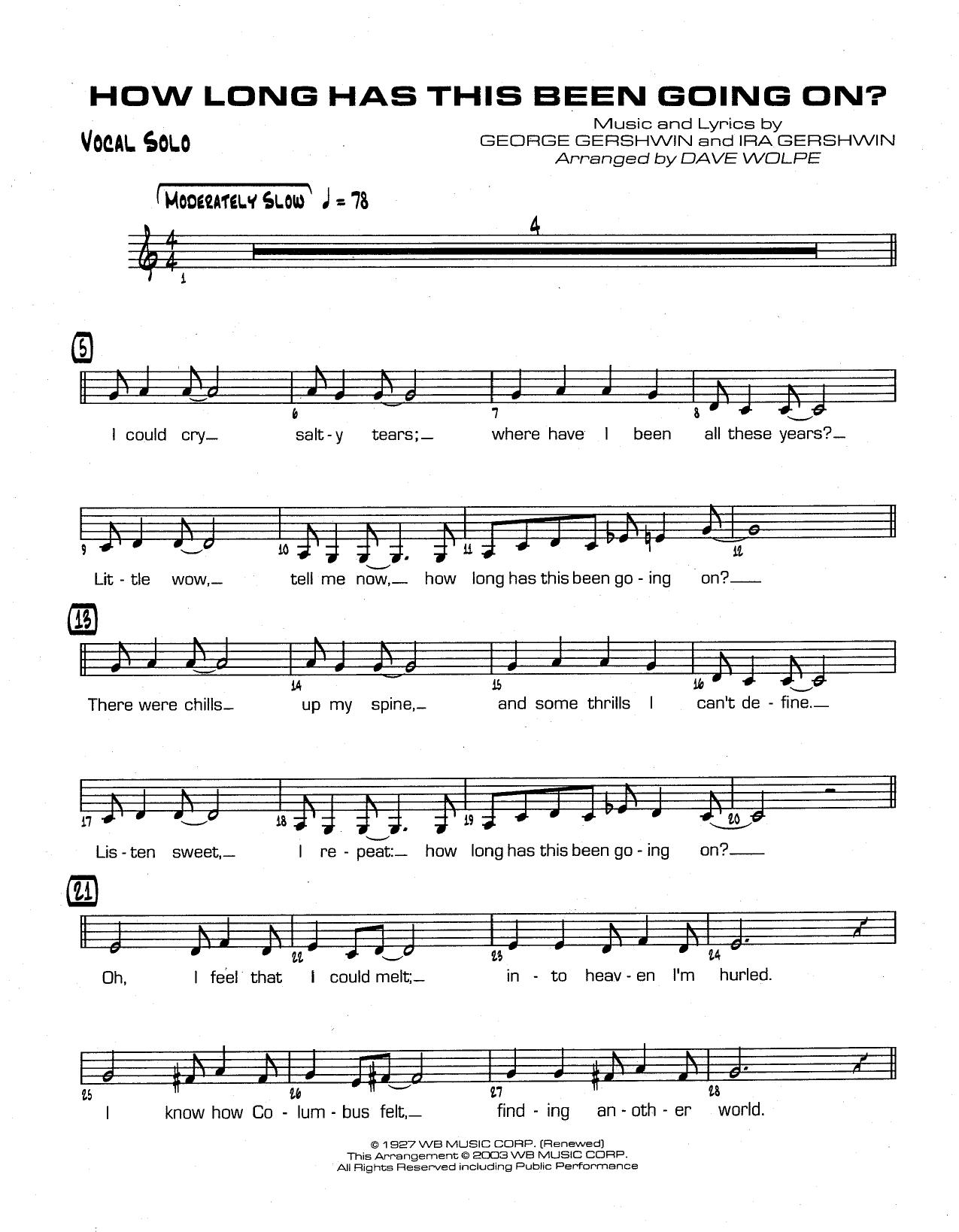
How Long Has This Been Going On (D.Wolpe) sheet music preview

How Long Has This Been Going On (D.Wolpe)

Composed by George Gershwin

Arranged by Dave Wolpe

  • Ensemble: Big Band
  • Pages: 40
  • Instruments (19): Vocal Solo, Solo Bb Tenor Saxophone (Substitute for Vocal), 1st Eb Alto Saxophone, 2nd Eb Alto Saxophone, 1st Bb Tenor Saxophone, 2nd Bb Tenor Saxophone, Eb Baritone Saxophone, 1st Bb Trumpet, 2nd Bb Trumpet, 3rd Bb Trumpet, 4th Bb Trumpet, 1st Trombone, 2nd Trombone, 3rd Trombone, Bass Trombone, Guitar, Bass, Drums, Piano
  • Difficulty: medium
  • Content: Individual Parts
  • Format: PDF Download (Instant)
  • Price: $24.99

George and Ira Gershwin originally penned "How Long Has This Been Going On" for the 1928 musical *Rosalie*, though it was cut before opening and subsequently repurposed for the 1929 show *Funny Face*, quickly ascending to the pantheon of the Great American Songbook. Immortalized by vocal royalty like Billie Holiday, Ella Fitzgerald, and Sarah Vaughan, this quintessential jazz standard embodies the sophisticated melancholy and harmonic richness of the golden age of American theater and jazz. The composition thrives on its wistful, lingering melody and a sophisticated chord progression that naturally invites expressive jazz interpretation, making it a timeless vehicle for vocalists working within a traditional big band framework. Dave Wolpe’s masterful big band arrangement frames the iconic vocal line in a lush, swinging context that balances intimacy with classic 18-piece ensemble power. Set in a relaxed, flowing medium swing feel (approx. 116 BPM), the chart opens with a moody, atmospheric intro that highlights the rhythm section before the vocalist enters with the principal theme. The mood is simultaneously nostalgic and gently optimistic, evoking the smoky ambiance of a classic mid-century jazz club. Wolpe avoids over-complicating the form, instead allowing the inherent emotional weight of Gershwin’s harmonies to breathe through tasteful, warm brass voicings and subtle saxophone countermelodies that complement rather than crowd the vocal delivery. As the arrangement unfolds, Wolpe employs classic section writing, utilizing rich saxophone solis and tasteful dynamic contrast to build subtle tension beneath the vocal line. The instrumental bridge features a well-crafted space for a featured improvised solo—ideally suited for the lead tenor saxophone or piano—allowing a soloist to stretch out over the traditional form before smoothly returning to the vocal vamp. The background figures behind the singer are uncluttered, emphasizing dynamic shading, subtle use of cup and basket mutes in the brass, and a smooth, legato phrasing style that is characteristic of Wolpe's writing for vocalists. The chart concludes with a tasteful, restrained diminuendo that resolves peacefully, leaving a lasting emotional impression on the audience. Advanced high school ensembles, collegiate jazz orchestras, and professional community big bands will find this arrangement remarkably rewarding to rehearse and perform. While the technical demands on individual players are moderate—avoiding extreme ranges or breakneck tempos—the chart places a high premium on ensemble blend, intonation, stylistic cohesion, and the delicate art of accompanying a live vocalist. It serves as an ideal centerpiece for a festival performance or a classic vocal jazz set, offering a masterclass in taste, phrasing, and ensemble restraint. Balancing the dynamic relationship between the vocalist and the 18-piece ensemble is the primary technical challenge of this arrangement. Conductors must ensure the big band maintains a transparent texture, particularly during the head and vocal verses; horns should never exceed a mezzo-piano dynamic when supporting the voice. The tempo should remain a steady, conversational medium swing (around quarter note = 116), avoiding any tendency to rush the backbeat. Rehearsal should focus heavily on unified articulation within the saxophone and brass sections, ensuring that long tones have a warm, vocal-like quality and that swing eighth notes are evenly weighted with a relaxed, lazy feel. Brass players should utilize cup or straight mutes where indicated to achieve the desired darker, intimate color palette. Pay close attention to the subtle background figures behind the vocal bridge, ensuring dynamic swells do not mask the lyrics. Q: What instrumentation and parts are included in this arrangement? A: This chart is scored for a standard 18-instrument big band plus a vocal soloist, including 5 saxophones (Alto 1, Alto 2, Tenor 1, Tenor 2, Baritone), 4 trumpets, 4 trombones, guitar, piano, bass, and drums, totaling 40 pages of music. Q: What is the difficulty level of this Dave Wolpe chart? A: This arrangement is graded as medium, making it highly accessible for advanced high school bands, college ensembles, and professional community jazz orchestras with a capable vocalist. Q: What is the historical style and background of this piece? A: The composition is a legendary George and Ira Gershwin standard from 1928, arranged here in a classic, vocal-centric medium swing style that echoes the golden era of big band accompaniment. Q: What makes this specific arrangement by Dave Wolpe unique? A: Wolpe expertly balances lush, traditional Gershwin harmonies with uncluttered, supportive background figures that elevate the vocalist without ever overpowering them, featuring tasteful dynamic shifts and a spotlight solo. Q: What is the performance duration and recommended tempo? A: The arrangement is designed to be performed at a relaxed medium swing tempo of approximately 116 beats per minute, resulting in a performance duration of roughly 3 to 4 minutes depending on the length of the improvised solo.

Questions and answers

What is included in the How Long Has This Been Going On (D.Wolpe) PDF?
The verified current file contains individual parts across 40 pages.
How many instruments or parts are listed for How Long Has This Been Going On (D.Wolpe)?
The verified instrumentation list contains 19 entries for this Big Band arrangement.
Who is credited for How Long Has This Been Going On (D.Wolpe)?
Composer: George Gershwin. Arranger: Dave Wolpe.
What difficulty is listed for How Long Has This Been Going On (D.Wolpe)?
The verified difficulty level is medium.
Can I preview How Long Has This Been Going On (D.Wolpe) before buying?
Yes. The product page provides a preview generated from the current PDF file.
How is How Long Has This Been Going On (D.Wolpe) delivered?
After successful payment, the digital PDF is made available for download. The displayed price is $24.99.

Musicians Also Search For

How Long Has This Been Going On Dave Wolpe PDFHow Long Has This Been Going On Dave Wolpe sheet musicHow Long Has This Been Going On arranged by Dave WolpeDave Wolpe big band chartsDave Wolpe jazz arrangements PDFHow Long Has This Been Going On George Gershwin sheet musicHow Long Has This Been Going On George Gershwin big band arrangementsGeorge Gershwin big band chartsHow Long Has This Been Going On big band arrangementsHow Long Has This Been Going On big band PDF downloadHow Long Has This Been Going On jazz sheet musicbig band sheet music downloadHow Long Has This Been Going On individual parts downloadHow Long Has This Been Going On sheet music PDFbuy How Long Has This Been Going On sheet musicdownload How Long Has This Been Going On PDFHow Long Has This Been Going On jazz chartsbest Dave Wolpe big band arrangementsGeorge Gershwin arranged by Dave WolpeHow Long Has This Been Going On printable sheet musicbig band repertoire PDF

All arrangements by Dave Wolpe All George Gershwin sheet music