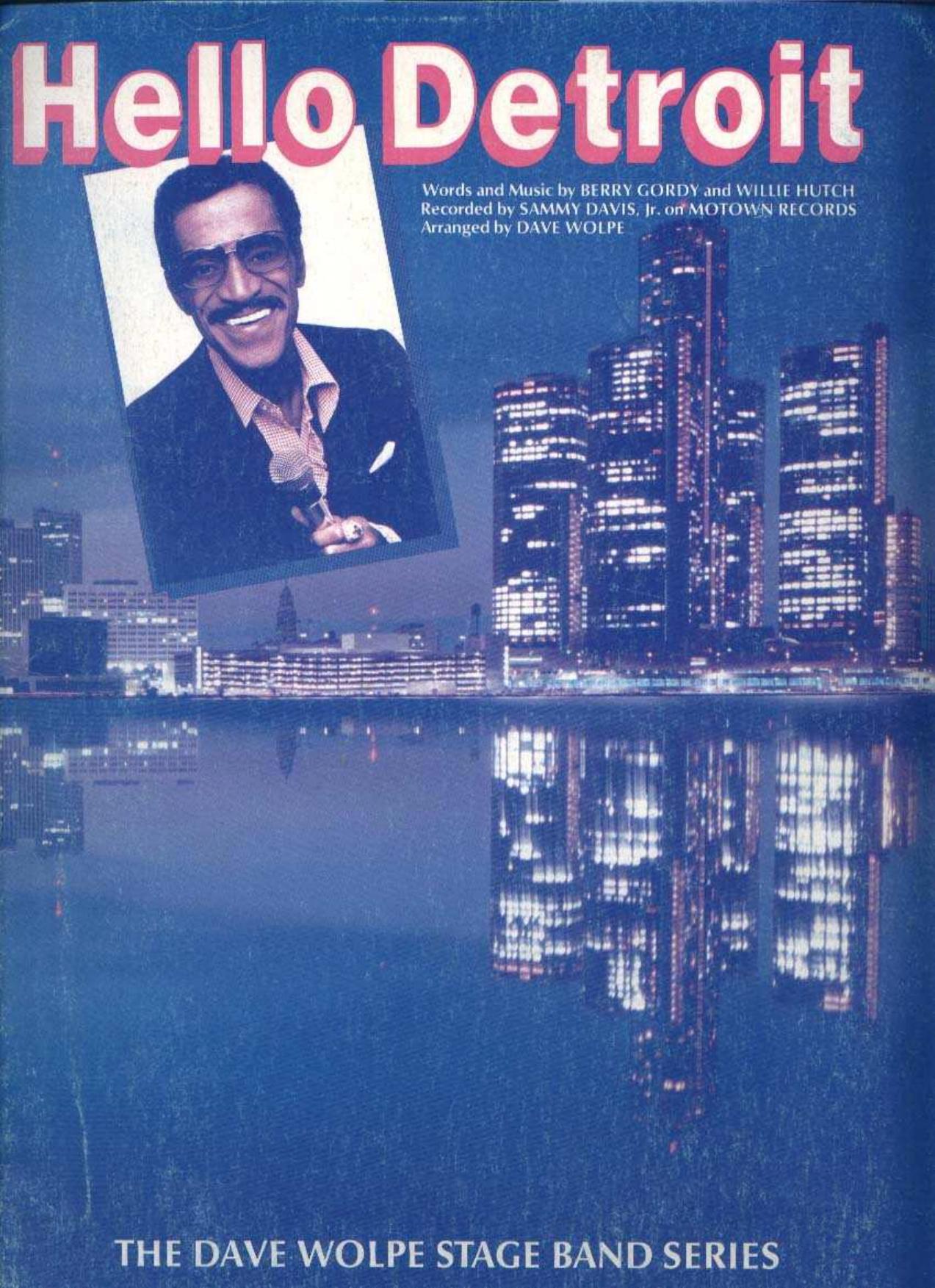
Hello Detroit (D.Wolpe) sheet music preview

Hello Detroit (D.Wolpe)

Composed by Dave Wolpe

Arranged by Dave Wolpe

  • Ensemble: Big Band
  • Pages: 55
  • Instruments (17): 1st Eb Alto Saxophone, 2nd Eb Alto Saxophone, 1st Bb Tenor Saxophone, 2nd Bb Tenor Saxophone, Eb Baritone Saxophone, 1st Bb Trumpet, 2nd Bb Trumpet, 3rd Bb Trumpet, 4th Bb Trumpet, 1st Trombone, 2nd Trombone, 3rd Trombone, Bass Trombone, Guitar, Piano, Bass, Drums
  • Difficulty: advanced
  • Content: Individual Parts
  • Format: PDF Download (Instant)
  • Price: $24.99

Motor City energy pulses through every measure of Dave Wolpe’s dynamic big band chart, *Hello Detroit*. Written as a swinging, upbeat tribute to the cultural and industrial heartbeat of Detroit, this original composition captures the optimism and swagger of mid-century urban America while maintaining the sophisticated harmonic vocabulary of contemporary mainstream jazz. While not tied to a specific historical recording by a vintage Count Basie or Buddy Rich orchestra, the piece consciously channels the high-octane excitement of classic 1960s and 70s studio big band albums, blending traditional swinging drive with modern brass voicings. It stands out as a brilliant showpiece that bridges traditional big band swing with accessible, crowd-pleasing modern jazz composition. Driven by an infectious, medium-up swing groove in 4/4 time, *Hello Detroit* opens with an attention-grabbing brass fanfare that immediately establishes an atmosphere of bustling city life and joyful momentum. The arrangement is anchored by a persistent walking bassline and crisp ride cymbal pulse, creating a buoyant foundation that propels the ensemble forward. Wolpe employs rich, expanded tertian and quartal harmonies in the saxophone and brass sections, utilizing dense cluster voicings during transitional interludes to create a lush, modern sonic wall of sound. The emotional arc moves effortlessly from exuberant, brass-heavy declarations to sleek, understated rhythmic coolness during the horn background figures. Wolpe’s masterclass arrangement style shines brightest in the meticulously crafted saxophone soli and the high-impact shout chorus that sets up the final climax. The melody is introduced cleanly by the lead alto saxophone and first trumpet before being tossed organically across the ensemble, ensuring that sectional interplay remains engaging throughout. Brass writing features smart use of dynamic contrast, building natural tension through sequential modulations and escalating rhythmic figures. The chart provides open solo space—typically designated for tenor saxophone and piano—backed by punchy, supportive horn background figures that demand crisp articulation and immaculate dynamic control from the rhythm section. Advanced high school, collegiate, and community big bands will find *Hello Detroit* to be an ideal showcase piece that balances technical accessibility with sophisticated musical rewards. While the brass ranges remain manageable for competent high school players (first trumpet reaching a sustained high A), the primary performance challenge lies in maintaining a razor-sharp, driving swing feel at a brisk tempo without rushing. The rhythm section—particularly the drummer—must possess a steady internal clock and the finesse to trade dynamically between supportive comping and high-energy punctuation. It is a guaranteed concert closer that leaves both performers and audiences energized. Executing *Hello Detroit* successfully requires strict attention to articulation, balance, and tempo stability. The primary technical hurdle involves maintaining a relaxed, driving medium-up swing feel without letting the tempo drag or push, particularly during the transition from ensemble solis to the rhythm section comping. Conductors should ensure the foundational rhythm section—especially the drummer on the ride cymbal and hi-hat on beats two and four—locks in tightly with the walking bassline before the horns enter. Articulation must be short and punchy on unaccented eighth notes, utilizing a traditional jazz "doo-dah" tongue style rather than heavy staccato. Brass players should approach high-register passages with a blended, warm tone rather than forced volume, particularly during the dense chordal climaxes leading into the shout chorus. Make ample use of dynamic terracing: when the ensemble drops to a whisper behind the featured soloists, the horns must pull back immediately to dynamic pianissimo to let the soloist breathe. Falls, doits, and ghost notes should be executed cleanly and uniformly across sections to preserve the polished studio-orchestra aesthetic. Q: What specific instruments and parts are included in this publication? A: This 55-page publication includes a full conductor score and individual parts for the standard 17-instrument big band instrumentation: 2 alto saxophones, 2 tenor saxophones, baritone saxophone, 4 trumpets, 4 trombones, guitar, piano, bass, and drums. Q: What is the overall difficulty level of this arrangement? A: This chart is graded as medium-advanced (Grade 4), making it well-suited for advanced high school ensembles, college jazz bands, and skilled community big bands looking for a solid challenge. Q: What is the musical style and historical context of Hello Detroit? A: Composed and arranged by Dave Wolpe, this piece is an original medium-up swing chart in the style of classic studio and big band tribute recordings, celebrating the vibrant energy of Detroit with modern jazz harmonies. Q: What makes Dave Wolpe's arrangement unique? A: Wolpe's distinct approach features rich, expanded chord voicings, a tightly woven saxophone soli, and a powerful, dynamically escalating shout chorus that provides exceptional musical contrast and audience appeal. Q: What is the performance duration and recommended tempo for this piece? A: While performance time varies slightly based on the length of improvised solos, the piece typically runs around 4 to 5 minutes at a recommended medium-up swing tempo of approximately 168 to 176 BPM.

Questions and answers

What is included in the Hello Detroit (D.Wolpe) PDF?
The verified current file contains individual parts across 55 pages.
How many instruments or parts are listed for Hello Detroit (D.Wolpe)?
The verified instrumentation list contains 17 entries for this Big Band arrangement.
Who is credited for Hello Detroit (D.Wolpe)?
Composer: Dave Wolpe. Arranger: Dave Wolpe.
What difficulty is listed for Hello Detroit (D.Wolpe)?
The verified difficulty level is advanced.
Can I preview Hello Detroit (D.Wolpe) before buying?
Yes. The product page provides a preview generated from the current PDF file.
How is Hello Detroit (D.Wolpe) delivered?
After successful payment, the digital PDF is made available for download. The displayed price is $24.99.

Musicians Also Search For

Hello Detroit Dave Wolpe PDFHello Detroit Dave Wolpe sheet musicHello Detroit arranged by Dave WolpeDave Wolpe big band chartsDave Wolpe jazz arrangements PDFHello Detroit Dave Wolpe big band arrangementsHello Detroit big band arrangementsHello Detroit big band PDF downloadHello Detroit jazz sheet musicbig band sheet music downloadHello Detroit individual parts downloadHello Detroit sheet music PDFbuy Hello Detroit sheet musicdownload Hello Detroit PDFHello Detroit jazz chartsbest Dave Wolpe big band arrangementsHello Detroit printable sheet musicbig band repertoire PDF

All arrangements by Dave Wolpe All Dave Wolpe sheet music