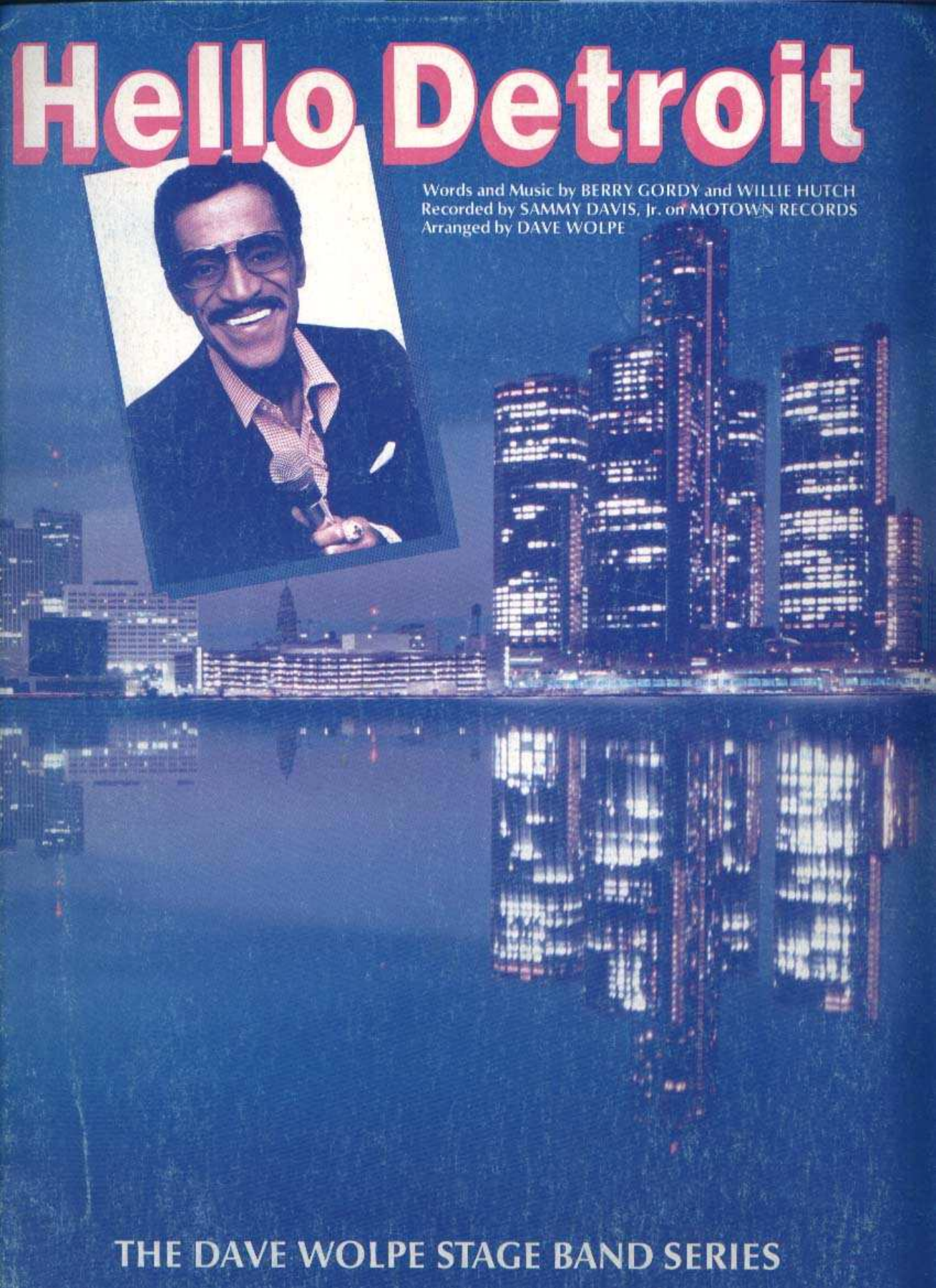
Hello Detroit (D.Wolpe) sheet music preview

Hello Detroit (D.Wolpe)

Composed by Dave Wolpe

Arranged by Dave Wolpe

  • Ensemble: Big Band
  • Style: Jazz Standard
  • Pages: 55
  • Instruments (17): 1st Eb Alto Saxophone, 2nd Eb Alto Saxophone, 1st Bb Tenor Saxophone, 2nd Bb Tenor Saxophone, Eb Baritone Saxophone, 1st Bb Trumpet, 2nd Bb Trumpet, 3rd Bb Trumpet, 4th Bb Trumpet, 1st Trombone, 2nd Trombone, 3rd Trombone, Bass Trombone, Guitar, Piano, Bass, Drums
  • Difficulty: advanced
  • Content: Individual Parts
  • Format: PDF Download (Instant)
  • Price: $24.99

Dave Wolpe's "Hello Detroit" stands as a vibrant, original composition that captures the essence of the contemporary big band sound, firmly rooted in the tradition of hard-swinging jazz. While not a historical "standard" in the traditional sense, Wolpe's prolific output and consistent quality have established his works as modern staples in the big band repertoire, frequently performed by educational and professional ensembles alike. This particular piece embodies the energetic, sophisticated style characteristic of jazz from the latter half of the 20th century, drawing inspiration from the driving rhythms and intricate harmonies popularized by iconic arrangers like Sammy Nestico and Thad Jones. It's a testament to the enduring appeal of well-crafted, accessible big band charts that showcase both individual virtuosity and collective power. Musically, "Hello Detroit" is an up-tempo swing chart, typically performed in the range of 180-200 beats per minute, establishing an immediate, infectious groove. The piece is primarily in a bright major key, fostering an optimistic and exhilarating mood. Its character is defined by a propulsive rhythm section, tight horn voicings, and dynamic contrasts that build excitement throughout. Listeners will be struck by its crisp articulation and the sheer joy it conveys, evoking the bustling energy of a vibrant city. The piece is designed to be a showstopper, a high-energy opener or closer that leaves a lasting impression of sophisticated swing and musical prowess. Dave Wolpe's distinctive arranging approach is immediately evident in "Hello Detroit." He masterfully employs his signature techniques, including rich, often four-part, horn voicings that provide a full and resonant sound without sacrificing clarity. The arrangement features compelling soli sections for the saxophones and brass, showcasing the sections' collective precision and blend. A hallmark of Wolpe's writing is his ability to craft powerful shout choruses that are both harmonically interesting and incredibly impactful, driving the piece to thrilling climaxes. While the piece maintains a consistent swing feel, Wolpe's subtle harmonic shifts and dynamic layering prevent it from becoming predictable, offering constant engagement for both performers and audience. Performance of "Hello Detroit" is both challenging and immensely rewarding. The melody is initially presented by the saxophone section, often doubled or punctuated by the brass, before being taken up by the full ensemble. There are ample opportunities for featured solos, typically for tenor saxophone and trumpet, allowing individual musicians to shine within the ensemble context. Technical challenges include precise articulation at a brisk tempo, maintaining rhythmic integrity across the sections, and achieving the necessary dynamic contrasts. The reward lies in the collective experience of executing a tight, swinging chart that genuinely excites. This arrangement is ideally suited for college-level big bands, advanced high school ensembles, and community jazz orchestras looking to tackle a professional-sounding, energetic piece. Its well-structured form and clear notation make it an excellent vehicle for developing ensemble precision and stylistic authenticity. "Hello Detroit" demands a precise, driving up-tempo swing feel, ideally between 180-200 BPM. The primary technical challenge lies in maintaining crisp articulation and rhythmic accuracy at this brisk pace, particularly in the saxophone soli sections and brass figures. Conductors should emphasize a light, buoyant swing eighth-note feel from the rhythm section, avoiding a heavy or rushed pulse. Brass players should focus on clear attacks and releases, utilizing short, accented notes to propel the ensemble. Saxophones need to prioritize blend and intonation during the intricate soli passages. Rehearsal tips include isolating challenging rhythmic figures and soli sections at a slower tempo before gradually increasing to the target tempo. Encourage dynamic contrasts, especially in the shout choruses, to build excitement. No special techniques like plunger mutes or falls are explicitly notated, but stylistic inflections common to big band jazz can be encouraged where appropriate. Q: What instruments and parts are included in the "Hello Detroit (D.Wolpe)" arrangement? A: This arrangement includes parts for 18 instruments: Conductor, Alto Saxophone 1, Alto Saxophone 2, Tenor Saxophone 1, Tenor Saxophone 2, Baritone Saxophone, Trumpet 1, Trumpet 2, Trumpet 3, Trumpet 4, Trombone 1, Trombone 2, Trombone 3, Bass Trombone, Guitar, Piano, Bass, and Drums. Q: What is the difficulty level of "Hello Detroit (D.Wolpe)"? A: "Hello Detroit" is considered an advanced intermediate to advanced level arrangement. It is well-suited for college-level big bands, advanced high school ensembles, and community jazz orchestras due to its up-tempo swing, intricate soli sections, and demands for precise articulation and dynamic control. Q: What is the musical style and historical context of this arrangement? A: "Hello Detroit" is an original composition by Dave Wolpe, written in the contemporary big band jazz style. It embodies the energetic, hard-swinging sound prevalent in big band music from the latter half of the 20th century, reflecting influences from iconic arrangers like Sammy Nestico and Thad Jones. Q: What makes Dave Wolpe's arrangement of "Hello Detroit" unique? A: Wolpe's arrangement is characterized by his signature rich horn voicings, compelling saxophone and brass soli sections, and powerful, harmonically sophisticated shout choruses. It showcases his ability to craft an exciting, dynamic, and accessible big band chart that highlights both individual soloists and collective ensemble precision. Q: What is the recommended tempo and approximate duration for "Hello Detroit"? A: "Hello Detroit" is an up-tempo swing chart, with a recommended tempo range of 180-200 beats per minute. The approximate duration will vary slightly depending on the tempo and length of improvised solos, but typically falls between 4 to 5 minutes.

Questions and answers

What is included in the Hello Detroit (D.Wolpe) PDF?
The verified current file contains individual parts across 55 pages.
How many instruments or parts are listed for Hello Detroit (D.Wolpe)?
The verified instrumentation list contains 17 entries for this Big Band arrangement.
Who is credited for Hello Detroit (D.Wolpe)?
Composer: Dave Wolpe. Arranger: Dave Wolpe.
What difficulty is listed for Hello Detroit (D.Wolpe)?
The verified difficulty level is advanced.
What style is listed for Hello Detroit (D.Wolpe)?
The catalog lists the style as Jazz Standard.
Can I preview Hello Detroit (D.Wolpe) before buying?
Yes. The product page provides a preview generated from the current PDF file.
How is Hello Detroit (D.Wolpe) delivered?
After successful payment, the digital PDF is made available for download. The displayed price is $24.99.

Musicians Also Search For

Hello Detroit Dave Wolpe PDFHello Detroit Dave Wolpe sheet musicHello Detroit arranged by Dave WolpeDave Wolpe big band chartsDave Wolpe jazz arrangements PDFHello Detroit Dave Wolpe big band arrangementsHello Detroit big band arrangementsHello Detroit big band PDF downloadHello Detroit jazz sheet musicbig band sheet music downloadHello Detroit individual parts downloadHello Detroit sheet music PDFHello Detroit Jazz Standard chartsJazz Standard big band arrangementsbuy Hello Detroit sheet musicdownload Hello Detroit PDFHello Detroit jazz chartsbest Dave Wolpe big band arrangementsHello Detroit printable sheet musicbig band repertoire PDF

All arrangements by Dave Wolpe All Dave Wolpe sheet music