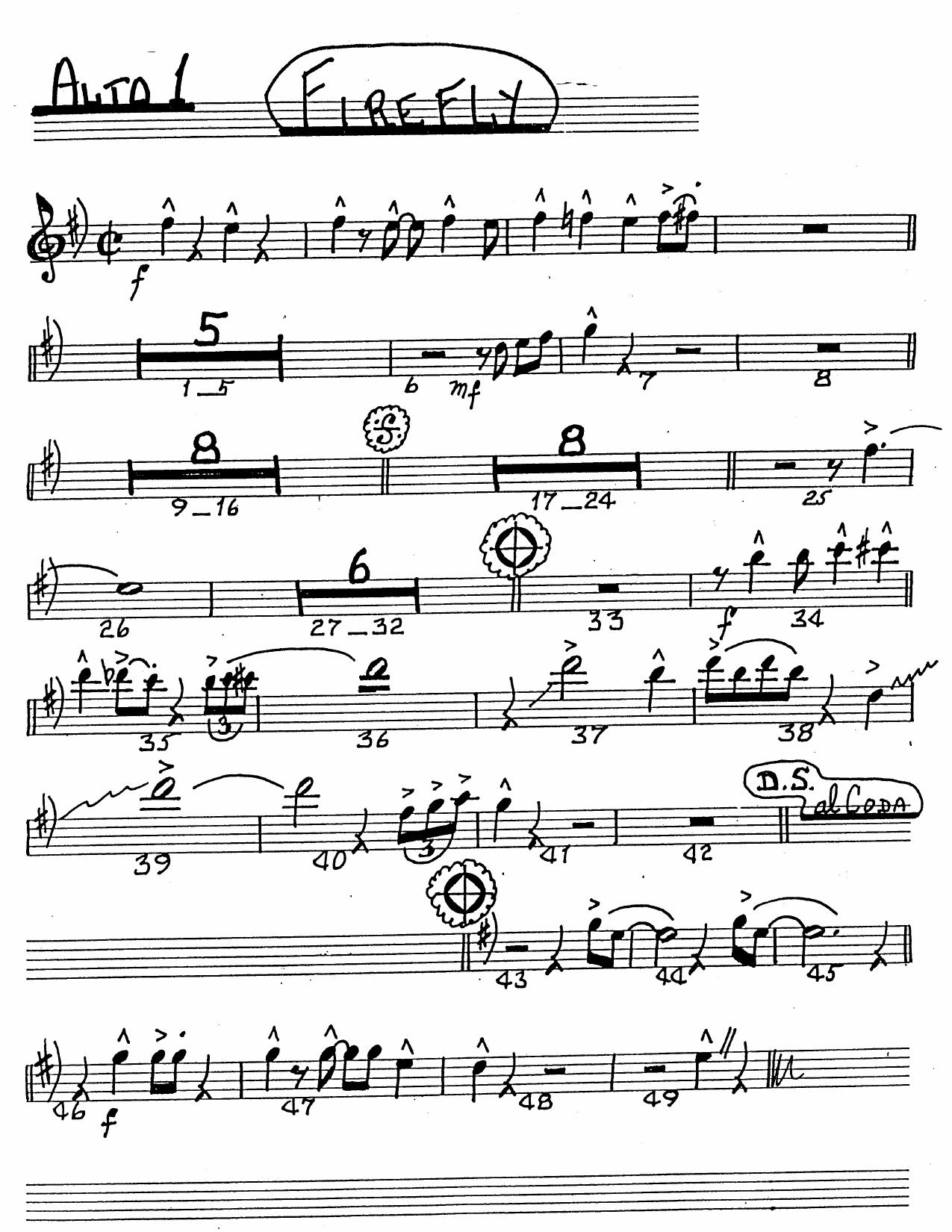
Firefly sheet music preview

Firefly

Composed by Traditional

Arranged by Unknown

  • Ensemble: Big Band
  • Style: Jazz Standard
  • Pages: 17
  • Instruments (16): Alto 1, Alto 2, Tenor 1, Tenor 2, Baritone, Trpt. 1, Trpt. 2, Trpt. 3, Trpt. 4, Tromb. 1, Tromb. 2, Tromb. 3, Bass, Guitar, Drums, Keyboard
  • Difficulty: easy
  • Content: Individual Parts
  • Format: PDF Download (Instant)
  • Price: $24.99

"Firefly" emerges from the rich tapestry of the jazz standard repertoire, a piece whose enduring melody and harmonic sophistication have captivated audiences and musicians for decades. While the original composer remains traditional, its widespread adoption and interpretation by countless jazz luminaries solidified its status as a cornerstone of the genre. The tune gained prominence during the mid-20th century, a period often referred to as the Golden Age of Jazz, when big bands dominated the popular music landscape and intricate arrangements were the hallmark of musical excellence. Its inherent lyrical quality and adaptable harmonic structure have allowed it to transcend various jazz subgenres, making it a favorite for both intimate combos and expansive big bands. The piece is celebrated for its elegant melodic contours and a chord progression that invites creative improvisation, embodying the timeless appeal of classic jazz. This particular big band arrangement of "Firefly" presents the tune as a vibrant, medium-swing chart in the key of F Major, radiating a mood of sophisticated exuberance. The energy is consistently engaging, propelled by a walking bass line and a driving drum feel that establishes a solid rhythmic foundation. The arrangement opens with a captivating saxophone soli, immediately showcasing the arranger's distinctive voicings which blend rich harmonies with a bright, articulate sound. This initial statement sets a high bar for musicality and precision. Throughout the chart, the arranger, though unknown, demonstrates a keen understanding of big band dynamics, utilizing contrasting textures between the brass and saxophone sections to build excitement and maintain listener interest. The overall character is one of polished swing, designed to evoke the classic big band sound with a fresh, contemporary edge. The arranger's approach to "Firefly" is marked by several distinctive features that elevate this rendition. The melody is initially carried by the alto saxophone 1, presenting the familiar theme with clarity and warmth. This is followed by a meticulously crafted brass soli that provides a powerful counterpoint, showcasing the ensemble's collective strength. The arrangement features several well-placed shout choruses, building in intensity and harmonic complexity, culminating in a thrilling climax before returning to a more subdued, yet still swinging, final statement. There are ample opportunities for featured solos, typically allocated to tenor saxophone and trumpet, allowing individual musicians to express their creativity within the framework of the chart. Technical challenges include precise articulation in the fast-moving soli sections, maintaining consistent swing feel across all sections, and navigating the extended harmonies that provide depth and color. The rewarding aspect lies in the collective experience of executing a dynamic and harmonically rich arrangement that truly swings. This arrangement is ideally suited for college-level jazz ensembles, advanced high school bands, or community big bands with a strong rhythm section and experienced horn players. Its demands for tight ensemble playing, nuanced dynamics, and improvisational skill make it an excellent vehicle for developing musicianship. The chart offers a comprehensive workout for all sections, from the intricate saxophone voicings to the powerful brass figures and the driving rhythm section. Performing "Firefly" provides an invaluable opportunity to engage with a true jazz standard through a well-crafted and exciting big band lens, offering both educational value and immense performance satisfaction. Conductors should emphasize a consistent, relaxed medium-swing feel throughout "Firefly," ensuring the rhythm section lays down a solid, unhurried groove at approximately 130-140 BPM. Key technical challenges include the precise articulation and blend required for the saxophone soli sections, which demand careful attention to intonation and rhythmic accuracy. Brass players must execute the shout choruses with power and clarity without overblowing, focusing on unified attacks and releases. Encourage dynamic contrast, particularly between the initial melodic statements and the more intense shout choruses, to build narrative arc. Special techniques such as controlled falls and doits are indicated and should be executed with stylistic authenticity. Rehearsal time should be dedicated to isolating the soli sections and shout choruses, ensuring rhythmic precision and harmonic balance before integrating them into the full ensemble. Pay close attention to the balance between soloists and the accompanying ensemble. Q: What instruments and parts are included in this arrangement? A: This big band arrangement includes parts for 16 instruments: Alto Saxophone 1, Alto Saxophone 2, Tenor Saxophone 1, Tenor Saxophone 2, Baritone Saxophone, Trumpet 1, Trumpet 2, Trumpet 3, Trumpet 4, Trombone 1, Trombone 2, Trombone 3, Bass Trombone, Piano, Bass, and Drums. Q: What is the difficulty level of this arrangement? A: This arrangement of "Firefly" is rated as medium-advanced, making it suitable for college-level jazz ensembles, advanced high school bands, and experienced community big bands. It requires strong technical proficiency and an understanding of jazz stylistic nuances. Q: What is the musical style and historical context of "Firefly"? A: "Firefly" is a classic jazz standard presented here as a big band arrangement in a medium-swing style. The original piece gained prominence during the mid-20th century, representing the Golden Age of Jazz and its rich tradition of melodic and harmonic sophistication. Q: What makes this specific arrangement of "Firefly" unique? A: This arrangement features distinctive voicings in the saxophone soli, powerful brass shout choruses, and well-placed solo sections for tenor saxophone and trumpet. It blends classic big band sounds with a dynamic, engaging approach to a beloved standard. Q: What is the approximate performance duration and recommended tempo for this piece? A: The approximate performance duration for this arrangement is 4-5 minutes, depending on the length of improvised solos. The recommended tempo is a medium-swing feel, approximately 130-140 BPM.

Questions and answers

What is included in the Firefly PDF?
The verified current file contains individual parts across 17 pages.
How many instruments or parts are listed for Firefly?
The verified instrumentation list contains 16 entries for this Big Band arrangement.
Who is credited for Firefly?
Composer: Traditional. Arranger: Unknown.
What difficulty is listed for Firefly?
The verified difficulty level is easy.
What style is listed for Firefly?
The catalog lists the style as Jazz Standard.
Can I preview Firefly before buying?
Yes. The product page provides a preview generated from the current PDF file.
How is Firefly delivered?
After successful payment, the digital PDF is made available for download. The displayed price is $24.99.

Musicians Also Search For

Firefly Unknown PDFFirefly Unknown sheet musicFirefly arranged by UnknownUnknown big band chartsUnknown jazz arrangements PDFFirefly Traditional sheet musicFirefly Traditional big band arrangementsTraditional big band chartsFirefly big band arrangementsFirefly big band PDF downloadFirefly jazz sheet musicbig band sheet music downloadFirefly individual parts downloadFirefly sheet music PDFFirefly Jazz Standard chartsJazz Standard big band arrangementsbuy Firefly sheet musicdownload Firefly PDFFirefly jazz chartsbest Unknown big band arrangementsTraditional arranged by UnknownFirefly printable sheet musicbig band repertoire PDF

All arrangements by Unknown All Traditional sheet music