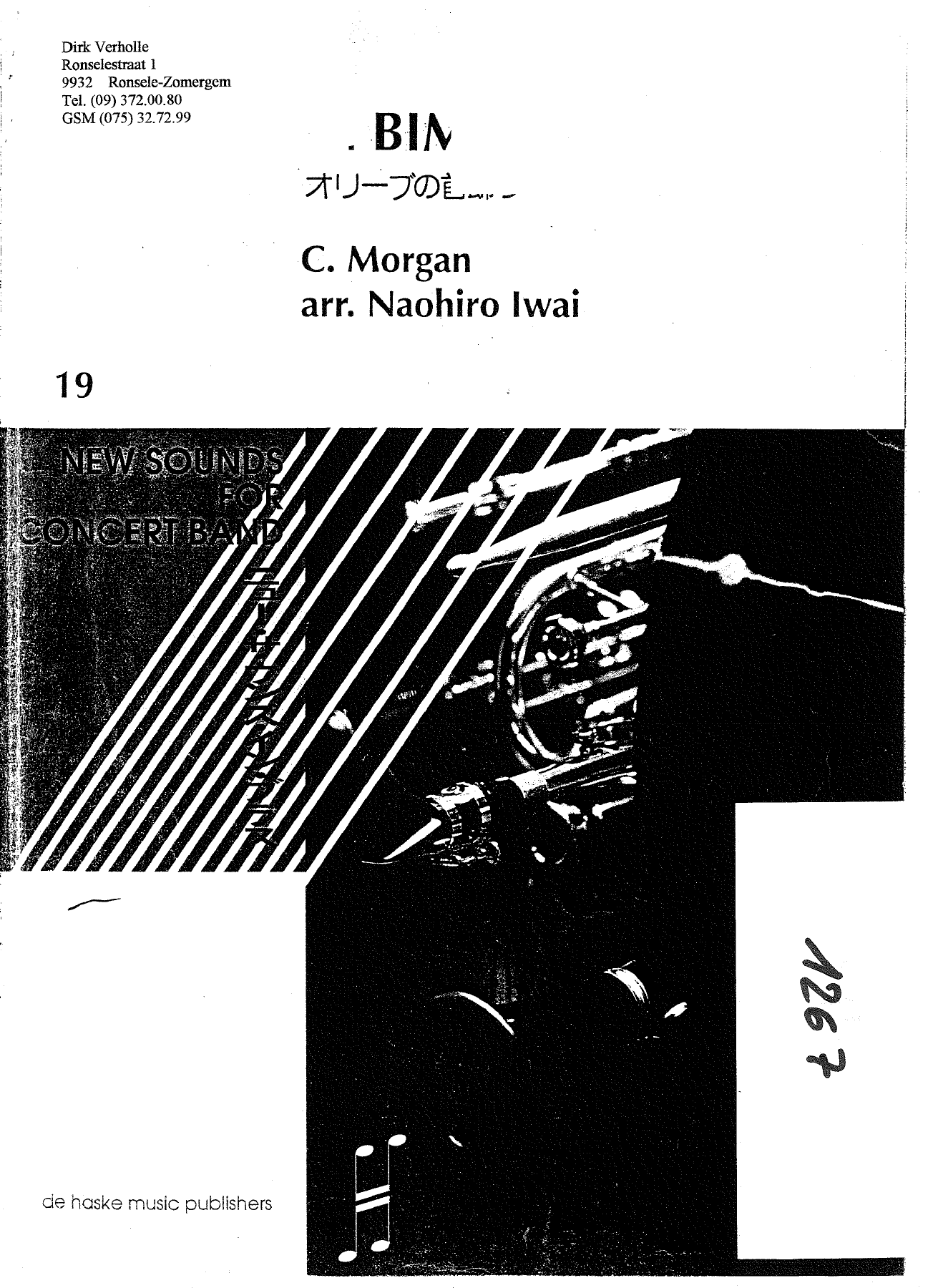
El Bimbo (N.Iwai)
Composed by Claude Morgan
Arranged by N.Iwai
- Ensemble: Concert Band
- Style: Latin Jazz
- Pages: 86
- Instruments (33): Piccolo, 1st & 2nd Flute, Oboe, Bassoon, Eb Clarinet, 1st Bb Clarinet, 2nd Bb Clarinet, 3rd Bb Clarinet, 1st & 2nd Eb Alto Sax., Bb Tenor Saxophone, Eb Baritone Saxophone, 1st Bb Trumpet, 2nd Bb Trumpet, 3rd Bb Trumpet, 1st & 2nd F Horn, 3rd & 4th F Horn, 1st & 2nd Eb Horn, 3rd & 4th Eb Horn, 1st & 2nd Bb Trombone, 3rd & 4th C Trombone, 3rd & 4th Bb Trombone, Bb Baritone/Euphonium, Bb Tenor Tuba/Euphonium, C Baritone/Euphonium, Eb Bass, Bb Bass, C Bass, Double Bass, Drums, Glockenspiel & Xylophone, Congas or Bongos & Tambourine, 1st Bb Flugel horn, 2nd Bb Flugel horn
- Difficulty: advanced
- Content: Individual Parts
- Format: PDF Download (Instant)
- Price: $22.99
The infectious melody of "El Bimbo," originally composed by Claude Morgan in 1974, soared to international prominence, becoming a global phenomenon particularly in the disco and pop scenes of the mid-1970s. While not traditionally a jazz standard, its catchy, memorable theme made it ripe for reinterpretation across various genres. The original recording, characterized by its distinctive accordion and orchestral arrangements, became synonymous with a lighthearted, romantic Parisian flair, often heard in European cafes and as a theme for various media. N.Iwai's rendition masterfully recontextualizes this iconic tune, transforming its pop sensibilities into a vibrant Latin Jazz concert band experience, demonstrating how a memorable melody can transcend its original genre through skilled arrangement. N.Iwai's arrangement of "El Bimbo" plunges the concert band into an exhilarating Latin Jazz groove. Set primarily in a bright, driving 4/4 tempo with a distinct Latin feel—think bossa nova meets salsa rhythm section—the piece exudes an undeniable energy and festive mood. The primary key of C major provides a bright, accessible tonal center, allowing the melodic lines to shimmer. The arrangement is characterized by N.Iwai's signature blend of rich, often full-ensemble voicings and intricate rhythmic interplay. Expect sophisticated harmonic extensions that add depth to the original, somewhat simpler, chord progression, elevating it beyond its pop origins. The overall sound is one of joyous celebration, designed to get audiences tapping their feet and musicians fully engaged. The arranger's approach to "El Bimbo" is both respectful of the original melody and boldly innovative in its jazz treatment. N.Iwai, known for his imaginative scoring for concert band, employs a variety of textures and dynamics to maintain interest throughout the 86-page score. The iconic main theme is initially presented by the woodwinds, often in unison or close harmony, before being taken up by the brass for a more powerful statement. There are compelling soli sections for both woodwinds and brass that showcase the ensemble's precision and blend, often featuring rapid-fire rhythmic figures. A significant feature is the inclusion of multiple improvised solo opportunities, typically for alto saxophone, trumpet, or trombone, providing a platform for individual expression over the driving Latin rhythm section. The piece builds to a climactic shout chorus, where the full ensemble unleashes a powerful, harmonically rich statement of the theme, often with syncopated rhythmic punches. Performing "El Bimbo (N.Iwai)" is a rewarding experience that demands both rhythmic precision and expressive musicianship. Technical challenges include navigating the intricate syncopated rhythms inherent in Latin jazz, maintaining a consistent and energetic groove, and executing the rapid soli passages with clarity. The brass section will need strong articulation and endurance, particularly in the upper register, while the woodwinds are tasked with nimble melodic runs and tight ensemble work. The rhythm section (drum set, bass, piano, guitar, and auxiliary percussion) is absolutely crucial in establishing and maintaining the authentic Latin feel. This arrangement is ideally suited for advanced high school, college, community, and professional concert bands capable of tackling complex rhythmic figures and dynamic contrasts, and who possess a strong understanding of Latin jazz idioms. Its vibrant character and engaging melodic content make it an excellent choice for a concert opener, closer, or a spirited feature piece. "El Bimbo (N.Iwai)" requires a consistent and energetic Latin feel, best approached with a precise yet flexible rhythmic execution. The indicated tempo of approximately quarter note = 132-144 should be maintained with a driving, forward momentum, emphasizing the underlying clave. Key technical challenges include the tight, syncopated ensemble figures, particularly in the woodwind and brass soli sections, which demand meticulous rehearsal for clarity and blend. Articulation should be crisp and unified across sections; brass players should aim for a bright, accented sound without being harsh, while woodwinds need to articulate cleanly through rapid passages. The rhythm section is paramount: the drum set must establish a solid groove, often incorporating elements of bossa nova or samba, while bass and piano provide harmonic and rhythmic support with a strong sense of pulse. Auxiliary percussion (e.g., congas, timbales, shakers) should be integrated sensitively to enhance the texture without overpowering the ensemble. Encourage soloists to embrace the improvisational spirit of Latin jazz, utilizing blues scales and dominant seven arpeggios over the provided chord changes. Rehearsal should focus on isolating challenging rhythmic passages, ensuring all members feel the internal pulse, and building dynamic contrast towards the climactic shout chorus. Q: What instruments and parts are typically included in this concert band arrangement? A: This arrangement for concert band includes a full complement of woodwind, brass, and percussion parts, specifically flutes, oboe, bassoons, clarinets, alto/tenor/baritone saxophones, trumpets, horns, trombones, euphonium, tuba, string bass, drum set, and various auxiliary percussion. Q: What is the difficulty level of "El Bimbo (N.Iwai)" for concert band? A: This arrangement is considered advanced, suitable for advanced high school, college, community, and professional concert bands. It requires strong rhythmic precision, technical facility across all sections, and an understanding of Latin jazz stylistic nuances. Q: What is the musical style and historical context of "El Bimbo (N.Iwai)"? A: This arrangement transforms Claude Morgan's 1974 pop hit "El Bimbo" into a vibrant Latin Jazz piece for concert band. It blends the original's catchy melody with sophisticated Latin rhythms and jazz harmonies, reflecting a fusion of pop accessibility and jazz complexity. Q: What makes N.Iwai's arrangement of "El Bimbo" unique compared to other versions? A: N.Iwai's arrangement is unique for its skillful reinterpretation of a pop classic into a full-fledged Latin Jazz concert band piece, featuring intricate soli sections, sophisticated harmonic voicings, and multiple opportunities for improvised solos, all while maintaining the original's infectious energy. Q: What is the typical performance duration or tempo for this arrangement? A: The typical performance duration for "El Bimbo (N.Iwai)" is approximately 3-4 minutes, played at a bright, driving Latin tempo, generally around quarter note = 132-144.
Questions and answers
- What is included in the El Bimbo (N.Iwai) PDF?
- The verified current file contains a conductor score and individual parts across 86 pages.
- How many instruments or parts are listed for El Bimbo (N.Iwai)?
- The verified instrumentation list contains 33 entries for this Concert Band arrangement.
- Who is credited for El Bimbo (N.Iwai)?
- Composer: Claude Morgan. Arranger: N.Iwai.
- What difficulty is listed for El Bimbo (N.Iwai)?
- The verified difficulty level is advanced.
- What style is listed for El Bimbo (N.Iwai)?
- The catalog lists the style as Latin Jazz.
- Can I preview El Bimbo (N.Iwai) before buying?
- Yes. The product page provides a preview generated from the current PDF file.
- How is El Bimbo (N.Iwai) delivered?
- After successful payment, the digital PDF is made available for download. The displayed price is $22.99.
Musicians Also Search For
El Bimbo N.Iwai PDF • El Bimbo N.Iwai sheet music • El Bimbo arranged by N.Iwai • N.Iwai concert band charts • N.Iwai jazz arrangements PDF • El Bimbo Claude Morgan sheet music • El Bimbo Claude Morgan concert band arrangements • Claude Morgan concert band charts • El Bimbo concert band arrangements • El Bimbo concert band PDF download • El Bimbo jazz sheet music • concert band sheet music download • El Bimbo conductor score PDF • El Bimbo individual parts download • El Bimbo sheet music PDF • El Bimbo Latin Jazz charts • Latin Jazz concert band arrangements • buy El Bimbo sheet music • download El Bimbo PDF • El Bimbo jazz charts • best N.Iwai concert band arrangements • Claude Morgan arranged by N.Iwai • El Bimbo printable sheet music • concert band repertoire PDF