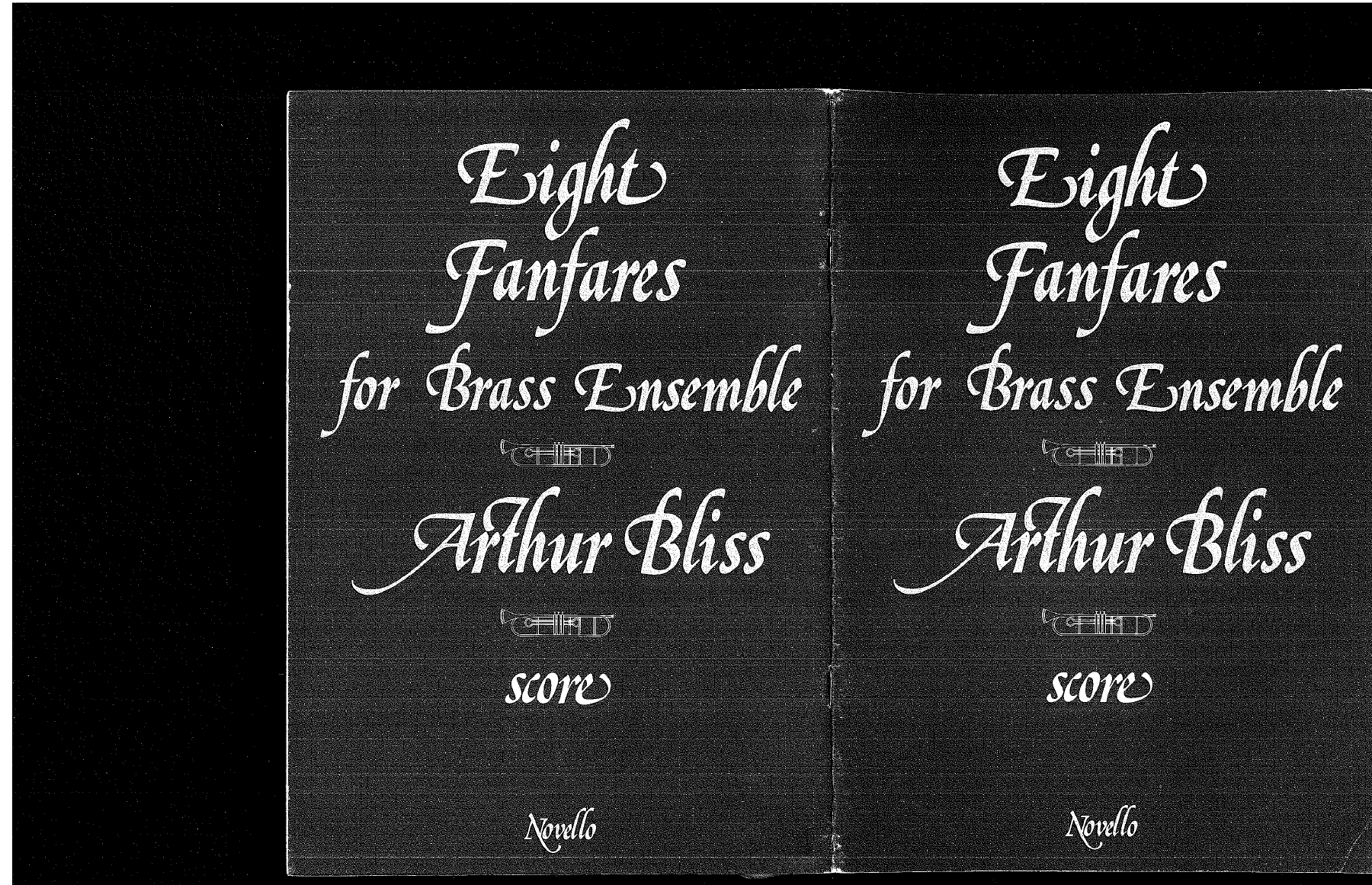
Eight Fanfares For Brass Ensemble (A.Bliss)
Composed by Arthur Bliss
Arranged by A.Bliss
- Ensemble: Small Ensemble
- Style: Jazz Standard
- Pages: 15
- Difficulty: easy
- Content: Sheet Music
- Format: PDF Download (Instant)
- Price: $12.99
Arthur Bliss's "Eight Fanfares For Brass Ensemble" stands as a monumental work in the brass repertoire, originally composed in 1921. While not a jazz standard in its original form, this arrangement by A.Bliss reimagines the grandeur and ceremonial brilliance of Bliss's fanfares through a contemporary jazz lens. The original work, a product of the early 20th century, captures the spirit of post-World War I optimism and a burgeoning modernist aesthetic in British classical music. Bliss, known for his dramatic and often dissonant style, crafted these fanfares with powerful, declarative statements, making them ripe for reinterpretation. A.Bliss's rendition transforms these classical motifs into a vibrant small ensemble jazz piece, bridging the gap between historical gravitas and modern improvisation. This arrangement breathes new life into the original material, characterized by a medium swing feel that underpins the inherently majestic themes. While the original fanfares were often stately and processional, A.Bliss introduces a sophisticated harmonic palette, employing extended harmonies and reharmonizations that give the piece a fresh, contemporary jazz sound. The mood oscillates between celebratory and introspective, with moments of powerful tutti brass balanced by intricate, lyrical passages. The overall energy is dynamic and engaging, maintaining the original's sense of occasion while infusing it with the rhythmic vitality and harmonic sophistication expected of a modern jazz small ensemble. The key centers shift fluidly, adding to the harmonic interest and keeping performers and listeners alike engaged. A.Bliss's distinctive approach to this arrangement is evident in the clever re-voicing of the original brass lines for a jazz small ensemble, often featuring close-voiced chords that create a rich, dense texture. While the original melodic lines are preserved, they are frequently presented as contrapuntal figures within a swinging rhythm section, or as a brass soli section showcasing tight ensemble playing. The arrangement features a prominent solo section, typically over a harmonically rich vamp, allowing individual voices to shine and explore the recontextualized themes. A.Bliss is known for their ability to blend classical influences with a deep understanding of jazz idiom, often employing sophisticated counterpoint and rhythmic interplay. This arrangement highlights their signature technique of building intensity through layered textures and unexpected harmonic resolutions, culminating in a powerful, re-imagined shout chorus that pays homage to both the original's grandeur and the jazz tradition. Performing this arrangement is a rewarding experience for a small ensemble. The melody is skillfully distributed among the brass instruments, ensuring each player has moments in the spotlight, both in lead lines and supporting roles. The primary technical challenges lie in maintaining precise articulation within the swing feel, navigating the extended harmonies, and executing the tight ensemble passages with clarity and balance. The solo section offers ample opportunity for improvisation, while the re-imagined shout chorus demands strong dynamic control and rhythmic precision. This arrangement is particularly suitable for college-level jazz ensembles, advanced community bands, and professional small ensembles seeking a challenging yet deeply satisfying piece that offers a unique blend of classical heritage and modern jazz innovation. This arrangement demands a high level of musicianship and ensemble cohesion. Key technical challenges include maintaining precise articulation and rhythmic accuracy within the medium swing feel, particularly in the intricate contrapuntal sections. Conductors should emphasize a light, buoyant swing eighth-note feel, avoiding a heavy or plodding execution. The extended harmonies require careful tuning and balance within the brass section to ensure clarity and avoid muddiness. Rehearsal tips include isolating challenging soli passages at a slower tempo, focusing on intonation and blend. Encourage soloists to draw inspiration from the original fanfare motifs while exploring modern jazz vocabulary. Dynamic contrasts are crucial; ensure the powerful tutti sections are balanced by more lyrical, nuanced moments. No special techniques like plungers or falls are explicitly notated, but tasteful jazz inflections can be added by advanced players where appropriate. Q: What instruments are included in this arrangement? A: This arrangement is scored for a small brass ensemble, typically including trumpets, trombones, and potentially a French horn or tuba, along with a standard jazz rhythm section (piano, bass, drums). Specific instrumentation details are provided on the score. Q: What is the difficulty level of "Eight Fanfares For Brass Ensemble (A.Bliss)"? A: This arrangement is considered advanced, suitable for college-level jazz ensembles, advanced community bands, and professional small ensembles due to its sophisticated harmonies, intricate ensemble passages, and demands for precise rhythmic and dynamic control. Q: What is the musical style and historical context of this arrangement? A: This arrangement reinterprets Arthur Bliss's classical "Eight Fanfares For Brass Ensemble" (composed in 1921) through a modern jazz lens, featuring a medium swing feel, extended harmonies, and jazz improvisation over the original's ceremonial grandeur. Q: What makes A.Bliss's arrangement of "Eight Fanfares" unique? A: A.Bliss's arrangement is unique for its successful fusion of early 20th-century classical brass writing with contemporary jazz idiom, transforming the original's majestic themes into a swinging, harmonically rich, and improvisational small ensemble piece. Q: What is the typical performance duration or tempo for this piece? A: The arrangement is typically performed at a medium swing tempo, with specific tempo markings provided in the score. The overall performance duration will vary slightly depending on the length of improvised solos, but generally falls within the 5-7 minute range.
Musicians Also Search For
Eight Fanfares For Brass Ensemble A.Bliss PDF • Eight Fanfares For Brass Ensemble A.Bliss sheet music • Eight Fanfares For Brass Ensemble arranged by A.Bliss • A.Bliss small ensemble charts • A.Bliss jazz arrangements PDF • Eight Fanfares For Brass Ensemble Arthur Bliss sheet music • Eight Fanfares For Brass Ensemble Arthur Bliss small ensemble arrangement • Arthur Bliss small ensemble charts • Eight Fanfares For Brass Ensemble small ensemble arrangement • Eight Fanfares For Brass Ensemble small ensemble PDF download • Eight Fanfares For Brass Ensemble jazz ensemble sheet music • small ensemble sheet music instant download • Eight Fanfares For Brass Ensemble sheet music with parts • Eight Fanfares For Brass Ensemble Jazz Standard chart • Jazz Standard small ensemble arrangements • buy Eight Fanfares For Brass Ensemble sheet music online • download Eight Fanfares For Brass Ensemble PDF • Eight Fanfares For Brass Ensemble jazz chart • best A.Bliss small ensemble arrangements • Arthur Bliss songs arranged by A.Bliss • Eight Fanfares For Brass Ensemble printable sheet music • small ensemble repertoire PDF