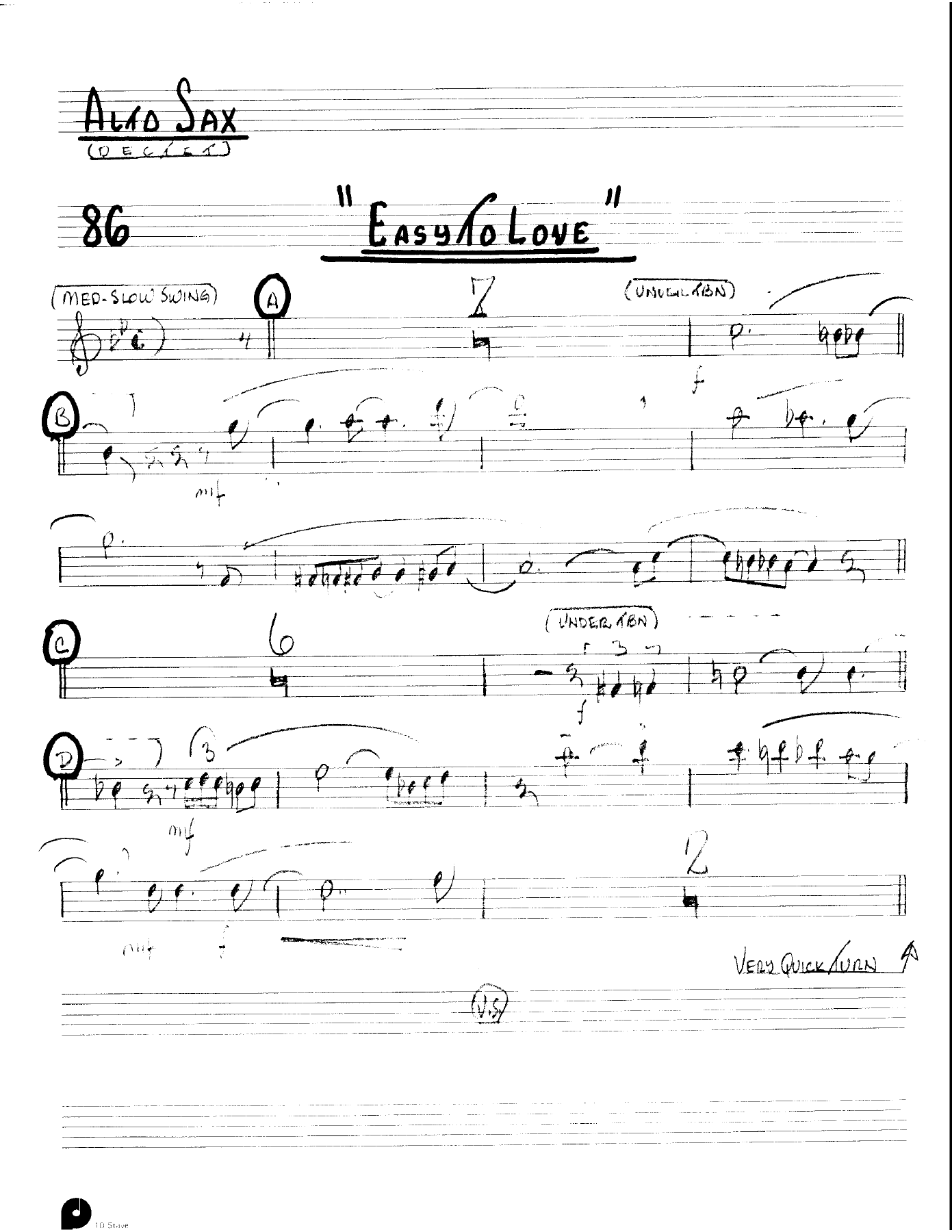
Easy To Love (6.Dectet)
Composed by Cole Porter
Arranged by 6 horns + Rhythm - Stan Kenton Dectet
- Ensemble: Small Ensemble
- Style: Jazz Standard
- Pages: 25
- Difficulty: easy
- Content: Sheet Music
- Format: PDF Download (Instant)
- Price: $12.99
Cole Porter's timeless ballad, "Easy To Love," emerged in 1934 for the Broadway musical *Anything Goes*, though it was initially cut due to its wide vocal range for the lead actor. It found its definitive introduction in the 1936 MGM musical film *Born to Dance*, where it was performed by James Stewart and Frances Langford, and became an instant success, charting three times that year. This enduring piece quickly cemented its place in the Great American Songbook and the jazz repertoire, celebrated for its flowing melody, sophisticated harmony, and witty lyrics that blend romantic idealization with clever wordplay. Over the decades, it has been interpreted by jazz luminaries such as Billie Holiday, Ella Fitzgerald, Erroll Garner, Charlie Parker, and Chet Baker, solidifying its status as a beloved jazz standard. Its 32-bar AABA form, typical of many jazz standards, provides a familiar yet rich harmonic landscape for improvisation and arrangement. This particular arrangement, "Easy To Love (6.Dectet)," captures the sophisticated and often progressive spirit associated with the Stan Kenton Dectet. While the original Stan Kenton Orchestra was known for its powerful big band sound, often featuring aggressive brass, complex harmonies, and layered textures, the Dectet format (6 horns + rhythm) allowed for a more agile yet still harmonically rich approach. This arrangement is designed as a medium swing, typically around 110-164 BPM, maintaining the song's inherent charm and romantic feel while infusing it with a vibrant, swinging energy. The key is often G major, which allows for a bright yet nuanced harmonic palette, evoking a mood that is both elegant and buoyant. The arranger's approach for this Dectet treatment emphasizes the distinctive Kenton sound within a smaller ensemble. Expect intricate voicings across the six horns, creating a lush, full sound that belies the ensemble's size. Characteristic Kenton techniques might include dense, often dissonant, harmonies, and layered melodic lines where different horn sections play complementary or contrapuntal melodies. While specific details of this arrangement's voicings are proprietary, the Kenton Dectet style typically features a blend of saxophones and brass, allowing for dynamic contrasts between smooth, blended sections and sharper, punctuated figures. The melody is likely carried by various horn combinations throughout, offering diverse timbral colors. Soli sections for the horns will be prominent, showcasing the ensemble's precision and blend. Featured solo sections, often over the standard AABA form, will provide opportunities for improvisation, typically for a saxophone or trumpet, with a supportive yet engaging rhythm section accompaniment. Performing this arrangement is rewarding for its balance of musicality and challenge. The technical demands lie in achieving tight ensemble precision, particularly in the intricate voicings and dynamic shifts. Balancing the six horns to create a cohesive sound, especially during soli passages, requires careful listening and blend. The rhythm section must maintain a consistent, driving medium swing feel, providing a solid foundation while interacting dynamically with the horns. This arrangement is well-suited for advanced high school, college, community, or semi-professional jazz ensembles. Its detailed scoring and harmonic depth offer a substantial learning experience for developing musicians, while its engaging character makes it a compelling performance piece for more experienced groups. The opportunity to explore a classic jazz standard through the lens of a renowned arranger like Stan Kenton, even in a smaller format, makes it a valuable addition to any ensemble's repertoire. This arrangement thrives on a precise, medium swing feel, ideally around 140-160 BPM, ensuring the rhythmic drive is present without rushing the inherent elegance of Cole Porter's melody. Key technical challenges include maintaining tight ensemble articulation and blend, particularly in the densely voiced soli sections for the six horns. Conductors should emphasize careful listening across the horn lines to ensure harmonic clarity and balanced dynamics. The rhythm section must establish a consistent, buoyant swing groove from the outset, with the bass providing a strong walking line and drums offering tasteful ride cymbal work and subtle fills. Special attention should be given to dynamic contrasts, moving smoothly from softer, lyrical passages to more energetic, punctuated figures. Rehearsal tips include isolating challenging harmonic passages for the horns, practicing them slowly to ensure intonation and balance, and then gradually increasing tempo. Encourage soloists to embrace the song's romantic character while exploring harmonic possibilities over the standard form. Q: What instruments are included in this "Easy To Love (6.Dectet)" arrangement? A: This arrangement is scored for 6 horns plus a standard jazz rhythm section. The specific horn instrumentation typically includes two trumpets, one trombone, and three saxophones (Alto, Tenor, Baritone), along with piano, bass, and drums. Q: What is the difficulty level of this arrangement? A: This arrangement is considered to be of an intermediate to advanced difficulty level, suitable for experienced high school, college, community, or semi-professional jazz ensembles. It requires strong ensemble playing, good intonation, and a solid understanding of jazz articulation and phrasing. Q: What musical style and historical context does this arrangement represent? A: This arrangement is a jazz standard in a medium swing style, based on Cole Porter's classic composition from 1934. It reflects the sophisticated harmonic and melodic characteristics of the Great American Songbook, interpreted with the distinctive small-ensemble approach inspired by the Stan Kenton Dectet. Q: What makes this arrangement unique compared to other versions of "Easy To Love"? A: This arrangement stands out due to its specific 6-horn plus rhythm section instrumentation, offering a rich, full sound with intricate voicings characteristic of the Stan Kenton Dectet style, rather than a traditional big band or combo arrangement. It provides a unique blend of harmonic depth and instrumental agility. Q: What is the typical performance duration and tempo for this piece? A: The typical performance duration for this arrangement is approximately 3-4 minutes, depending on the number and length of improvised solos. It is designed to be performed at a medium swing tempo, generally ranging from 140 to 160 beats per minute.
Musicians Also Search For
Easy To Love 6 horns + Rhythm - Stan Kenton Dectet PDF • Easy To Love 6 horns + Rhythm - Stan Kenton Dectet sheet music • Easy To Love arranged by 6 horns + Rhythm - Stan Kenton Dectet • 6 horns + Rhythm - Stan Kenton Dectet small ensemble charts • 6 horns + Rhythm - Stan Kenton Dectet jazz arrangements PDF • Easy To Love Cole Porter sheet music • Easy To Love Cole Porter small ensemble arrangement • Cole Porter small ensemble charts • Easy To Love small ensemble arrangement • Easy To Love small ensemble PDF download • Easy To Love jazz ensemble sheet music • small ensemble sheet music instant download • Easy To Love sheet music with parts • Easy To Love Jazz Standard chart • Jazz Standard small ensemble arrangements • buy Easy To Love sheet music online • download Easy To Love PDF • Easy To Love jazz chart • best 6 horns + Rhythm - Stan Kenton Dectet small ensemble arrangements • Cole Porter songs arranged by 6 horns + Rhythm - Stan Kenton Dectet • Easy To Love printable sheet music • small ensemble repertoire PDF