Do-Re-Mi (T.Hoshide)
Composed by Richard Rodgers
Arranged by Re
- Ensemble: Concert Band
- Style: Musical Theatre
- Pages: 75
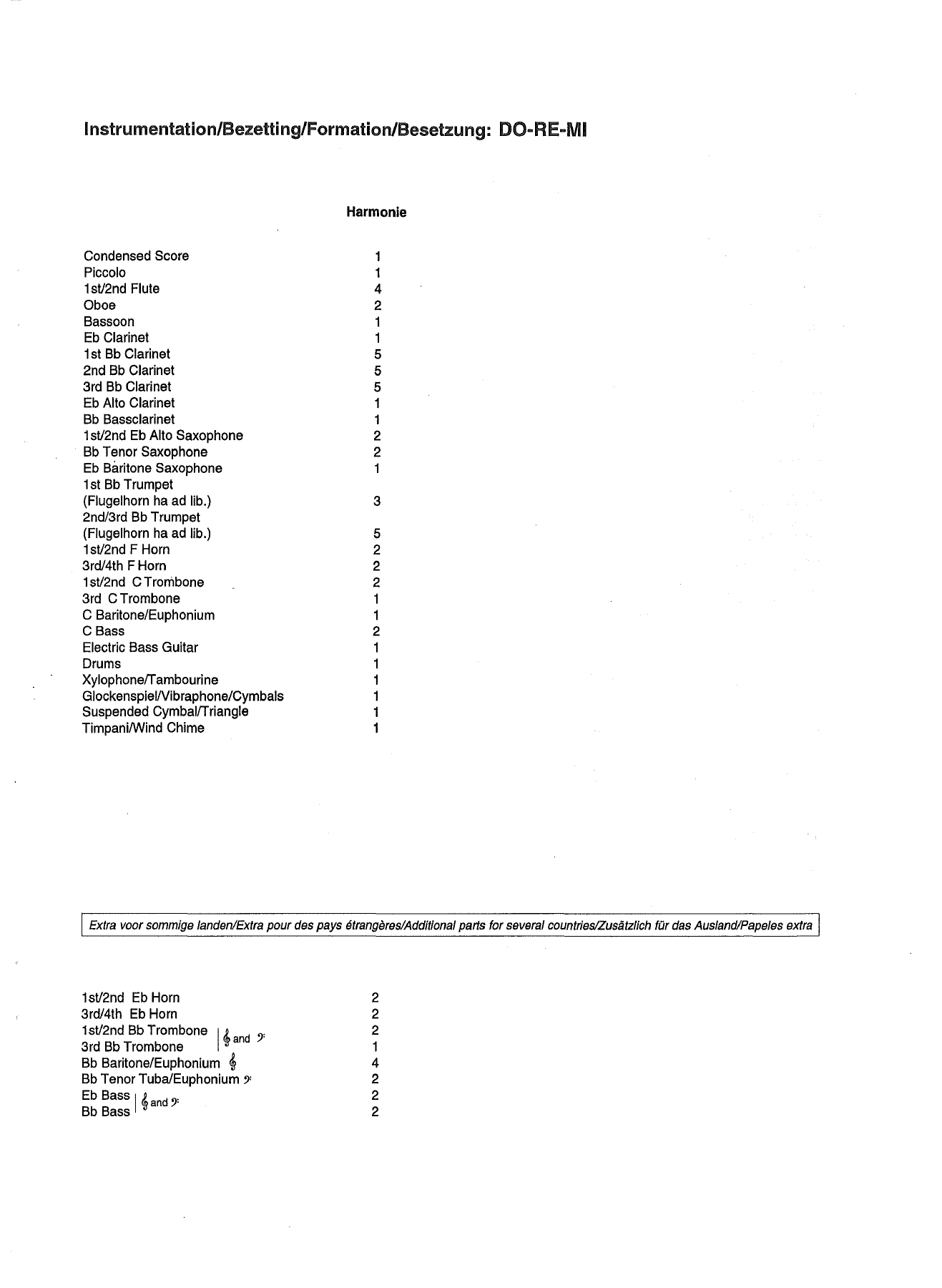
- Instruments (41): Piccolo, 1st Flute, 2nd Flute, Oboe, Bassoon, Eb Clarinet, 1st Bb Clarinet, 2nd Bb Clarinet, 3rd Bb Clarinet, Bb Bass Clarinet, 1st Eb Alto Saxophone, 2nd Eb Alto Saxophone, Bb Tenor Saxophone, Eb Baritone Saxophone, 1st Bb Trumpet, 2nd Bb Trumpet, 3rd Bb Trumpet, 3rd F Horn, 4th F Horn, 1st Eb Horn, 2nd Eb Horn, 3rd Eb Horn, 4th Eb Horn, 1st C Trombone, 2nd C Trombone, 3rd C Trombone, Bb Baritone/Euphonium, Bb Tenor Tuba/Euphonium, Eb Bass, Bb Bass, Bass C, Timpani, Wind Chime, Glockenspiel, Vibraphone, Cymbals, Drums, Xylophone, Tambourine, Suspended Cymbal, Triangle
- Difficulty: advanced
- Content: Individual Parts
- Format: PDF Download (Instant)
- Price: $22.99
Richard Rodgers’ timeless melody, "Do-Re-Mi," from the iconic 1959 musical *The Sound of Music*, transcends its original stage setting to offer a delightful and educational experience for concert bands in this imaginative arrangement by Re. Originally conceived for the stage by Rodgers and Hammerstein, *The Sound of Music* became a global phenomenon, particularly after its 1965 film adaptation starring Julie Andrews, solidifying "Do-Re-Mi" as one of the most recognizable and beloved tunes in the musical theatre canon. Its inherent simplicity and pedagogical structure, teaching the solfège scale, have made it a staple in music education worldwide. While not typically a jazz standard, its strong melodic contour and clear harmonic progression provide a fertile ground for creative reinterpretation, making it an intriguing choice for a concert band setting that seeks to blend familiar melodies with sophisticated arranging techniques. Re's treatment of "Do-Re-Mi" reimagines the classic tune with a fresh perspective, moving beyond its traditional orchestral or vocal presentation. This arrangement maintains the original's bright, optimistic mood but infuses it with a dynamic energy suitable for a modern concert band. The piece is set in a vibrant, generally up-tempo 4/4 feel, oscillating between a crisp march-like articulation and a more flowing, lyrical approach. Re masterfully employs a variety of textures, from full ensemble statements to delicate, chamber-like passages featuring woodwind or brass choirs. The arrangement showcases the full spectrum of the concert band, utilizing rich, extended harmonies that add depth and color without obscuring the familiar melodic lines. Expect inventive counter-melodies and intricate inner voices that weave around the primary theme, demonstrating Re's signature ability to elevate familiar material with sophisticated yet accessible writing. The melody of "Do-Re-Mi" is thoughtfully distributed throughout the ensemble, ensuring engagement for all sections. Initial statements might feature the flutes and clarinets, later transitioning to the trumpets and trombones for more robust declarations, and even to the lower brass or saxophones for rich, foundational presentations. While there are no extended improvised solo sections in the traditional jazz sense, Re often highlights instrumental sections with prominent soli passages that require strong sectional playing and precise articulation. Technical challenges include maintaining rhythmic precision in the faster passages, achieving balanced voicings across the diverse instrumentation, and executing dynamic contrasts effectively. The reward lies in presenting a beloved melody with a renewed sense of grandeur and musicality, offering both performers and audiences a fresh and engaging experience. This arrangement is ideally suited for high school, college, and community concert bands looking for a piece that is both musically enriching and audience-friendly, providing opportunities for technical development and expressive performance. Conductors should emphasize a consistent, bright tempo, generally around quarter note = 120-132, allowing the inherent joy of the melody to shine through. The piece benefits from a clear distinction between articulated, march-like sections and more legato, flowing phrases, particularly in the woodwind soli passages. Pay close attention to dynamic markings; Re utilizes a wide dynamic range to build and release tension, crucial for the arrangement's overall impact. Balance is key, especially in sections where counter-melodies are prominent; ensure that the primary melodic line always remains audible. Rehearsal time should be dedicated to sectional precision, particularly for the intricate woodwind runs and brass fanfares. While no special techniques like plunger mutes or doits are explicitly required, encourage a vibrant, resonant tone from all sections, and work on clean releases and attacks to maintain the arrangement’s crisp character. Q: What instruments are included in this arrangement? A: This arrangement for concert band includes a full complement of standard wind and percussion instruments, typically covering flutes, oboes, clarinets, bassoons, saxophones, trumpets, horns, trombones, euphonium, tuba, and a comprehensive percussion section. Q: What is the difficulty level of "Do-Re-Mi (T.Hoshide)"? A: This arrangement is rated as medium-advanced, suitable for high school, college, and community concert bands. It presents challenges in rhythmic precision, dynamic control, and ensemble balance, making it rewarding for developing musicians. Q: What musical style and historical context does this arrangement represent? A: While the original "Do-Re-Mi" is a classic from the 1959 musical *The Sound of Music* by Richard Rodgers, this arrangement by Re reimagines it for concert band, blending its musical theatre origins with sophisticated contemporary concert band arranging techniques. Q: What makes Re's arrangement of "Do-Re-Mi" unique? A: Re's unique approach lies in their ability to infuse a familiar melody with fresh, vibrant textures, extended harmonies, and intricate counter-melodies, distributing the melodic interest across all sections of the concert band while maintaining the original's optimistic spirit. Q: What is the typical performance duration and tempo for this piece? A: The typical performance duration for this arrangement is approximately 3-4 minutes. It is generally performed at a bright, up-tempo pace, around quarter note = 120-132, to capture its energetic and joyful character.
Questions and answers
- What is included in the Do-Re-Mi (T.Hoshide) PDF?
- The verified current file contains a conductor score and individual parts across 75 pages.
- How many instruments or parts are listed for Do-Re-Mi (T.Hoshide)?
- The verified instrumentation list contains 41 entries for this Concert Band arrangement.
- Who is credited for Do-Re-Mi (T.Hoshide)?
- Composer: Richard Rodgers. Arranger: Re.
- What difficulty is listed for Do-Re-Mi (T.Hoshide)?
- The verified difficulty level is advanced.
- What style is listed for Do-Re-Mi (T.Hoshide)?
- The catalog lists the style as Musical Theatre.
- Can I preview Do-Re-Mi (T.Hoshide) before buying?
- Yes. The product page provides a preview generated from the current PDF file.
- How is Do-Re-Mi (T.Hoshide) delivered?
- After successful payment, the digital PDF is made available for download. The displayed price is $22.99.
Musicians Also Search For
Do-Re-Mi Re PDF • Do-Re-Mi Re sheet music • Do-Re-Mi arranged by Re • Re concert band charts • Re jazz arrangements PDF • Do-Re-Mi Richard Rodgers sheet music • Do-Re-Mi Richard Rodgers concert band arrangements • Richard Rodgers concert band charts • Do-Re-Mi concert band arrangements • Do-Re-Mi concert band PDF download • Do-Re-Mi jazz sheet music • concert band sheet music download • Do-Re-Mi conductor score PDF • Do-Re-Mi individual parts download • Do-Re-Mi sheet music PDF • Do-Re-Mi Musical Theatre charts • Musical Theatre concert band arrangements • buy Do-Re-Mi sheet music • download Do-Re-Mi PDF • Do-Re-Mi jazz charts • best Re concert band arrangements • Richard Rodgers arranged by Re • Do-Re-Mi printable sheet music • concert band repertoire PDF