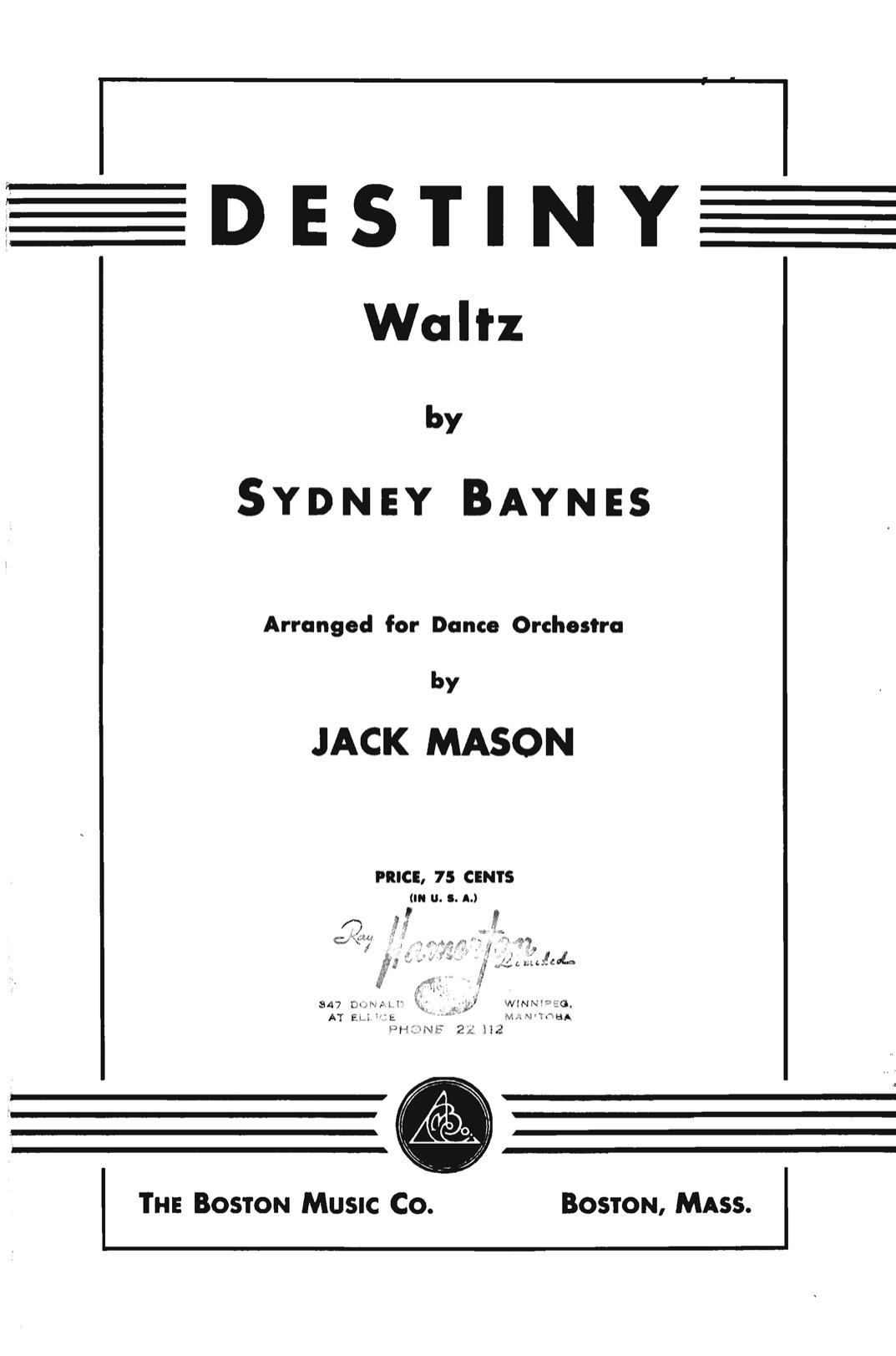
Destiny (J.Mason) sheet music preview

Destiny (J.Mason)

Composed by Victor Herbert

Arranged by Jack Mason

  • Ensemble: Big Band
  • Pages: 31
  • Instruments (14): 1st Eb Alto Saxophone, 3rd Eb Alto Saxophone, 2nd Bb Tenor Saxophone, 4th Eb Baritone Saxophone, 1st Trumpet in Bb, 3rd Trumpet in Bb, 1st Trombone, 2nd Trombone, Piano, Bass, Drums, Vocal Trio (T.T.B.), Violins A-B, Violin C
  • Difficulty: medium
  • Content: Individual Parts
  • Format: PDF Download (Instant)
  • Price: $24.99

Victor Herbert’s timeless melodic craftsmanship meets the sophisticated sensibilities of the mid-century modern jazz orchestra in this remarkable big band adaptation. Originally conceived during the golden age of American operetta and light orchestral music, Herbert's compositions possessed an inherent harmonic richness and lyrical fluidity that begged for jazz interpretation. Arranger Jack Mason brilliantly bridges the gap between turn-of-the-century parlor romanticism and swinging modernism, transforming a classic motif into a vibrant, high-energy vehicle for the contemporary big band. This chart captures the transition from lush, rubato-esque preamble into a driving, swinging groove that honors the original composer's melodic integrity while injecting fresh, sophisticated rhythmic vitality. Opening with an evocative, atmospheric introduction in a moderate-tempo swing feel, the arrangement quickly establishes a warm, inviting mood before settling into a crisp, bouncy two-beat and four-beat groove. The harmonic landscape is peppered with extended chord extensions, passing diminished chords, and clever reharmonizations that give the chart a lush, sophisticated sheen reminiscent of classic Nestico or Hefti writing, yet retaining a distinct theatrical flair. The dynamic contour shifts gracefully from sultry, muted brass statements to roaring, brass-heavy shout choruses that showcase the full dynamic range of a standard 15-piece big band instrumentation. The emotional trajectory moves from nostalgic elegance to exuberant, foot-tapping jubilation, creating an engaging narrative arc for both performers and audience members. Jack Mason’s arranging methodology shines through in the clever distribution of thematic material across the ensemble. The woodwind section—anchored by soaring lines in Alto Saxophone 1 and rich lower-register support from Baritone Saxophone 4—frequently carries the intricate, flowing melody, while Tenor Saxophone 2 and Alto Saxophone 3 provide essential counter-melodies and punchy background figures. Trumpet 1 leads the soaring brass climaxes with confidence, requiring a player comfortable with tasteful upper-register work without sacrificing warm, lyrical tone production. Featured solo space allows a featured instrumentalist to stretch out over changes that cleverly disguise the original tune's traditional contours into a modern modal-leaning jazz playground. Advanced high school ensembles with strong section players, as well as collegiate and professional community big bands, will find this 31-page arrangement to be an immensely rewarding addition to their library. The primary technical challenges lie in maintaining precise stylistic uniformity during the nuanced swing eighth-note passages and balancing the dense, rich chord voicings in the saxophone soli sections. Conductor and band directors will appreciate how effectively the chart rewards meticulous attention to articulation, dynamic shading, and stylistic contrast, making it an absolute standout selection for festival performances, formal concerts, or specialized American music showcases. Executing this arrangement successfully demands rigorous attention to stylistic cohesion and dynamic control. The primary technical hurdle involves the transition from the lush, rubato introductory phrases into the strict, driving medium-swing groove; the rhythm section must lock in immediately to establish a buoyant, relaxed 4/4 feel that never drags. Horn sections should focus on uniform articulation, ensuring that short notes are crisp and accented notes maintain a warm, vocal quality rather than sounding harsh. Mute usage, where specified for trumpets and trombones, requires careful balance so that textural colors blend smoothly beneath the lead voices. During the saxophone soli, blend and intonation are paramount; players must lock their vibrato speeds and match the lead alto's phrasing precisely. Rehearsal strategy should begin by isolating the rhythm section to cement the underlying harmonic foundation before layering in the horn sections section by section, paying meticulous attention to the shifting dynamic peaks and valleys leading into the final shout chorus. Q: What instruments and parts are included in this arrangement? A: The chart is scored for a standard 15-instrument big band ensemble, featuring dedicated parts for Alto Saxophone 1, Alto Saxophone 3, Tenor Saxophone 2, Baritone Saxophone 4, Trumpet 1, and accompanying rhythm and auxiliary horn sections across a comprehensive 31-page master score and parts set. Q: What is the difficulty level of this Jack Mason arrangement? A: This arrangement is graded as medium-advanced, making it ideal for accomplished high school jazz ensembles, collegiate bands, and professional community big bands looking for sophisticated harmonic writing and solid ensemble challenges. Q: What is the historical context and musical style of the piece? A: The piece adapts the melodic themes of turn-of-the-century composer Victor Herbert into a swinging, mid-century jazz big band style, blending romantic operetta elegance with classic swing-era arranging techniques. Q: What makes this specific arrangement by Jack Mason unique? A: Mason uniquely balances Victor Herbert's original romantic lyricism with modern jazz harmonies, utilizing clever woodwind solis, lush brass voicings, and unexpected reharmonizations to breathe new life into a classical motif. Q: What is the recommended performance tempo and duration? A: The arrangement is set in a comfortable medium-swing tempo feel that typically spans approximately 3.5 to 4.5 minutes, depending on the length of the open improvised solo sections.

Questions and answers

What is included in the Destiny (J.Mason) PDF?
The verified current file contains individual parts across 31 pages.
How many instruments or parts are listed for Destiny (J.Mason)?
The verified instrumentation list contains 14 entries for this Big Band arrangement.
Who is credited for Destiny (J.Mason)?
Composer: Victor Herbert. Arranger: Jack Mason.
What difficulty is listed for Destiny (J.Mason)?
The verified difficulty level is medium.
Can I preview Destiny (J.Mason) before buying?
Yes. The product page provides a preview generated from the current PDF file.
How is Destiny (J.Mason) delivered?
After successful payment, the digital PDF is made available for download. The displayed price is $24.99.

Musicians Also Search For

Destiny Jack Mason PDFDestiny Jack Mason sheet musicDestiny arranged by Jack MasonJack Mason big band chartsJack Mason jazz arrangements PDFDestiny Victor Herbert sheet musicDestiny Victor Herbert big band arrangementsVictor Herbert big band chartsDestiny big band arrangementsDestiny big band PDF downloadDestiny jazz sheet musicbig band sheet music downloadDestiny individual parts downloadDestiny sheet music PDFbuy Destiny sheet musicdownload Destiny PDFDestiny jazz chartsbest Jack Mason big band arrangementsVictor Herbert arranged by Jack MasonDestiny printable sheet musicbig band repertoire PDF

All arrangements by Jack Mason All Victor Herbert sheet music