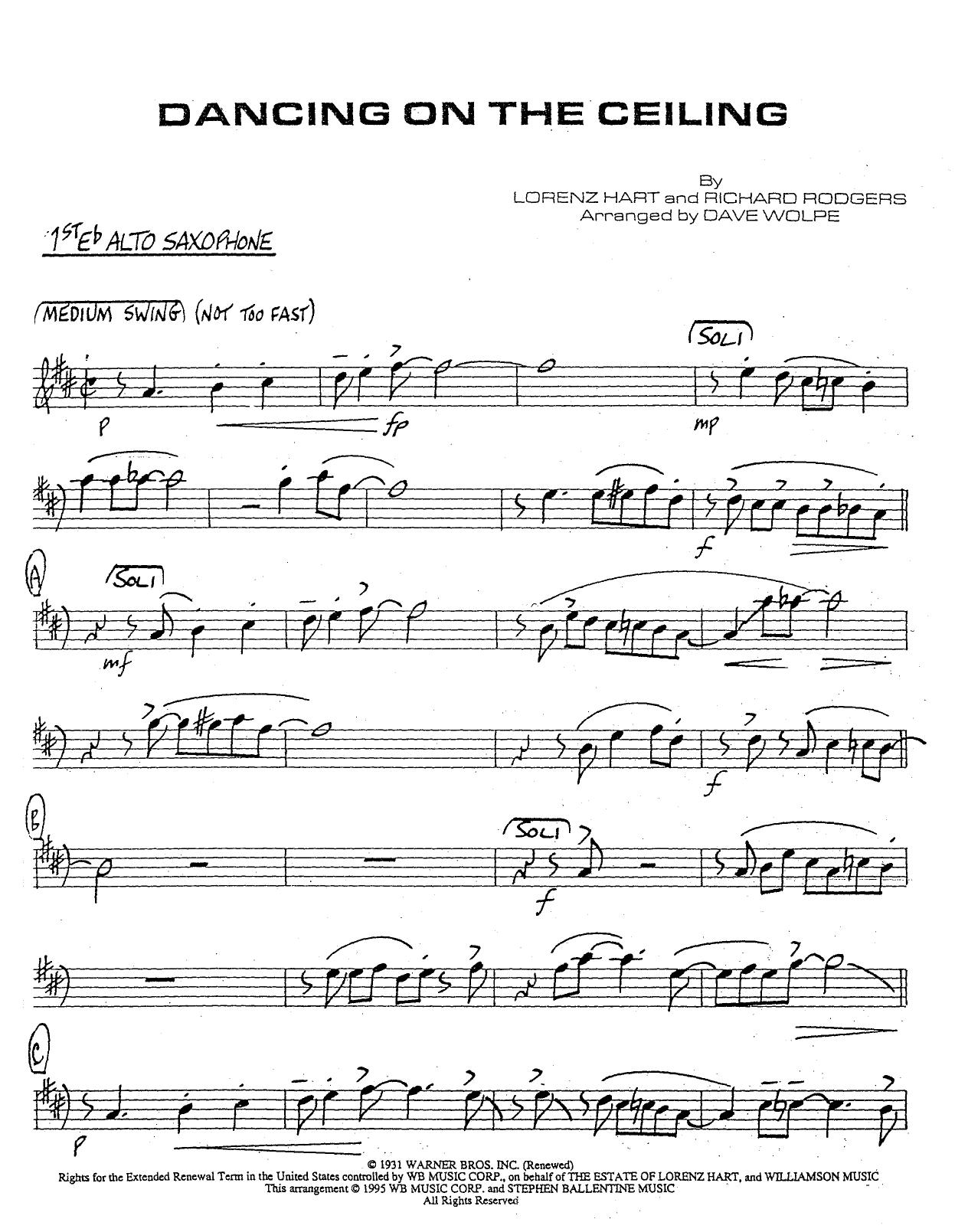
Dancing On The Ceiling (D.Wolpe)
Composed by Lionel Richie
Arranged by Dave Wolpe
- Ensemble: Big Band
- Pages: 36
- Instruments (17): 1st Eb Alto Saxophone, 2nd Eb Alto Saxophone, 1st Bb Tenor Saxophone, 2nd Bb Tenor Saxophone, Eb Baritone Saxophone, 1st Bb Trumpet, 2nd Bb Trumpet, 3rd Bb Trumpet, 4th Bb Trumpet, 1st Trombone, 2nd Trombone, 3rd Trombone, Bass Trombone, Piano, Bass, Drums, Guitar
- Difficulty: medium
- Content: Individual Parts
- Format: PDF Download (Instant)
- Price: $24.99
Lionel Richie’s infectious 1986 pop smash "Dancing on the Ceiling" receives a brilliant, high-energy transformation in this jazz big band chart crafted by master arranger Dave Wolpe. Originally released on Richie’s third solo studio album and dominating the Billboard charts during an era defined by slick synth-pop and upbeat dance anthems, the tune possesses an inherently driving rhythmic pulse and a memorable, hook-laden melody. Wolpe seizes upon these natural compositional strengths, stripping away the 1980s production gloss to recontextualize the track as a vibrant, swinging contemporary big band showcase. The result is a seamless bridge between mainstream pop nostalgia and traditional big band excitement, offering audiences an instantly recognizable melody delivered through a sophisticated jazz lens. Operating at a brisk, driving medium-up swing tempo, this arrangement radiates an irrepressible, celebratory mood. The chart opens with a rhythmic, brass-driven vamp that immediately establishes the buoyant groove before handing the initial thematic statement over to the saxophone section. Rich, contemporary extended harmonies color the underlying chord progressions, providing a sophisticated harmonic backdrop while retaining the infectious optimism of Richie’s original refrain. Wolpe builds structural momentum through cascading ensemble figures, punchy brass interjections, and a dynamic shout chorus that demands crisp articulation and unified phrasing from the entire ensemble. The arrangement balances accessible melodic familiarity with enough syncopated rhythmic challenges to keep seasoned players fully engaged. Throughout the chart, instrumental color is distributed deftly across the ensemble. The woodwinds handle fleet-fingered scalar runs and tight, harmonized soli passages that recall the classic writing styles of the Count Basie and Buddy Rich libraries, filtered through Wolpe's distinct contemporary sensibility. Ample space is provided for featured soloists—typically designated for trumpet and tenor saxophone—allowing performers to stretch out over standard changes that complement the overarching party atmosphere of the chart. The technical demands lean primarily on rhythmic precision, clean section blend, and stamina during the high-energy brass climaxes, making it an immensely satisfying centerpiece for any concert program. Advanced high school ensembles with strong section leaders, collegiate jazz orchestras, and professional community big bands will find this arrangement to be an ideal vehicle for thrilling an audience. While the technical threshold requires competent sight-reading and good endurance—particularly in the lead brass registers—the intuitive nature of the swing feel ensures that the band can quickly move past basic rhythm learning and focus on stylistic polish, dynamics, and groove. Wolpe’s expert scoring guarantees that even mid-sized sections will sound full, balanced, and remarkably powerful. Success with this arrangement hinges on maintaining a relaxed yet forward-propelling swing feel, avoiding any tendency to rush the tempo during dense ensemble passages. The rhythm section is the engine room here; the drummer should drive the ensemble with a crisp ride-cymbal pattern and steady hi-hat on beats two and four, while the bassist walks a buoyant, quarter-note line that anchors the modern harmonic shifts. Pay close attention to short-long articulations in the brass section, ensuring that accented notes are clipped and dynamic contrasts are exaggerated for maximum impact. In the soli sections, the saxophones must blend as a single voice, matching vibrato width and release lengths meticulously. Rehearsal should initially isolate the syncopated background figures behind the soloists to ensure they do not overpower the featured improviser. Encourage the brass players to utilize controlled, bright tones rather than forced volume during the shout chorus to maintain clarity across the high-register lines. Q: What instrumentation and parts are included in this arrangement? A: This chart is scored for a standard 16-instrument big band lineup, including 2 alto saxophones, 2 tenor saxophones, baritone saxophone, 4 trumpets, 4 trombones, and a full four-piece rhythm section (piano, guitar, bass, and drums), spanning 36 total pages of music. Q: What is the difficulty level of this Dave Wolpe chart? A: It is graded as medium-advanced, making it well-suited for advanced high school, collegiate, and professional community big bands that possess good reading skills and brass endurance. Q: What is the musical style and historical background of the piece? A: It is a jazz big band adaptation of Lionel Richie’s 1986 pop hit "Dancing on the Ceiling," reimagined through Wolpe's arranging style into a high-energy swing chart. Q: What makes this specific arrangement unique? A: It brilliantly fuses a familiar 1980s pop-rock hook with traditional swing-era big band arranging devices, featuring sophisticated extended harmonies, tight saxophone solis, and an energetic shout chorus. Q: What is the performance tempo and expected duration? A: The arrangement is set at a bright, driving medium-up swing tempo (approximately quarter note = 160-168 BPM), yielding a performance duration of roughly 3 to 4 minutes depending on solo choruses.
Questions and answers
- What is included in the Dancing On The Ceiling (D.Wolpe) PDF?
- The verified current file contains individual parts across 36 pages.
- How many instruments or parts are listed for Dancing On The Ceiling (D.Wolpe)?
- The verified instrumentation list contains 17 entries for this Big Band arrangement.
- Who is credited for Dancing On The Ceiling (D.Wolpe)?
- Composer: Lionel Richie. Arranger: Dave Wolpe.
- What difficulty is listed for Dancing On The Ceiling (D.Wolpe)?
- The verified difficulty level is medium.
- Can I preview Dancing On The Ceiling (D.Wolpe) before buying?
- Yes. The product page provides a preview generated from the current PDF file.
- How is Dancing On The Ceiling (D.Wolpe) delivered?
- After successful payment, the digital PDF is made available for download. The displayed price is $24.99.
Musicians Also Search For
Dancing On The Ceiling Dave Wolpe PDF • Dancing On The Ceiling Dave Wolpe sheet music • Dancing On The Ceiling arranged by Dave Wolpe • Dave Wolpe big band charts • Dave Wolpe jazz arrangements PDF • Dancing On The Ceiling Lionel Richie sheet music • Dancing On The Ceiling Lionel Richie big band arrangements • Lionel Richie big band charts • Dancing On The Ceiling big band arrangements • Dancing On The Ceiling big band PDF download • Dancing On The Ceiling jazz sheet music • big band sheet music download • Dancing On The Ceiling individual parts download • Dancing On The Ceiling sheet music PDF • buy Dancing On The Ceiling sheet music • download Dancing On The Ceiling PDF • Dancing On The Ceiling jazz charts • best Dave Wolpe big band arrangements • Lionel Richie arranged by Dave Wolpe • Dancing On The Ceiling printable sheet music • big band repertoire PDF