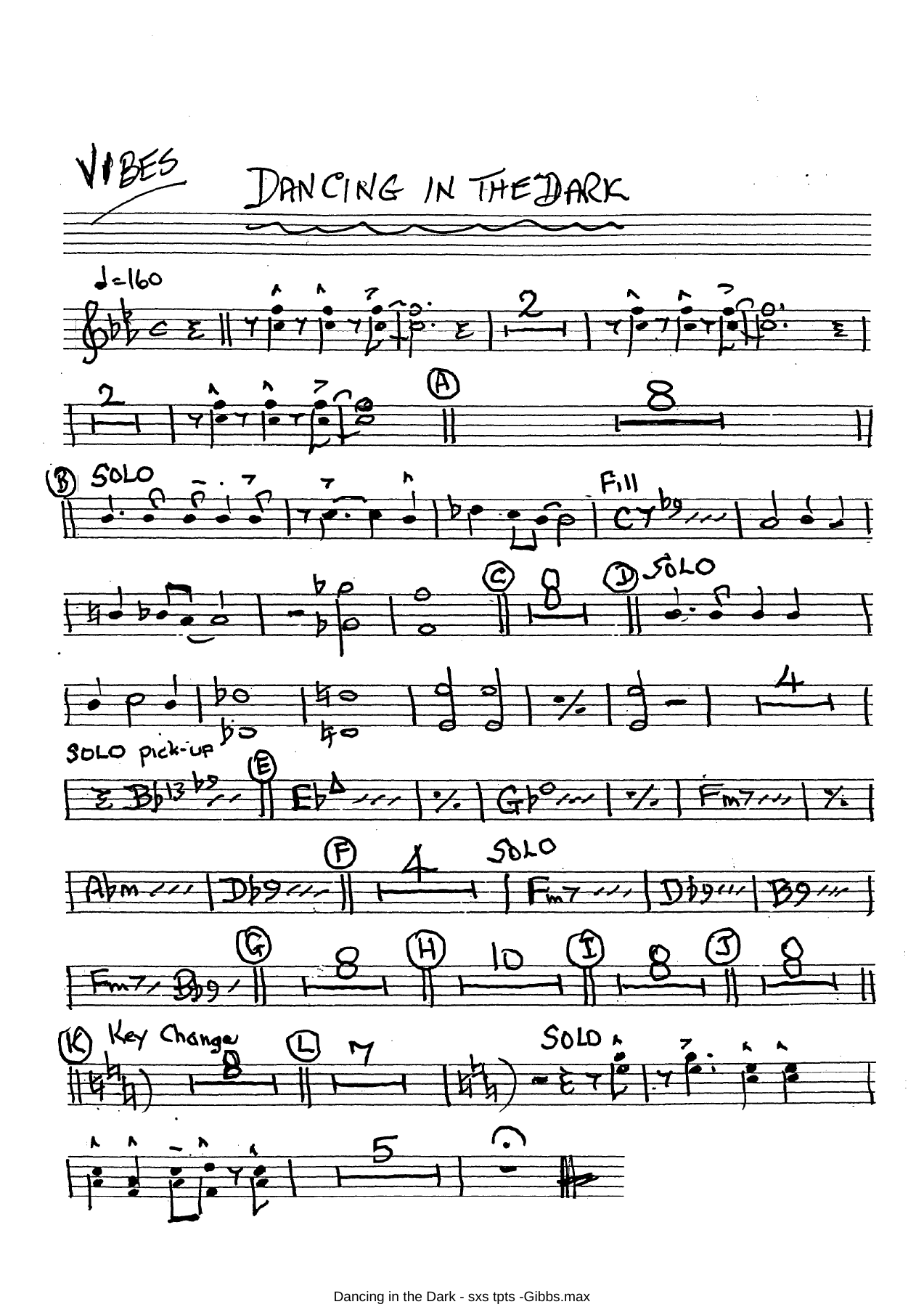
Dancing In The Dark (B.Holman) sheet music preview

Dancing In The Dark (B.Holman)

Composed by Arthur Schwartz

Arranged by Bill Holman

  • Ensemble: Big Band
  • Style: Jazz Standard
  • Pages: 53
  • Instruments (18): Vibes, 1st Alto Saxophone, 2nd Alto Saxophone, 1st Tenor Saxophone, 2nd Tenor Saxophone, Baritone Saxophone, 1st Trumpet, 2nd Trumpet, 3rd Trumpet, 4th Trumpet, 1st Trombone, 2nd Trombone, 3rd Trombone, 4th Trombone, Piano, Guitar, Bass, Drums
  • Difficulty: advanced
  • Content: Individual Parts
  • Format: PDF Download (Instant)
  • Price: $24.99

Arthur Schwartz and Howard Dietz penned "Dancing In The Dark" in 1931 for the Broadway revue *The Band Wagon*, where it was introduced by John Barker with Tilly Losch dancing. This enduring composition quickly transcended its theatrical origins to become a cornerstone of the Great American Songbook, embraced by both jazz and popular music artists. Its status as a jazz standard was solidified through countless interpretations, notably Artie Shaw's 1941 recording, which transformed the original slow ballad into a swing-era highlight, and the iconic 1953 MGM film adaptation of *The Band Wagon*, featuring a memorable ballet sequence by Fred Astaire and Cyd Charisse. The original piece is characterized by its lyrical melody, subtle alliteration, and a hypnotic, waltz-like quality, evoking a sense of romantic wonder and introspection. Bill Holman’s arrangement of "Dancing In The Dark" reimagines this classic jazz standard for the big band idiom, infusing it with his signature West Coast jazz sensibilities. Known for his dense yet hard-swinging charts, Holman's approach often features complex counterpoint, innovative voicings, and a knack for making a large ensemble swing with the fluidity of a smaller combo. While the specific key and tempo for this arrangement are not detailed, Holman typically maintains the core mood of a piece while exploring its harmonic and rhythmic possibilities. His arrangements are celebrated for their sophisticated humor and ability to take familiar melodies on unpredictable and captivating musical journeys. Expect rich, extended harmonies and meticulously crafted soli sections that highlight the full dynamic range and textural depth of the big band. This arrangement is designed to showcase the ensemble's collective virtuosity, with the melody likely passed between various sections, a common Holman technique to create varied sonic textures. While specific featured solos are not indicated, Holman's charts often provide ample space for improvisation, allowing soloists to engage with his intricate harmonic landscapes. Technical challenges will likely include precise ensemble playing, navigating complex rhythmic figures, and achieving the nuanced dynamics that are a hallmark of Holman's writing. The rewarding aspect lies in mastering these intricacies to deliver a cohesive, swinging performance that reveals new dimensions within the familiar standard. This arrangement is ideally suited for advanced high school, collegiate, community, and professional big bands capable of tackling challenging material and interpreting a sophisticated jazz aesthetic. Its depth and detail make it a compelling choice for ensembles looking to perform a definitive version of this beloved standard. Conductors and musicians approaching Bill Holman's "Dancing In The Dark" should prioritize meticulous attention to dynamics and articulation to unlock the arrangement's full potential. Holman's writing is renowned for its nuanced contrasts, often featuring intricate counterpoint and layered voicings that require each section to blend precisely while maintaining individual clarity. Focus on achieving a medium swing feel, ensuring a relaxed yet propulsive rhythmic foundation from the rhythm section. Rehearsal time should be dedicated to balancing the dense ensemble passages, particularly in soli sections, to allow all lines to speak clearly. While specific special techniques are not listed, a deep understanding of jazz phrasing, proper vibrato control, and dynamic shaping will be crucial. Soloists should be encouraged to explore the harmonic richness of the piece, building their improvisations thoughtfully within the established mood. The chart's length of 53 pages suggests a substantial work, requiring stamina and consistent musicality throughout. **Q: What instruments are included in this arrangement?** A: This big band arrangement of "Dancing In The Dark" is scored for 18 instruments, including Vibes, Alto Saxophone 1, Alto Saxophone 2, Tenor Saxophone 1, Tenor Saxophone 2, and other standard big band instrumentation. **Q: What is the difficulty level of this arrangement?** A: This arrangement is considered advanced, suitable for experienced high school, collegiate, community, and professional big bands due to its complex voicings, intricate counterpoint, and demanding ensemble passages. **Q: What is the musical style and historical context of "Dancing In The Dark"?** A: "Dancing In The Dark" is a jazz standard, originally composed by Arthur Schwartz and Howard Dietz in 1931 for the Broadway revue *The Band Wagon*. It gained widespread fame through various jazz interpretations and its prominent feature in the 1953 MGM film adaptation. **Q: What makes Bill Holman's arrangement of "Dancing In The Dark" unique?** A: Bill Holman's arrangement is distinguished by his signature West Coast jazz style, characterized by sophisticated harmonic voicings, intricate counterpoint, and a swinging, yet often complex, rhythmic approach that reinterprets the classic standard with fresh, unpredictable musicality. **Q: What is the typical performance duration or tempo for this piece?** A: While the exact duration can vary based on improvisation, this arrangement is intended to be performed with a medium swing feel, allowing for a substantial exploration of the piece's musical themes over its 53 pages.

Questions and answers

What is included in the Dancing In The Dark (B.Holman) PDF?
The verified current file contains individual parts across 53 pages.
How many instruments or parts are listed for Dancing In The Dark (B.Holman)?
The verified instrumentation list contains 18 entries for this Big Band arrangement.
Who is credited for Dancing In The Dark (B.Holman)?
Composer: Arthur Schwartz. Arranger: Bill Holman.
What difficulty is listed for Dancing In The Dark (B.Holman)?
The verified difficulty level is advanced.
What style is listed for Dancing In The Dark (B.Holman)?
The catalog lists the style as Jazz Standard.
Can I preview Dancing In The Dark (B.Holman) before buying?
Yes. The product page provides a preview generated from the current PDF file.
How is Dancing In The Dark (B.Holman) delivered?
After successful payment, the digital PDF is made available for download. The displayed price is $24.99.

Musicians Also Search For

Dancing In The Dark Bill Holman PDFDancing In The Dark Bill Holman sheet musicDancing In The Dark arranged by Bill HolmanBill Holman big band chartsBill Holman jazz arrangements PDFDancing In The Dark Arthur Schwartz sheet musicDancing In The Dark Arthur Schwartz big band arrangementsArthur Schwartz big band chartsDancing In The Dark big band arrangementsDancing In The Dark big band PDF downloadDancing In The Dark jazz sheet musicbig band sheet music downloadDancing In The Dark individual parts downloadDancing In The Dark sheet music PDFDancing In The Dark Jazz Standard chartsJazz Standard big band arrangementsbuy Dancing In The Dark sheet musicdownload Dancing In The Dark PDFDancing In The Dark jazz chartsbest Bill Holman big band arrangementsArthur Schwartz arranged by Bill HolmanDancing In The Dark printable sheet musicbig band repertoire PDF

All arrangements by Bill Holman All Arthur Schwartz sheet music