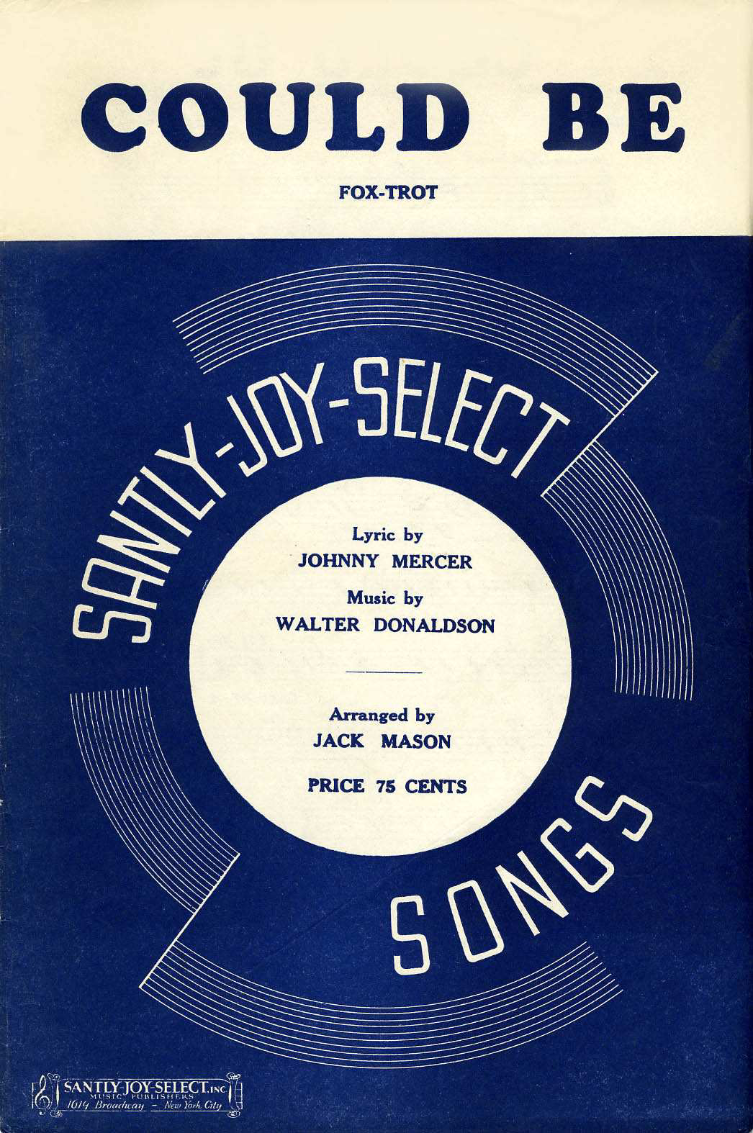
Could Be (J.Mason) sheet music preview

Could Be (J.Mason)

Composed by WALTER DONALDSON

Arranged by Jack Mason

  • Ensemble: Big Band Dance
  • Style: Foxtrot
  • Pages: 30
  • Instruments (14): Alto Saxophone 1, Tenor Saxophone 2, Alto Saxophone 3, Tenor Saxophone 4, Trombone 1, Trombone 2, Trumpet 1, Trumpet 2, Trumpet 3, Piano, Guitar, Bass, Drum Set, Violin 1
  • Difficulty: medium
  • Content: Individual Parts
  • Format: PDF Download (Instant)
  • Price: $24.99

Walter Donaldson's "Could Be" emerges from the golden age of American popular song, a classic from the 1920s that embodies the burgeoning spirit of the Foxtrot era. While not as universally recognized as some of his other compositions like "My Blue Heaven" or "Yes Sir, That's My Baby," "Could Be" captures the charming melodicism and rhythmic vitality characteristic of the period when jazz was evolving from its nascent forms into a more sophisticated dance music. This particular tune, with its straightforward yet engaging harmonic progression, provided a fertile ground for arrangers to craft danceable and memorable big band charts. It represents a delightful slice of early 20th-century popular music, offering a glimpse into the sophisticated entertainment that captivated audiences during the pre-swing era. Jack Mason’s arrangement of "Could Be (J.Mason)" is a masterful recreation of the big band dance style, specifically tailored for a 17-instrument ensemble. Mason approaches this Foxtrot with an authentic sensibility, delivering a medium-tempo feel that is both swinging and eminently danceable. The arrangement is set in a bright, accessible key, evoking a mood of lighthearted sophistication and classic elegance. Mason’s signature technique shines through in his meticulous voicings, which provide a rich, full sound without sacrificing clarity. Expect expertly crafted soli sections for the saxophones and brass, showcasing the ensemble's precision and blend. The overall energy is consistently buoyant, designed to encourage rhythmic engagement from both performers and listeners, making it ideal for period-specific performances or as a charming contrast in a varied program. The arrangement features the melody gracefully passed between different sections, ensuring dynamic interest. Initially, the melody is often presented by the saxophone section, perhaps with a warm, blended sound, before being picked up by the brass for a more declarative statement. While this chart is primarily an ensemble showcase, Mason often includes brief, idiomatic solo opportunities—perhaps a short, lyrical tenor saxophone break or a trumpet fill—that are integrated seamlessly into the overall structure rather than serving as extended improvisational vehicles. Technical challenges for the ensemble lie in achieving a unified articulation and precise rhythmic execution, particularly in the intricate soli passages and the characteristic Foxtrot rhythmic figures. The rewarding aspect of performing this piece comes from mastering its stylistic nuances and delivering a cohesive, polished performance that transports the audience back to the dance halls of the 1920s and 30s. This arrangement is well-suited for college and community big bands seeking to explore the foundational repertoire of dance-oriented jazz, as well as professional ensembles looking for authentic, high-quality charts from the early big band era. This Foxtrot arrangement of "Could Be" should be approached with a consistent, medium-tempo feel, aiming for a metronomic range of quarter note = 120-130 BPM. The rhythmic precision in the brass and saxophone sections is paramount, particularly in the syncopated figures that define the Foxtrot style; ensure clean attacks and releases. Articulation should be light and crisp, avoiding overly heavy accents unless specifically marked. Pay close attention to dynamics, as Mason’s charts often feature subtle shifts that contribute significantly to the overall musicality. There are no extended improvised solos, but any short melodic breaks should be played with a lyrical, idiomatic phrasing. Rehearsal time should focus on balancing the intricate voicings, ensuring that inner voices are heard without overpowering the melody, and achieving a cohesive ensemble blend, especially in the soli sections. Q: What instruments and parts are included in this arrangement? A: This arrangement is scored for a 17-instrument big band, including Alto Saxophone 1, Alto Saxophone 2, Tenor Saxophone 1, Tenor Saxophone 2, Baritone Saxophone, 4 Trumpets, 4 Trombones, Piano, Bass, Guitar, and Drums. Q: What is the difficulty level of "Could Be (J.Mason)"? A: This arrangement is rated as medium difficulty. It requires solid ensemble playing, precise articulation, and a good understanding of the Foxtrot style, making it suitable for college, community, and professional big bands. Q: What musical style and historical context does this arrangement represent? A: This is a classic Foxtrot from the 1920s, composed by Walter Donaldson. Jack Mason's arrangement authentically captures the sound and feel of early big band dance music from the pre-swing era. Q: What makes Jack Mason's arrangement of "Could Be" unique? A: Mason's arrangement is distinguished by its authentic period voicings, meticulously crafted soli sections, and a faithful recreation of the Foxtrot style, offering a sophisticated yet accessible big band chart from a foundational era of jazz. Q: What is the typical performance duration and tempo for this piece? A: The typical performance duration for "Could Be (J.Mason)" is approximately 3-4 minutes, played at a medium Foxtrot tempo, generally between quarter note = 120-130 BPM.

Musicians Also Search For

Could Be Jack Mason PDFCould Be Jack Mason sheet musicCould Be arranged by Jack MasonJack Mason big band dance chartsJack Mason jazz arrangements PDFCould Be WALTER DONALDSON sheet musicCould Be WALTER DONALDSON big band dance arrangementWALTER DONALDSON big band dance chartsCould Be big band dance arrangementCould Be big band dance PDF downloadCould Be jazz ensemble sheet musicbig band dance sheet music instant downloadCould Be individual parts downloadCould Be sheet music with partsCould Be Foxtrot chartFoxtrot big band dance arrangementsbuy Could Be sheet music onlinedownload Could Be PDFCould Be jazz chartbest Jack Mason big band dance arrangementsWALTER DONALDSON songs arranged by Jack MasonCould Be printable sheet musicbig band dance repertoire PDF

All arrangements by Jack Mason All WALTER DONALDSON sheet music