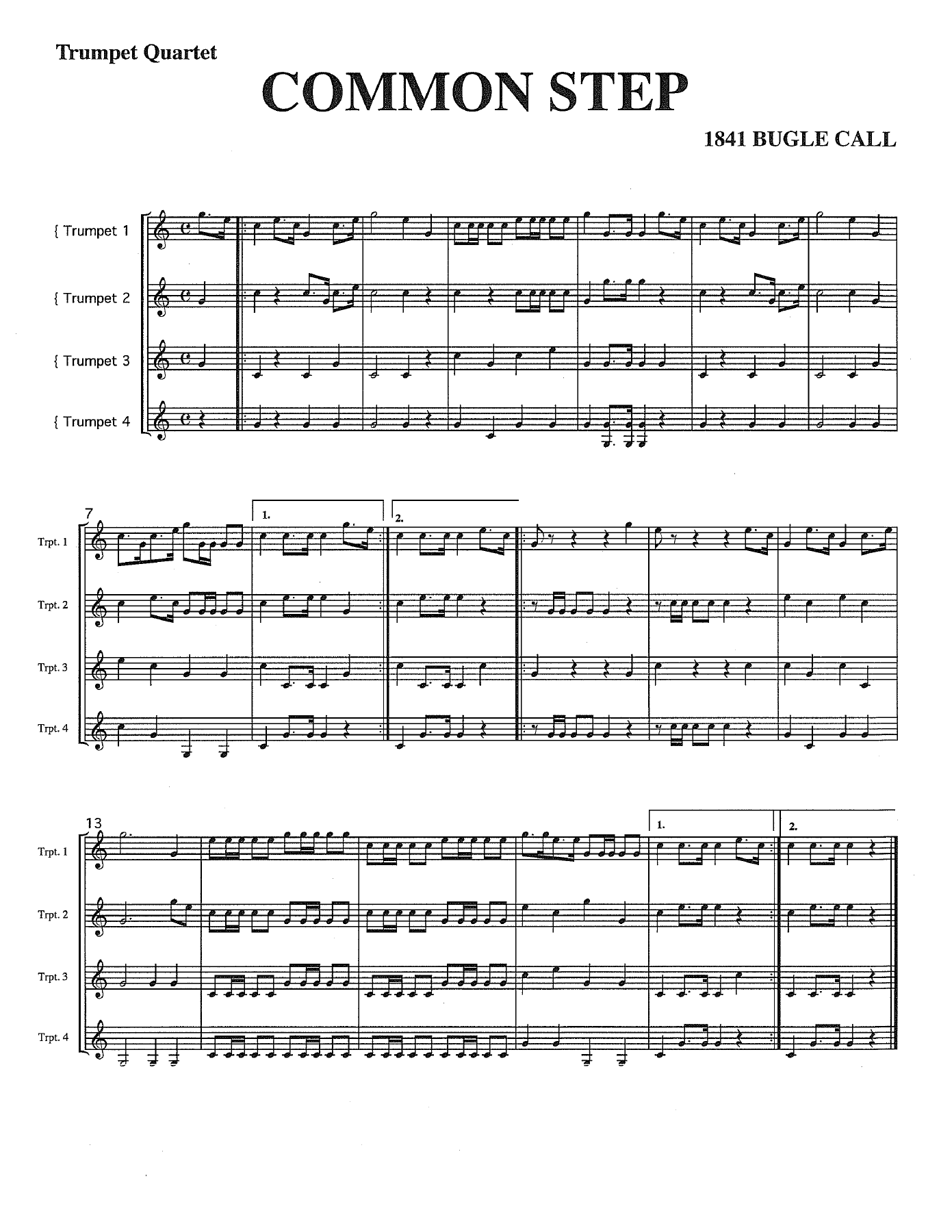
Common Step sheet music preview

Common Step

Composed by Traditional

Arranged by Unknown Arranger

  • Ensemble: Small Ensemble
  • Style: Jazz Standard
  • Pages: 5
  • Difficulty: easy
  • Content: Sheet Music
  • Format: PDF Download (Instant)
  • Price: $12.99

"Common Step" is a vibrant small ensemble arrangement that breathes new life into the timeless "Rhythm Changes" harmonic progression, a cornerstone of the jazz repertoire. This progression, famously derived from George Gershwin's 1930 hit "I Got Rhythm," became ubiquitous in the 1930s, '40s, and '50s, serving as a foundational harmonic structure for countless jazz compositions, particularly during the bebop era. Jazz musicians embraced "Rhythm Changes" to create new melodies—known as contrafacts—over its familiar chord structure, allowing for fresh creative expression while building upon a universally recognized harmonic framework. Iconic tunes such as Duke Ellington's "Cotton Tail," Charlie Parker's "Moose the Mooche," Thelonious Monk's "Rhythm-a-Ning," and Sonny Rollins' "Oleo" are all celebrated examples built upon these changes. "Common Step" taps into this rich legacy, offering a fresh melodic and rhythmic interpretation that honors the tradition while providing a contemporary feel. This arrangement is conceived as an up-tempo bebop excursion, typically performed at a brisk ♩=240-280 BPM. It is set in the traditional key of B-flat major, providing a bright and energetic sonic landscape. The mood is exhilarating and virtuosic, designed to evoke the high-energy improvisational spirit of classic bebop. The piece features a driving medium-fast swing feel, propelled by a walking bass line and crisp drum patterns. The melodic lines are angular and harmonically sophisticated, characteristic of the bebop style, utilizing extended harmonies and chromatic embellishments that create a sense of forward motion and excitement. The overall energy is infectious, encouraging both performers and listeners to engage with its intricate yet swinging character. The Unknown Arranger's treatment of "Common Step" is marked by a clever interplay between unison lines and tightly voiced harmonies. The arrangement opens with a fiery unison statement of the melody, immediately establishing its bebop credentials. This is quickly followed by a harmonized soli section that showcases the ensemble's blend and precision, employing close-position voicings that create a dense, modern sound. Throughout the piece, the arranger masterfully deploys rhythmic hits and syncopated figures, driving the momentum forward. A distinctive feature is the call-and-response between different sections of the small ensemble during the shout chorus, building intensity before leading into an open solo section over the familiar "Rhythm Changes" form. The arrangement includes suggested melodic fragments for soloists, offering guidance while encouraging individual improvisation. The ending is a powerful, punctuated statement, leaving a lasting impression of sophisticated energy. "Common Step" is ideally suited for college-level jazz ensembles, advanced high school groups, or community jazz bands with proficient improvisers and strong rhythmic section players. The technical challenges include navigating fast melodic lines, executing intricate rhythmic figures with precision, and maintaining a consistent, driving swing feel at a high tempo. The rewarding aspects lie in the opportunity for collective musicality, the thrill of performing complex bebop language, and the freedom for featured soloists to express themselves over one of jazz's most fundamental harmonic progressions. It provides an excellent vehicle for developing ensemble cohesion, rhythmic accuracy, and improvisational fluency within a classic jazz idiom. To achieve the intended up-tempo bebop feel, conductors should emphasize rhythmic precision and a relentless forward drive at ♩=240-280 BPM. Encourage the rhythm section to lay down a solid foundation: a walking bass line that is both agile and harmonically clear, and drums that provide crisp, syncopated accents without overpowering. Horn players must focus on clean articulation and blend, particularly in the unison and soli sections, ensuring that the angular melodic lines cut through with clarity. Technical challenges in the fast passages require diligent individual practice, followed by slow, careful ensemble rehearsal, gradually increasing tempo. Special attention should be paid to dynamic contrasts, using sudden shifts to highlight the call-and-response sections and build excitement into the shout chorus. Soloists should be encouraged to draw from bebop vocabulary, utilizing arpeggios, scales, and chromaticism over the "Rhythm Changes" progression. Q: What instruments/parts are included in the "Common Step" arrangement? A: This small ensemble arrangement typically includes parts for standard jazz instrumentation such as trumpet, alto saxophone, tenor saxophone, trombone, piano, bass, and drums. Specific instrumentation may vary slightly, but it is designed for a compact, versatile group. Q: What is the difficulty level of "Common Step"? A: "Common Step" is considered an advanced-intermediate to advanced-level arrangement, appropriate for college jazz ensembles, advanced high school bands, or proficient community jazz groups. It requires strong technical facility, rhythmic accuracy, and improvisational experience. Q: What is the musical style and historical context of "Common Step"? A: "Common Step" is a jazz standard arrangement in the bebop style, based on the famous "Rhythm Changes" chord progression derived from George Gershwin's 1930 song "I Got Rhythm." It embodies the high-energy, harmonically sophisticated characteristics of mid-20th-century bebop. Q: What makes this arrangement of "Common Step" unique? A: This arrangement features a distinctive Unknown Arranger's approach with a dynamic interplay of unison melody statements, tightly voiced soli sections, and a powerful shout chorus. It offers a fresh, energetic take on a classic jazz harmonic form, providing both challenge and reward for performers. Q: What is the typical performance duration and tempo for "Common Step"? A: The typical performance duration for "Common Step" is approximately 4-6 minutes, depending on the number and length of improvised solos. It is designed to be performed at a brisk, up-tempo bebop swing feel, ideally between ♩=240-280 BPM.

Musicians Also Search For

Common Step Unknown Arranger PDFCommon Step Unknown Arranger sheet musicCommon Step arranged by Unknown ArrangerUnknown Arranger small ensemble chartsUnknown Arranger jazz arrangements PDFCommon Step Traditional sheet musicCommon Step Traditional small ensemble arrangementTraditional small ensemble chartsCommon Step small ensemble arrangementCommon Step small ensemble PDF downloadCommon Step jazz ensemble sheet musicsmall ensemble sheet music instant downloadCommon Step sheet music with partsCommon Step Jazz Standard chartJazz Standard small ensemble arrangementsbuy Common Step sheet music onlinedownload Common Step PDFCommon Step jazz chartbest Unknown Arranger small ensemble arrangementsTraditional songs arranged by Unknown ArrangerCommon Step printable sheet musicsmall ensemble repertoire PDF

All arrangements by Unknown Arranger