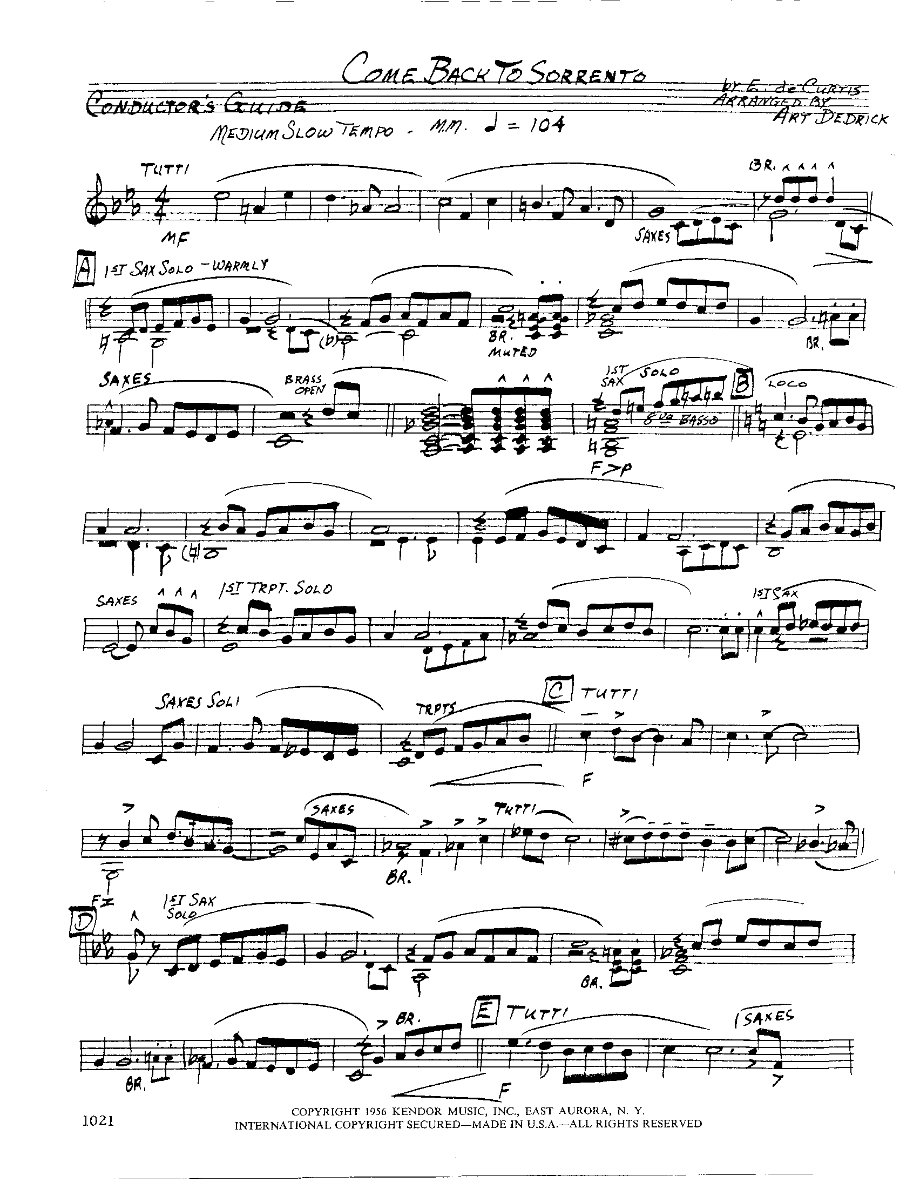
Come Back to Sorrento (A.Dedrick) sheet music preview

Come Back to Sorrento (A.Dedrick)

Composed by Ernesto De Curtis

Arranged by Art Dedrick

  • Ensemble: Big Band
  • Style: Jazz Standard
  • Pages: 22
  • Instruments (15): Conductor's Guide, Alto Saxophone 1, Alto Saxophone 3, Tenor Saxophone 2, Baritone Saxophone, Trumpet 1, Trumpet 2, Trumpet 3, Trombone 1, Trombone 2, Trombone 3, Bass Tuba, Piano, Drum Set, String Bass
  • Difficulty: medium
  • Content: Individual Parts
  • Format: PDF Download (Instant)
  • Price: $24.99

Ernesto De Curtis's timeless Neapolitan song, "Torna a Surriento," composed in 1902, transcends its operatic origins to become a beloved melody recognized globally. While not a jazz standard in the traditional sense of originating from the American Songbook, its enduring melodic beauty and harmonic richness have made it a fertile ground for interpretation across genres, including jazz. Its lush, romantic character, often associated with Italian tenors like Enrico Caruso and later popularized by artists ranging from Elvis Presley to Dean Martin, evokes a profound sense of nostalgia, longing, and the picturesque beauty of the Bay of Naples. This arrangement by Art Dedrick masterfully reimagines this classic, transforming its inherent lyricism into a sophisticated big band jazz vehicle. Dedrick's treatment of "Come Back to Sorrento" establishes a medium swing feel, firmly rooted in a classic big band idiom, likely around 120-130 BPM. The original's melancholic romanticism is preserved but infused with a vibrant, swinging energy. Dedrick, known for his accessible yet musically substantial arrangements, typically employs clear melodic statements, well-crafted counter-melodies, and intelligent voicings that allow bands of varying skill levels to sound professional. Expect rich, full-bodied saxophone section writing, often featuring tight soli passages that showcase the section's blend and precision. The brass sections will likely contribute with both supporting harmonies and punchy, articulate figures, building towards climactic moments. This arrangement likely opens with a lush, perhaps rubato, introduction that sets the mood before transitioning into the medium swing tempo. The iconic melody is initially presented by a lead instrument or section, perhaps the lead alto saxophone or a combined sax section, allowing its inherent beauty to shine. Dedrick's genius often lies in his ability to maintain melodic integrity while layering it with jazz harmonies and rhythmic sophistication. Expect a featured solo, most likely for tenor saxophone or trumpet, providing an opportunity for improvisation over the familiar chord changes. The arrangement will build through dynamic contrasts, possibly incorporating a powerful shout chorus where the full ensemble engages in a harmonically rich and rhythmically driving passage, culminating in a satisfying and memorable conclusion. This arrangement is ideally suited for high school, college, and community jazz ensembles seeking to expand their repertoire with a piece that offers both melodic familiarity and genuine jazz challenge. The technical demands are likely moderate, focusing on blend, articulation, dynamic control, and rhythmic precision rather than extreme ranges or blistering tempos. It provides an excellent opportunity for developing musicians to work on swinging eighth notes, ensemble cohesion, and navigating classic big band voicings. The rewarding aspect lies in transforming a beloved classical melody into a compelling jazz statement, offering both the band and the audience a fresh, engaging perspective on a truly timeless piece. Conductors should emphasize a consistent medium swing feel throughout, ensuring eighth notes are swung evenly and with appropriate jazz inflection. The opening, if rubato, requires careful attention to ensemble breathing and dynamic shaping to establish the romantic mood before the tempo locks in. Articulation is paramount, particularly in the brass, to achieve Dedrick's characteristic clarity and punch. Pay close attention to dynamic markings; Dedrick often uses subtle shifts to build tension and release. Soloists should be encouraged to improvise melodically and tastefully, respecting the original song's character while embracing the jazz idiom. Rehearsal time should focus on section blend, especially in the saxophone soli passages, and ensuring rhythmic precision in the ensemble hits. No special techniques like plunger mutes or extended brass effects are typically required for Dedrick's arrangements of this style, focusing instead on fundamental big band execution. Q: What instruments are included in this arrangement of "Come Back to Sorrento (A. Dedrick)"? A: This big band arrangement includes parts for 17 instruments: Alto Saxophone 1, Alto Saxophone 2, Tenor Saxophone 1, Tenor Saxophone 2, Baritone Saxophone, Trumpet 1, Trumpet 2, Trumpet 3, Trumpet 4, Trombone 1, Trombone 2, Trombone 3, Trombone 4, Piano, Bass, Drums, and Guitar. Q: What is the difficulty level of this arrangement? A: This arrangement is generally considered to be of a medium difficulty, suitable for high school, college, and community jazz ensembles. It offers engaging parts without excessive technical demands, focusing on ensemble blend, articulation, and swing feel. Q: What is the musical style and historical context of "Come Back to Sorrento (A. Dedrick)"? A: The original "Torna a Surriento" is a classic Neapolitan song from 1902. Art Dedrick's arrangement transforms it into a medium swing big band jazz standard, blending its romantic melody with a traditional jazz ensemble sound. Q: What makes Art Dedrick's arrangement of "Come Back to Sorrento" unique? A: Dedrick's approach is characterized by his ability to retain the original melody's beauty while infusing it with sophisticated jazz harmonies, clear voicings, and a classic big band swing feel. It's known for being accessible yet musically rich, offering a fresh perspective on a timeless piece. Q: What is the typical performance duration and tempo for this piece? A: While variable based on improvisation, this medium swing arrangement typically runs between 3 to 4 minutes. The tempo is a comfortable medium swing, likely in the range of 120-130 beats per minute.

Musicians Also Search For

Come Back to Sorrento Art Dedrick PDFCome Back to Sorrento Art Dedrick sheet musicCome Back to Sorrento arranged by Art DedrickArt Dedrick big band chartsArt Dedrick jazz arrangements PDFCome Back to Sorrento Ernesto De Curtis sheet musicCome Back to Sorrento Ernesto De Curtis big band arrangementErnesto De Curtis big band chartsCome Back to Sorrento big band arrangementCome Back to Sorrento big band PDF downloadCome Back to Sorrento jazz ensemble sheet musicbig band sheet music instant downloadCome Back to Sorrento conductor score PDFCome Back to Sorrento individual parts downloadCome Back to Sorrento sheet music with partsCome Back to Sorrento Jazz Standard chartJazz Standard big band arrangementsbuy Come Back to Sorrento sheet music onlinedownload Come Back to Sorrento PDFCome Back to Sorrento jazz chartbest Art Dedrick big band arrangementsErnesto De Curtis songs arranged by Art DedrickCome Back to Sorrento printable sheet musicbig band repertoire PDF

All arrangements by Art Dedrick All Ernesto De Curtis sheet music