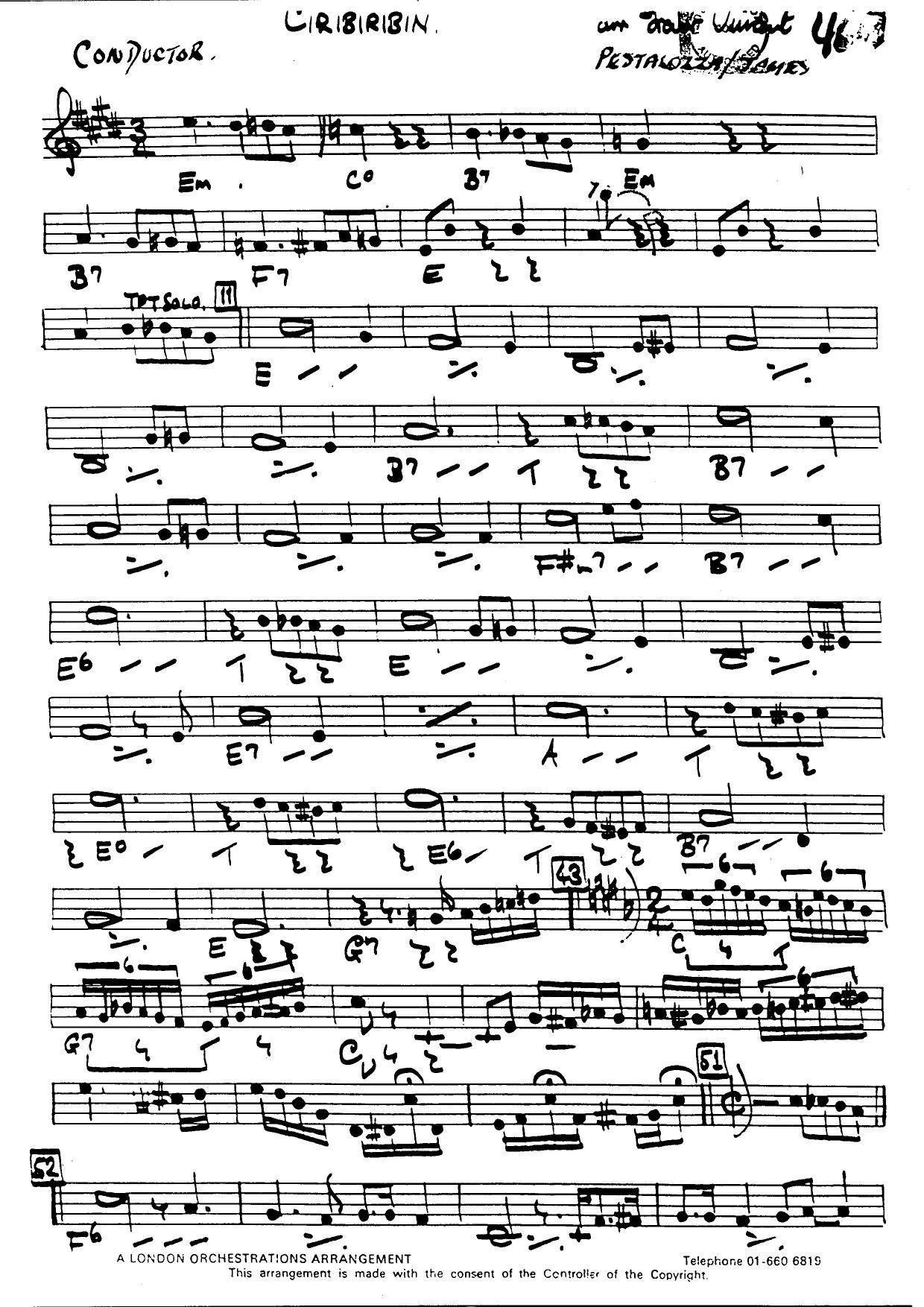
Ciribiribin (T.Vincent)
Composed by Alberto Pestalozza
Arranged by Harry James
- Ensemble: Big Band
- Pages: 47
- Instruments (18): Conductor (Lead Sheet), Alto Saxophone 1, Alto Saxophone 2, Tenor Saxophone 1, Tenor Saxophone 2, Baritone Saxophone, Trumpet 1, Trumpet 2, Trumpet 3, Trumpet 4, Trombone 1, Trombone 2, Trombone 3, Trombone 4, Guitar, Piano, Bass, Drums
- Difficulty: medium
- Content: Individual Parts
- Format: PDF Download (Instant)
- Price: $24.99
Alberto Pestalozza’s lively 1898 Italian waltz melody "Ciribiribin" underwent a dramatic transformation when trumpet virtuoso Harry James adopted it as his signature theme song in 1939. Immortalized by the Harry James Orchestra during the height of the swing era, this high-energy arrangement captures the exuberance of big band swing combined with James's penchant for dazzling pyrotechnics and soaring upper-register brass writing. While originally a lighthearted European parlor tune, this swing adaptation elevates the composition into a quintessential showcase of American big band showmanship, blending infectious melodic hooks with sophisticated harmonic framing characteristic of late-1930s and 1940s jazz orchestration. Propelled by an exuberant, driving medium-up swing tempo in 4/4 time, this chart exudes an uncontainable, celebratory energy. The mood is triumphant and theatrical, opening with an unmistakable clarion call before launching into a relentless rhythmic drive that evokes the glamorous atmosphere of mid-century ballroom dance halls. The brass section anchors the sonic profile with brilliant, biting staccato punches, while the saxophones weave agile counterlines underneath the primary thematic statements. The emotional trajectory moves from sheer high-voltage excitement to a breathtaking, high-register brass climax that never fails to electrify an audience. Harry James’s signature arranging approach is stamped all over this score, heavily prioritizing virtuosic trumpet exposition and rich, tightly-knit brass voicings. The arrangement opens with a dramatic, free-flowing introductory cadenza before settling into a crisp groove where the lead trumpet takes center stage, framed by cascading saxophone solis and punchy, off-beat ensemble interjections. The harmonic language expands upon Pestalozza’s simple major-scale triads by injecting crisp secondary dominants, altered extensions, and sudden dynamic shifts that heighten the tension heading into the shout chorus. The modulatory bridge and subsequent rebuild showcase how James balanced commercial accessibility with advanced compositional color. The lead trumpet chair carries the lion's share of the melodic responsibility, requiring a player with exceptional endurance, absolute precision in the extreme upper register, and a bold, projecting tone. Significant featured solo space is carved out for the lead trumpet, demanding facility with rapid articulation and expressive vibrato in the style of James himself. Secondary technical challenges lie within the woodwind sections, which must negotiate fast scalar passages and tight unison lines against the driving rhythm section. Precision in swing eighth-note articulation and dynamic control during the dynamic swells are vital for capturing the authentic period style, making every rehearsal deeply rewarding as the intricate counterpoint locks into place. Advanced high school groups, collegiate ensembles, and professional or community big bands with a strong lead trumpet player will find this 17-instrument arrangement an exhilarating centerpiece for a concert program. Due to the high demands placed on the trumpet section—particularly the first chair—and the requirement for tight ensemble cohesion at upbeat tempos, it is best suited for experienced bands capable of handling authentic swing-era idioms with professional flair. Conductors approaching this Harry James classic must prioritize balance between the roaring brass section and the foundational rhythm groove. The tempo should remain steady and bright, avoiding the temptation to rush the syncopated figures. Trumpet 1 must possess a commanding upper register, but players should blend carefully to avoid masking the saxophones during their ensemble solis. Style-wise, utilize crisp articulation: short, accented notes should be clipped and punchy, while longer lines require a smooth, vocal swing integration. Rehearsal should begin by isolating the rhythm section to lock in the driving 4/4 pulse before layering in the saxophones and brass. Pay close attention to dynamic markings, particularly the sudden sub-ito pianos leading into the shout chorus, which create the dramatic tension essential for this arrangement's high-impact delivery. Q: What instruments and parts are included in this arrangement? A: This standard 17-instrument big band arrangement includes parts for four trumpets, trombone sections, full saxophone section, and a complete rhythm section spanning 47 total pages of manuscript. Q: What is the difficulty level of this chart? A: This arrangement is rated advanced, primarily due to the demanding upper-register requirements, stamina, and stylistic precision required of the lead trumpet player and the high-speed ensemble articulation. Q: What is the historical style and background of this piece? A: Written in the swing era style, this chart is based on Alberto Pestalozza's 1898 waltz, which was famously adapted and popularized as a high-octane swing standard by trumpet legend Harry James in 1939. Q: What makes this specific arrangement unique? A: It features Harry James's signature treatment of the melody, blending virtuosic trumpet cadenzas, soaring upper-register brass highlights, and sophisticated late-30s big band voicings that elevate a European parlor tune into an iconic jazz showcase. Q: What is the recommended performance tempo and duration? A: The arrangement is set to a driving, medium-up swing feel in 4/4 time and typically runs around 3 to 4 minutes depending on the chosen tempo and the length of the featured trumpet solo.
Questions and answers
- What is included in the Ciribiribin (T.Vincent) PDF?
- The verified current file contains individual parts across 47 pages.
- How many instruments or parts are listed for Ciribiribin (T.Vincent)?
- The verified instrumentation list contains 18 entries for this Big Band arrangement.
- Who is credited for Ciribiribin (T.Vincent)?
- Composer: Alberto Pestalozza. Arranger: Harry James.
- What difficulty is listed for Ciribiribin (T.Vincent)?
- The verified difficulty level is medium.
- Can I preview Ciribiribin (T.Vincent) before buying?
- Yes. The product page provides a preview generated from the current PDF file.
- How is Ciribiribin (T.Vincent) delivered?
- After successful payment, the digital PDF is made available for download. The displayed price is $24.99.
Musicians Also Search For
Ciribiribin Harry James PDF • Ciribiribin Harry James sheet music • Ciribiribin arranged by Harry James • Harry James big band charts • Harry James jazz arrangements PDF • Ciribiribin Alberto Pestalozza sheet music • Ciribiribin Alberto Pestalozza big band arrangements • Alberto Pestalozza big band charts • Ciribiribin big band arrangements • Ciribiribin big band PDF download • Ciribiribin jazz sheet music • big band sheet music download • Ciribiribin individual parts download • Ciribiribin sheet music PDF • buy Ciribiribin sheet music • download Ciribiribin PDF • Ciribiribin jazz charts • best Harry James big band arrangements • Alberto Pestalozza arranged by Harry James • Ciribiribin printable sheet music • big band repertoire PDF