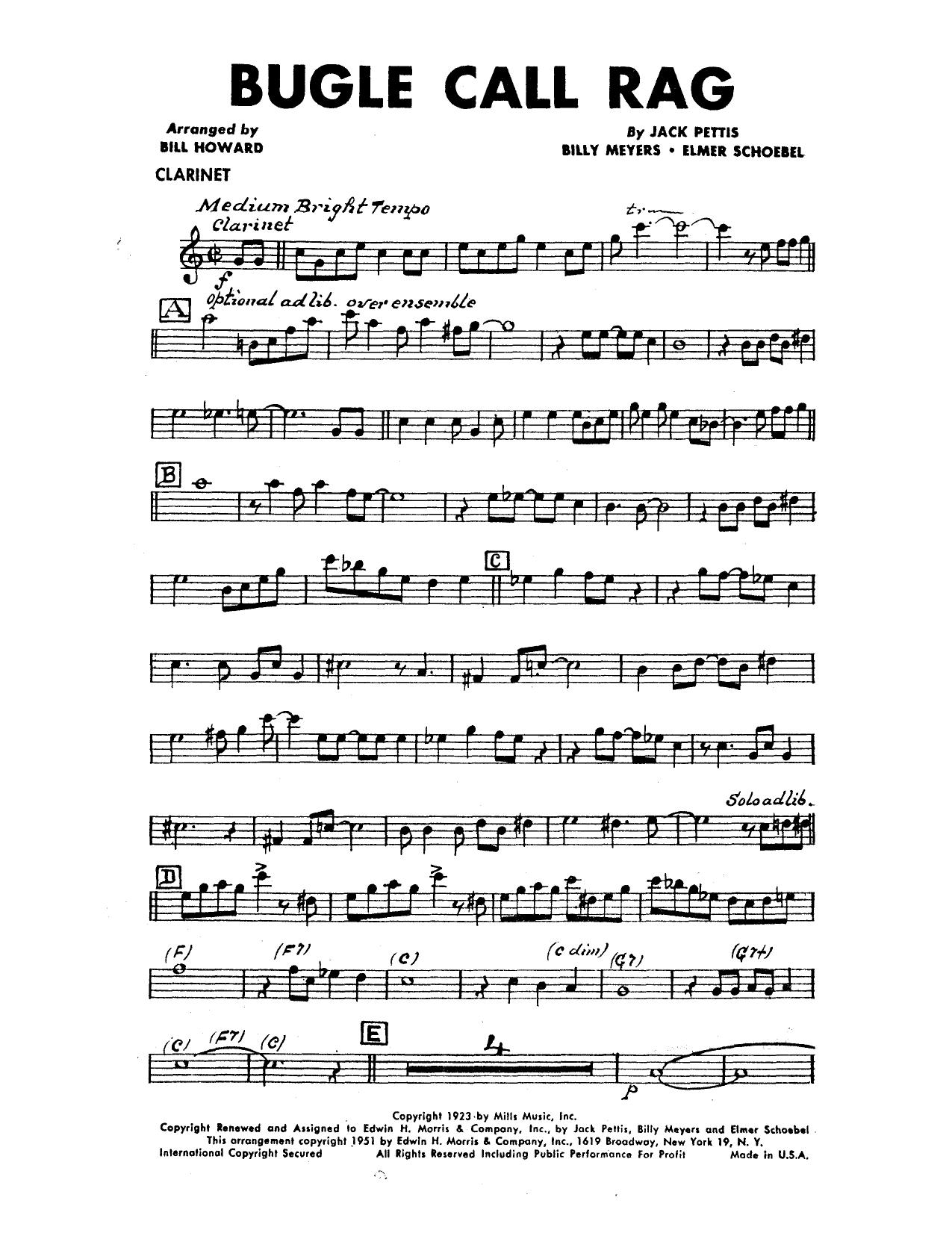
Bulge Call Rag (B.Howard) sheet music preview

Bulge Call Rag (B.Howard)

Composed by Bob Howard

Arranged by B.Howard

  • Ensemble: Dixieland Band
  • Style: Ragtime
  • Pages: 18
  • Difficulty: easy
  • Content: Sheet Music
  • Format: PDF Download (Instant)
  • Price: $18.99

"Bulge Call Rag," originally composed by Bob Howard, transports listeners and performers alike to the vibrant, syncopated world of early 20th-century American music. While the precise composition date of "Bulge Call Rag" isn't widely documented, the style itself, Ragtime, flourished from the 1890s to the 1910s, serving as a direct precursor to jazz. Ragtime is characterized by its "ragged" or syncopated rhythms, typically played by the right hand on the piano, set against a steady, march-like accompaniment in the left hand. Though primarily a solo piano style, ragtime significantly influenced early jazz bands, which imitated its style and added improvisation. Bob Howard, the original composer, was an American pianist-vocalist prominent in swing records of the 1930s, known for his hot small group swing records and as the first African-American to host a regularly broadcast network TV show. While his primary fame lies in the swing era, his connection to a ragtime piece like "Bulge Call Rag" highlights the stylistic fluidity and foundational role of ragtime in the development of jazz. This arrangement of "Bulge Call Rag" is designed for a Dixieland band, an ensemble type that emerged in the early 20th century, drawing influences from ragtime, blues, and military marching band music. Dixieland jazz is defined by its lively, often polyphonic texture, featuring collective improvisation among the frontline instruments—typically trumpet, clarinet, and trombone—over a buoyant two-beat feel. This particular arrangement captures the energetic and celebratory mood inherent in the ragtime tradition, rendered with the brassy, spirited sound characteristic of Dixieland. The tempo should be a bright, medium-up tempo, maintaining a driving, rhythmic pulse that encourages toe-tapping and a joyful atmosphere. The key is chosen to facilitate the characteristic melodic interplay and harmonic clarity of the style, ensuring both instrumental comfort and authentic sound. Arranger B. Howard, known for his insightful treatment of traditional jazz forms, approaches "Bulge Call Rag" with a deep respect for its ragtime origins while expertly adapting it for the Dixieland ensemble. Howard's signature techniques often involve carefully crafted soli sections that allow the entire horn section to articulate the syncopated melodies with precision and unified drive. While Dixieland often features collective improvisation, this arrangement likely balances written passages with opportunities for spontaneous melodic embellishment, a common feature in Howard's Dixieland arrangements. The 18 pages suggest a comprehensive arrangement that provides ample material for development and exploration, ensuring a full and engaging performance. The arrangement features the trumpet or cornet carrying the main melody, with the clarinet weaving intricate counter-melodies and the trombone providing harmonic support and "tailgate" glissandos. Performing "Bulge Call Rag" is a rewarding experience, offering musicians the chance to delve into the foundational elements of jazz. The technical challenges lie in maintaining rhythmic precision within the syncopated figures and achieving a cohesive sound during the collective improvisation sections, which require keen listening and musical dialogue. The interplay between the frontline instruments, particularly the clarinet's obbligato lines and the trombone's smears, creates a vibrant, conversational texture. The arrangement's structure, with its alternating melodic statements and potential for improvised breaks, ensures dynamic contrast and keeps both performers and audience engaged. This arrangement is ideally suited for college and community jazz bands, as well as semi-professional Dixieland ensembles, that possess a solid understanding of traditional jazz idioms and a desire to perform historically rich and musically stimulating repertoire. It provides an excellent platform for developing ensemble cohesion, rhythmic accuracy, and stylistic authenticity. To capture the authentic spirit of "Bulge Call Rag," aim for a bright, medium-up tempo with a strong, consistent two-beat feel in the rhythm section. Drummers should emphasize a crisp press roll and utilize woodblock or rimshot accents to highlight syncopation. The primary technical challenge for the frontline (trumpet, clarinet, trombone) lies in achieving rhythmic precision and clarity in the syncopated melodic lines, particularly during soli sections. Encourage players to articulate these figures sharply and uniformly. For the trombone, mastering "tailgate" glissandos and smears is crucial for stylistic authenticity. Clarinetists should focus on fluid articulation for the rapid counter-melodies. Rehearsal should prioritize listening across the ensemble to ensure tight rhythmic alignment and balanced collective improvisation, where each instrument maintains its distinct role without overpowering others. **Q: What instruments and parts are included in this arrangement?** A: This Dixieland band arrangement typically includes parts for trumpet/cornet, clarinet, trombone, piano, banjo/guitar, bass (string bass or tuba), and drums. The 18 pages suggest a comprehensive set of parts for a standard Dixieland ensemble. **Q: What is the difficulty level of "Bulge Call Rag (B.Howard)"?** A: This arrangement is suitable for intermediate to advanced ensembles, including college and community jazz bands, as well as semi-professional Dixieland groups. It requires a solid grasp of rhythmic precision, ensemble playing, and an understanding of traditional jazz articulation. **Q: What is the historical and musical context of "Bulge Call Rag"?** A: "Bulge Call Rag" is a ragtime piece, a style that flourished from the 1890s to the 1910s and was a significant precursor to jazz. It embodies the syncopated rhythms and lively character of early 20th-century American music, presented here in a Dixieland band setting. **Q: What makes B.Howard's arrangement of "Bulge Call Rag" unique?** A: B.Howard's arrangement distinctively blends the original ragtime character with classic Dixieland instrumentation and performance practices. It features well-crafted soli sections, opportunities for collective improvisation, and specific voicings that highlight the polyphonic texture characteristic of the Dixieland style. **Q: What is the approximate performance duration and tempo for this piece?** A: While exact duration can vary with interpretation, "Bulge Call Rag" should be performed at a bright, medium-up tempo, maintaining a driving two-beat feel. A typical performance would likely range between 3 to 4 minutes, depending on the number and length of improvised sections.

Musicians Also Search For

Bulge Call Rag B.Howard PDFBulge Call Rag B.Howard sheet musicBulge Call Rag arranged by B.HowardB.Howard dixieland band chartsB.Howard jazz arrangements PDFBulge Call Rag Bob Howard sheet musicBulge Call Rag Bob Howard dixieland band arrangementBob Howard dixieland band chartsBulge Call Rag dixieland band arrangementBulge Call Rag dixieland band PDF downloadBulge Call Rag jazz ensemble sheet musicdixieland band sheet music instant downloadBulge Call Rag sheet music with partsBulge Call Rag Ragtime chartRagtime dixieland band arrangementsbuy Bulge Call Rag sheet music onlinedownload Bulge Call Rag PDFBulge Call Rag jazz chartbest B.Howard dixieland band arrangementsBob Howard songs arranged by B.HowardBulge Call Rag printable sheet musicdixieland band repertoire PDF

All arrangements by B.Howard All Bob Howard sheet music