Brazil (arr Dave Wolpe)
Composed by Ary Barroso
Arranged by Dave Wolpe
- Ensemble: Small Ensemble
- Style: Jazz Standard
- Pages: 37
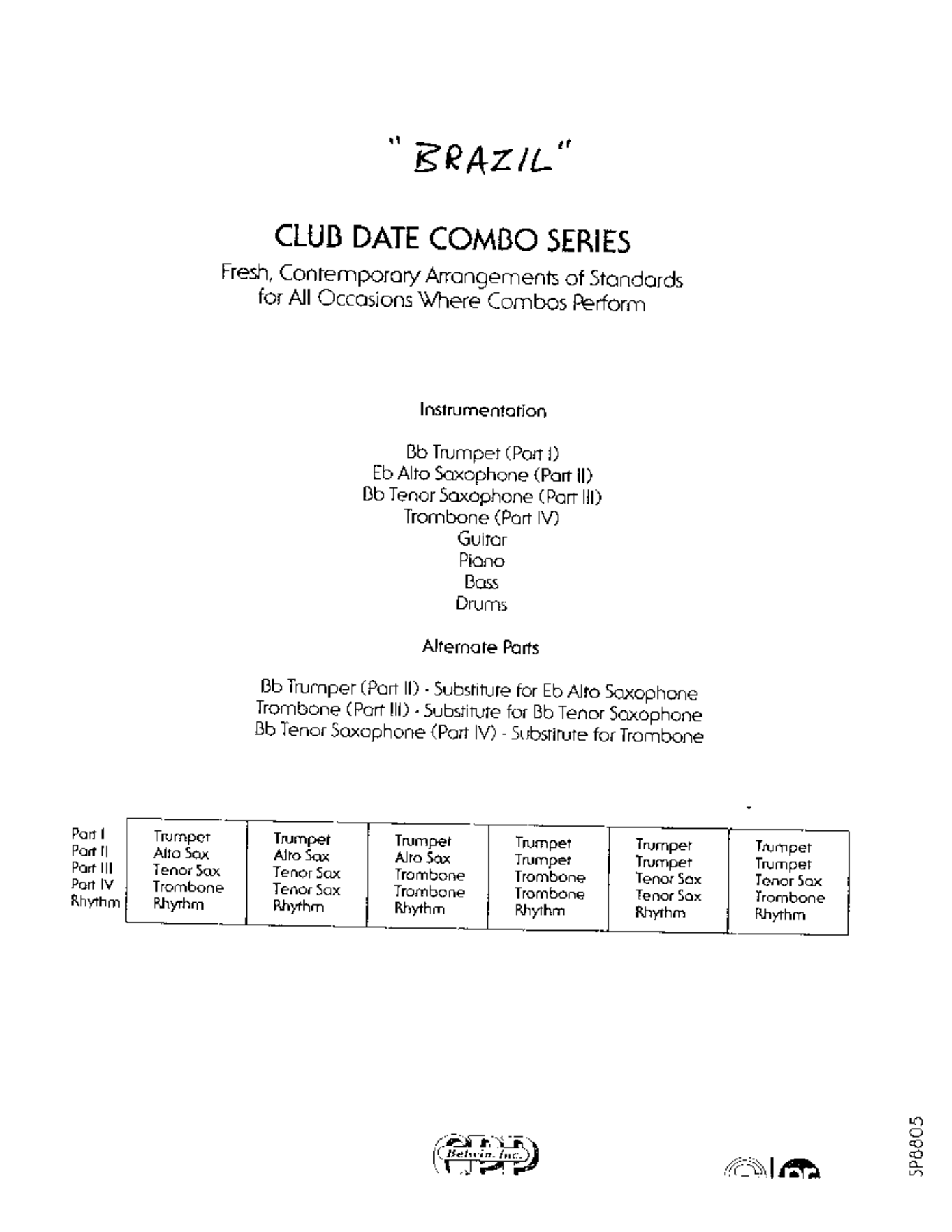
- Instruments (11): Bb Trumpet (Part I), Eb Alto Saxophone (Part II), Bb Tenor Saxophone (Part III), Trombone (Part IV), Guitar, Piano, Bass, Drums, Bb Trumpet (Part II) (Substitute for Eb Alto Saxophone), Trombone (Part III) (Substitute for Bb Tenor Saxophone), Bb Tenor Saxophone (Part IV) (Substitute for Trombone)
- Difficulty: easy
- Content: Individual Parts
- Format: PDF Download (Instant)
- Price: $12.99
"Aquarela do Brasil," universally known as "Brazil," is a cornerstone of the global musical lexicon, originally penned by the brilliant Brazilian composer Ary Barroso in 1939. This iconic samba-exaltação piece quickly transcended its origins, becoming a powerful symbol of Brazilian culture and national pride. Its fame soared internationally after its inclusion in Walt Disney's 1942 animated film *Saludos Amigos*, and it has since been embraced by countless artists across diverse genres, solidifying its status as one of the most recognized and frequently recorded Brazilian songs of all time. Barroso's genius lies in blending a lush, romantic melody with an irresistible rhythmic drive, capturing the vibrant spirit and picturesque landscapes of Brazil. The harmonic language, while rooted in samba, often incorporates jazz-influenced chord progressions, making it a natural fit for jazz interpretation and a rewarding study in Latin jazz harmony. Dave Wolpe's arrangement of "Brazil" for small ensemble masterfully reinterprets this samba classic through a jazz lens, offering a medium Latin groove that pulsates with authentic energy. Wolpe, renowned for his meticulous and musician-friendly charts, approaches this piece with a keen understanding of both the original's character and the demands of a contemporary jazz ensemble. His signature style often features sophisticated voicings, clear melodic lines, and well-crafted soli sections, designed to make each part feel integral and engaging. This arrangement maintains the buoyant, celebratory mood of Barroso's original, evoking a sense of joy and rhythmic vitality that is characteristic of the samba. The primary key, typically bright and accessible, allows for both lyrical expression and rhythmic precision. In this arrangement, the iconic melody of "Brazil" is thoughtfully distributed, often featuring the lead alto saxophone or trumpet, with rich harmonies provided by the other horns. Expect engaging soli sections where the horn lines interweave, showcasing the ensemble's blend and precision. While specific solo sections are integral to jazz performance, Wolpe's arrangements frequently include written solo opportunities or clear indications for improvisation over established chord changes, allowing soloists to shine within the Latin framework. Technical challenges typically involve maintaining the precise rhythmic integrity of the Latin groove, particularly in the rhythm section, and executing the ensemble figures with unified articulation and dynamics. The reward lies in the exhilarating experience of performing such a beloved and rhythmically infectious piece, where every musician contributes to a vibrant, cohesive sound. This small ensemble arrangement is ideally suited for college, community, and advanced high school jazz ensembles. Its detailed scoring and clear musical directives make it accessible for developing musicians while offering enough harmonic and rhythmic sophistication to engage more experienced players. The arrangement provides an excellent opportunity to delve into Latin jazz stylistic nuances, fostering rhythmic precision, ensemble cohesion, and improvisational skills within a classic framework. Bands looking to add an authentic and exciting Latin jazz standard to their repertoire will find Wolpe's "Brazil" an invaluable and highly performable addition. Conductors should emphasize a consistent and authentic medium Latin groove from the rhythm section, particularly focusing on the interplay between bass and drums to establish the samba feel without rushing. The tempo should be vibrant, around 180-200 BPM, allowing the rhythmic figures to breathe while maintaining forward momentum. Horn players must pay close attention to articulation, utilizing short, crisp notes for rhythmic passages and a warm, sustained tone for melodic phrases. Dynamic contrasts are crucial to highlight the call-and-response sections and build energy towards the shout chorus. Rehearsal should focus on precise ensemble attacks and releases, especially in the tightly voiced soli sections. Encourage soloists to embrace the Latin rhythmic vocabulary in their improvisations, drawing inspiration from the established groove. No special mutes are explicitly required, but discretion in their use can add color. **Q: What instruments are included in this small ensemble arrangement?** A: This arrangement is typically scored for a small jazz ensemble, often including trumpet, alto saxophone, tenor saxophone, trombone, and a full rhythm section (piano, guitar, bass, and drums). The exact instrumentation may vary slightly, but it is designed for a compact horn section plus rhythm. **Q: What is the difficulty level of this arrangement?** A: Dave Wolpe's arrangements are generally considered intermediate to medium-advanced (Grade 3-4), making them suitable for college, community, and advanced high school jazz bands. It presents engaging challenges in rhythm and ensemble playing without being overly complex. **Q: What is the musical style and historical context of "Brazil"?** A: "Brazil" is a classic samba-exaltação, composed by Ary Barroso in 1939. It's a patriotic Brazilian song that became a global jazz standard, characterized by its infectious Latin groove and soaring melodies. **Q: What makes Dave Wolpe's arrangement of "Brazil" unique?** A: Dave Wolpe's arrangement is distinctive for its authentic medium Latin groove, sophisticated voicings, and clear, playable lines for a small jazz ensemble. His charts are known for their musicality and ability to capture the essence of the original while making it accessible for jazz groups. **Q: What is the typical performance duration of this arrangement?** A: While exact duration can vary with solos and repeats, a typical performance of this arrangement would likely fall in the range of approximately 3 to 5 minutes, depending on the number and length of improvised solos.
Questions and answers
- What is included in the Brazil (arr Dave Wolpe) PDF?
- The verified current file contains individual parts across 37 pages.
- How many instruments or parts are listed for Brazil (arr Dave Wolpe)?
- The verified instrumentation list contains 11 entries for this Small Ensemble arrangement.
- Who is credited for Brazil (arr Dave Wolpe)?
- Composer: Ary Barroso. Arranger: Dave Wolpe.
- What difficulty is listed for Brazil (arr Dave Wolpe)?
- The verified difficulty level is easy.
- What style is listed for Brazil (arr Dave Wolpe)?
- The catalog lists the style as Jazz Standard.
- Can I preview Brazil (arr Dave Wolpe) before buying?
- Yes. The product page provides a preview generated from the current PDF file.
- How is Brazil (arr Dave Wolpe) delivered?
- After successful payment, the digital PDF is made available for download. The displayed price is $12.99.
Musicians Also Search For
Brazil Dave Wolpe PDF • Brazil Dave Wolpe sheet music • Brazil arranged by Dave Wolpe • Dave Wolpe small ensemble charts • Dave Wolpe jazz arrangements PDF • Brazil Ary Barroso sheet music • Brazil Ary Barroso small ensemble arrangements • Ary Barroso small ensemble charts • Brazil small ensemble arrangements • Brazil small ensemble PDF download • Brazil jazz sheet music • small ensemble sheet music download • Brazil individual parts download • Brazil sheet music PDF • Brazil Jazz Standard charts • Jazz Standard small ensemble arrangements • buy Brazil sheet music • download Brazil PDF • Brazil jazz charts • best Dave Wolpe small ensemble arrangements • Ary Barroso arranged by Dave Wolpe • Brazil printable sheet music • small ensemble repertoire PDF