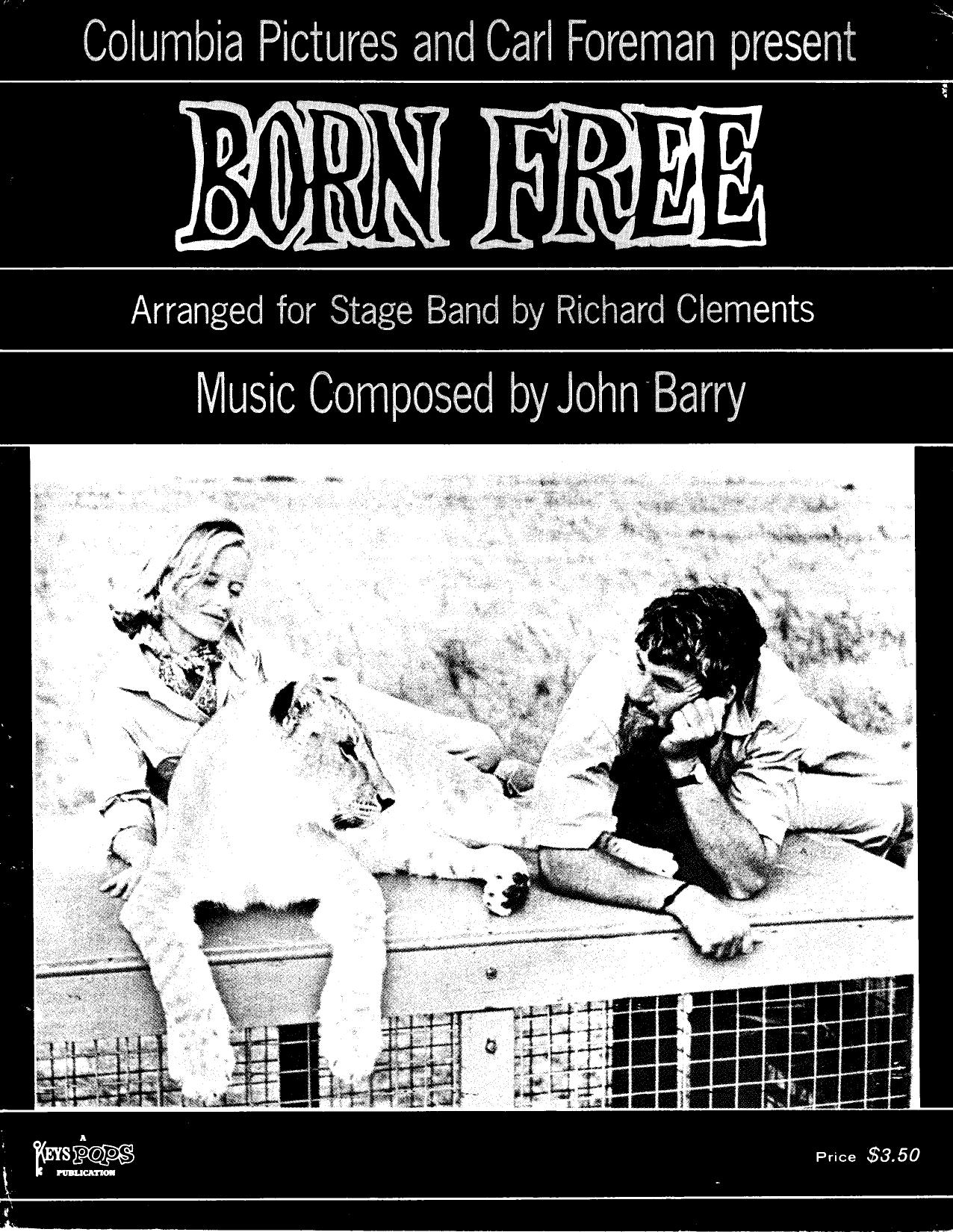
Born Free (R.Clements)
Composed by John Barry
Arranged by R.Clements
- Ensemble: Big Band
- Pages: 27
- Instruments (17): 1st Eb Alto Saxophone, 2nd Bb Tenor Saxophone, 3rd Eb Alto Saxophone, 4th Bb Tenor Saxophone, 5th Eb Baritone Saxophone, 1st Bb Trumpet, 2nd Bb Trumpet, 3rd Bb Trumpet, 4th Bb Trumpet, 1st Trombone, 2nd Trombone, 3rd Trombone, 4th Trombone, Piano, Bass, Guitar, Drums
- Difficulty: medium
- Content: Individual Parts
- Format: PDF Download (Instant)
- Price: $24.99
Rooted in the rich soil of folk tradition and elevated by mid-century cinematic grandeur, the timeless melody of "Born Free" has long invited sophisticated harmonic reinterpretation. Originally composed by John Barry with lyrics by Don Black for the 1966 film of the same name—winning an Academy Award for Best Original Song and becoming a signature vocal vehicle for artists like Matt Monro and Andy Williams—the tune possesses an inherent yearning and expansive lyrical contour. In the hands of arranger R.Clements, this iconic theme is stripped of its sentimental cinematic gloss and recontextualized within a sophisticated, modern big band framework that honors its melodic integrity while injecting fresh harmonic vitality and rhythmic drive. Opening with a moody, atmospheric rubato intro led by the piano and shimmering cymbals, the arrangement quickly establishes a supple, medium-swing groove in 4/4 time. The mood evolves from introspective and spacious to one of soaring, triumphant collective energy. Clements masterfully utilizes contemporary extended tertian and quartal harmonies, introducing subtle chromatic mediant shifts beneath the familiar melody. The brass section is deployed with rich, burnished voicings that evoke the West Coast cool school, balancing warm open-horn textures with tight, articulate bebop-infused background figures. Mid-century modernism meets contemporary big band writing through clever use of counterpoint, where the tenor saxophone and trombone weave independent melodic commentary behind the primary line. The structural architecture of the chart builds organically across its 27 pages of meticulously engraved parts. The lead alto saxophone and trumpet share primary melodic duties in the head, before giving way to an expansive, highly conversational solo section designed to showcase a featured improviser over a harmonically rich modal vamp. Clements avoids predictable big band clichés, instead crafting a harmonically dense shout chorus that utilizes dynamic contrast—shifting seamlessly from a whisper-quiet, muted brass sub-tone texture to a roaring, full-ensemble block-chord climax. Rhythmic syncopation throughout the ensemble demands crisp articulation, particularly in the rhythm section, where the drummer is encouraged to drive the medium-up tempo with a buoyant ride cymbal pulse and well-placed interactive kicks. Advanced high school ensembles with strong section leaders, as well as ambitious collegiate and professional community big bands, will find this arrangement an exceptionally rewarding addition to their repertoire. The 7-instrument core configuration provides a focused, chamber-jazz big band texture that highlights individual musicianship while demanding tight ensemble interdependence. Performers will relish the sophisticated harmonic palette and intelligent pacing, making it an ideal choice for festival competition or as a sophisticated centerpiece for a contemporary concert program. Success with this arrangement hinges on achieving a relaxed yet relentlessly driving medium-swing feel. The tempo should not be rushed; maintaining a steady, conversational groove allows the rich alterations in Clements’ chord voicings to breathe. The rhythm section is the anchor here: the pianist should voice chords sparingly using rootless voicings in the left hand, while the bassist lays down a walking line that locks tightly with the drummer's ride cymbal and hi-hat on beats two and four. Technically, the primary challenges lie in the subtle dynamic control required during the muted sections and the precision needed for the fast, interlocking chromatic lines in the woodwinds. Conductors should pay close attention to balance during the developmental middle section, ensuring that the background figures do not obscure the featured soloist. Brass players should practice their dynamic swells carefully to execute the dramatic crescendos leading into the shout chorus without distorting their tone. Encourage the ensemble to treat the familiar melody not as a nostalgic pop tune, but as a living, breathing jazz vehicle with deep emotional resonance. Q: What instruments and parts are included in this arrangement? A: The arrangement is scored for a 7-instrument ensemble featuring Alto Saxophone, Tenor Saxophone, Trumpet, Trombone, Piano, and rhythm section components across a comprehensive 27-page score and parts set. Q: What is the difficulty level of this chart? A: This arrangement is graded as advanced-intermediate to advanced, making it ideal for skilled high school, collegiate, and professional community big bands that possess strong soloists and tight section cohesion. Q: What is the historical and stylistic context of this version? A: Based on the classic cinematic theme popularized in the 1960s, R.Clements transforms the traditional melody into a modern jazz vehicle that bridges cool-school harmonies with an infectious medium-swing feel. Q: What makes R.Clements' arrangement unique? A: It avoids predictable big band clichés by utilizing sophisticated extended harmonies, subtle modal vamps, intricate counterpoint between the tenor sax and trombone, and a dynamically striking shout chorus. Q: What is the expected performance duration and tempo? A: The arrangement is set at a comfortable, driving medium-swing tempo and typically runs between 4 to 5 minutes in performance duration, depending on the length of the improvised solos.
Questions and answers
- What is included in the Born Free (R.Clements) PDF?
- The verified current file contains a conductor score and individual parts across 27 pages.
- How many instruments or parts are listed for Born Free (R.Clements)?
- The verified instrumentation list contains 17 entries for this Big Band arrangement.
- Who is credited for Born Free (R.Clements)?
- Composer: John Barry. Arranger: R.Clements.
- What difficulty is listed for Born Free (R.Clements)?
- The verified difficulty level is medium.
- Can I preview Born Free (R.Clements) before buying?
- Yes. The product page provides a preview generated from the current PDF file.
- How is Born Free (R.Clements) delivered?
- After successful payment, the digital PDF is made available for download. The displayed price is $24.99.
Musicians Also Search For
Born Free R.Clements PDF • Born Free R.Clements sheet music • Born Free arranged by R.Clements • R.Clements big band charts • R.Clements jazz arrangements PDF • Born Free John Barry sheet music • Born Free John Barry big band arrangements • John Barry big band charts • Born Free big band arrangements • Born Free big band PDF download • Born Free jazz sheet music • big band sheet music download • Born Free conductor score PDF • Born Free individual parts download • Born Free sheet music PDF • buy Born Free sheet music • download Born Free PDF • Born Free jazz charts • best R.Clements big band arrangements • John Barry arranged by R.Clements • Born Free printable sheet music • big band repertoire PDF