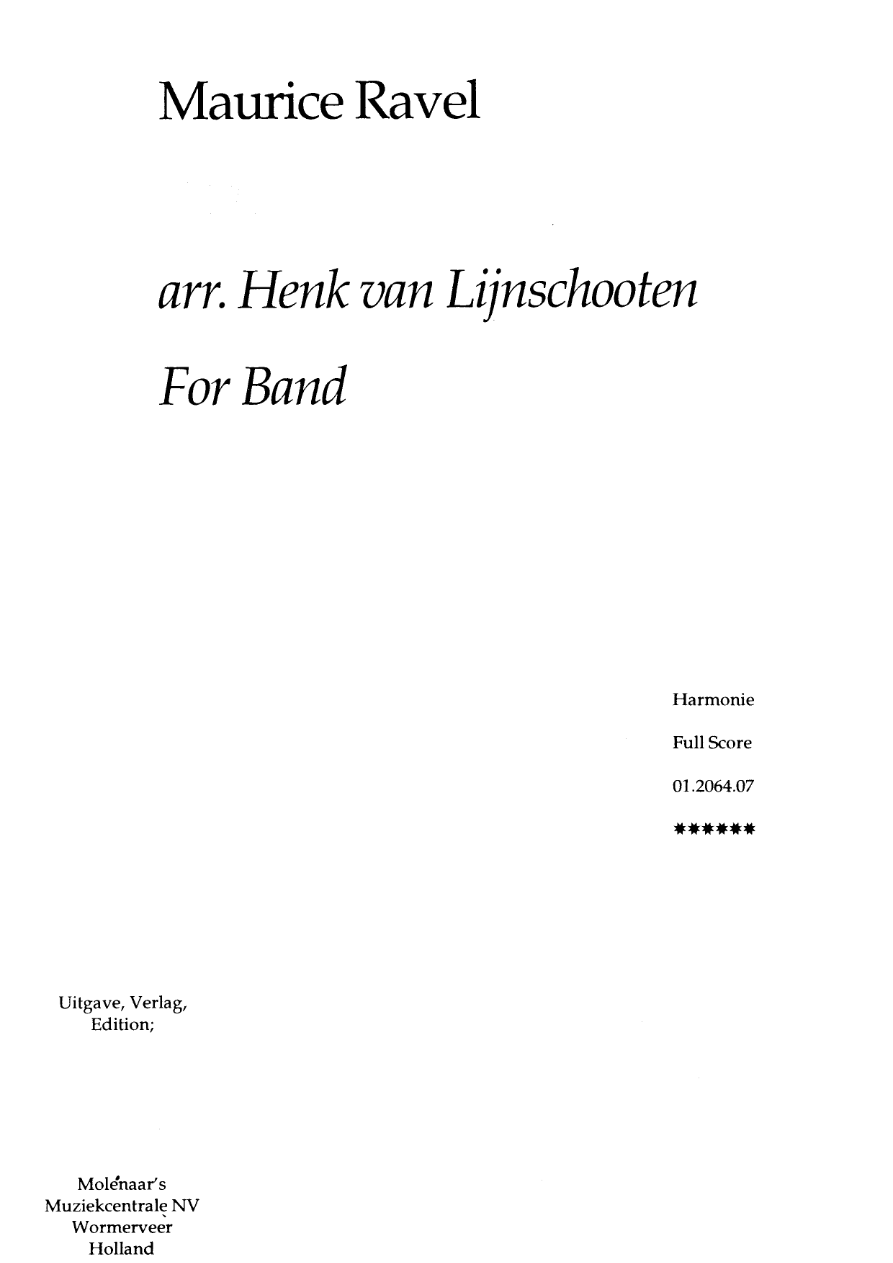
Bolero (Ravel, Lijnschooten)
Composed by Maurice Ravel
Arranged by Ravel, Lijnschooten
- Ensemble: Concert Band
- Style: Bolero
- Pages: 49
- Difficulty: medium
- Content: Sheet Music
- Format: PDF Download (Instant)
- Price: $22.99
Maurice Ravel's iconic "Boléro," originally composed in 1928 as a ballet score, stands as one of the most recognizable and hypnotically compelling works in the classical repertoire. Its enduring fame stems from its audacious structural simplicity: a single, unvarying tempo, a constant dynamic crescendo, and the relentless repetition of two melodic themes, all built over an unwavering snare drum ostinato. This revolutionary approach to orchestration and musical form captivated audiences from its premiere and has since transcended its classical origins, influencing countless genres and becoming a cultural touchstone. The piece is a masterclass in tension building, relying entirely on changes in instrumentation, texture, and dynamic intensity to create its dramatic arc, rather than thematic development. This particular arrangement, "Bolero (Ravel, Lijnschooten)," reimagines Ravel's orchestral masterpiece for the concert band, bringing its unique character to a new ensemble. While maintaining the original's core essence—the unwavering tempo, the insistent snare drum rhythm, and the recurring melodic motifs—Lijnschooten's treatment skillfully translates Ravel's intricate orchestral colors into the diverse palette of the modern wind ensemble. The arrangement preserves the original's relentless 3/4 time signature and the gradual, inexorable crescendo, beginning with a whisper and building to a monumental, almost overwhelming climax. The mood progresses from an ethereal, almost minimalist opening to a powerful, triumphant, and ultimately cathartic conclusion, evoking a sense of destiny and inevitable grandeur. Lijnschooten's distinctive approach lies in his meticulous re-orchestration, ensuring that the iconic solo lines are distributed effectively among the concert band's woodwind and brass sections, often featuring instruments like the alto saxophone, tenor saxophone, trumpet, and trombone in prominent roles that echo their orchestral counterparts. The arranger expertly manages the dynamic build-up, assigning specific instrumental combinations to each repetition of the theme, allowing for a clear and controlled progression of timbre and volume. While the original's harmonic language is largely preserved, the arrangement may subtly enhance certain voicings to maximize the resonance and power of the concert band. The challenge and reward lie in maintaining the unwavering tempo and rhythmic precision throughout the piece's extended duration, requiring exceptional ensemble discipline and breath control from all performers. Performing this arrangement is a profound exercise in sustained musicality and control. The melody, initially introduced by a solo clarinet, gradually passes through various instruments, including flute, bassoon, oboe, and eventually the brass, each adding its unique color to the developing tapestry. While there are no improvised solos in the jazz sense, the featured melodic lines demand expressive phrasing and impeccable intonation. The technical challenges primarily revolve around rhythmic accuracy, maintaining the steady tempo, and executing the monumental dynamic range from *pianissimo* to *fortissimo* with precision. This arrangement is highly suitable for advanced high school, collegiate, community, and professional concert bands seeking a challenging yet deeply rewarding work that offers both an educational experience in sustained performance and a powerful audience experience. The sheer endurance required, combined with the necessity for absolute rhythmic unity, makes this a demanding but ultimately exhilarating piece to perform. The primary technical challenge in "Bolero (Ravel, Lijnschooten)" is maintaining an absolutely unwavering tempo and rhythmic integrity from start to finish. The specified tempo marking is *Tempo di Bolero, Moderato assai* (approximately quarter note = 72), and strict adherence is paramount; any fluctuation undermines the piece's hypnotic effect. The snare drum ostinato must be rock-solid and consistent, acting as the rhythmic anchor for the entire ensemble. Conductors should emphasize careful dynamic layering, ensuring each entrance and crescendo is meticulously controlled to build the tension gradually and inexorably. Breath control is critical for woodwind and brass players, especially during the extended melodic lines and sustained dynamic levels. Encourage a unified articulation style, particularly for the recurring rhythmic figures, to maintain clarity and drive. Special techniques are minimal, focusing more on precise ensemble playing rather than extended techniques. Rehearsal time should be dedicated to practicing long stretches without interruption to build stamina and internalize the relentless rhythmic pulse, focusing on the subtle shifts in timbre and dynamic contour that define the arrangement's character. Q: What instruments and parts are included in this arrangement? A: This arrangement for concert band typically includes a full complement of woodwind, brass, and percussion parts, such as flutes, oboes, bassoons, clarinets (Bb, bass), saxophones (alto, tenor, baritone), trumpets, French horns, trombones, euphonium, tuba, and a comprehensive percussion section featuring snare drum (with the iconic ostinato), bass drum, cymbals, and tam-tam. Q: What is the difficulty level of "Bolero (Ravel, Lijnschooten)"? A: This arrangement is considered advanced (Grade 5-6), requiring a high level of technical proficiency, exceptional rhythmic precision, and significant ensemble discipline from all musicians. Its demands lie in sustained performance, dynamic control, and maintaining an unwavering tempo over an extended duration. Q: What is the musical style and historical context of this arrangement? A: This arrangement is a concert band transcription of Maurice Ravel's "Boléro," a classical orchestral work originally composed in 1928 in the "Bolero" style, characterized by its Spanish dance rhythm, repetitive melodic themes, and a relentless, gradual crescendo. It is not a jazz arrangement, but rather a faithful adaptation of a classical masterpiece for a different ensemble. Q: What makes this specific arrangement by Lijnschooten unique? A: Lijnschooten's arrangement is unique in its skillful re-orchestration of Ravel's intricate original for the concert band, effectively translating the iconic solo lines and dynamic build-up to the wind ensemble's instrumentation. It maintains the original's structural integrity and dramatic arc while optimizing the scoring for the unique timbral qualities and power of a concert band. Q: What is the typical performance duration and tempo for this piece? A: The typical performance duration for "Bolero (Ravel, Lijnschooten)" is approximately 14-16 minutes, depending on the conductor's interpretation. The tempo is a strict *Tempo di Bolero, Moderato assai*, generally around a quarter note = 72, which must be maintained consistently throughout the entire piece.
Musicians Also Search For
Bolero Ravel, Lijnschooten PDF • Bolero Ravel, Lijnschooten sheet music • Bolero arranged by Ravel, Lijnschooten • Ravel, Lijnschooten concert band charts • Ravel, Lijnschooten jazz arrangements PDF • Bolero Maurice Ravel sheet music • Bolero Maurice Ravel concert band arrangement • Maurice Ravel concert band charts • Bolero concert band arrangement • Bolero concert band PDF download • Bolero jazz ensemble sheet music • concert band sheet music instant download • Bolero sheet music with parts • Bolero Bolero chart • Bolero concert band arrangements • buy Bolero sheet music online • download Bolero PDF • Bolero jazz chart • best Ravel, Lijnschooten concert band arrangements • Maurice Ravel songs arranged by Ravel, Lijnschooten • Bolero printable sheet music • concert band repertoire PDF