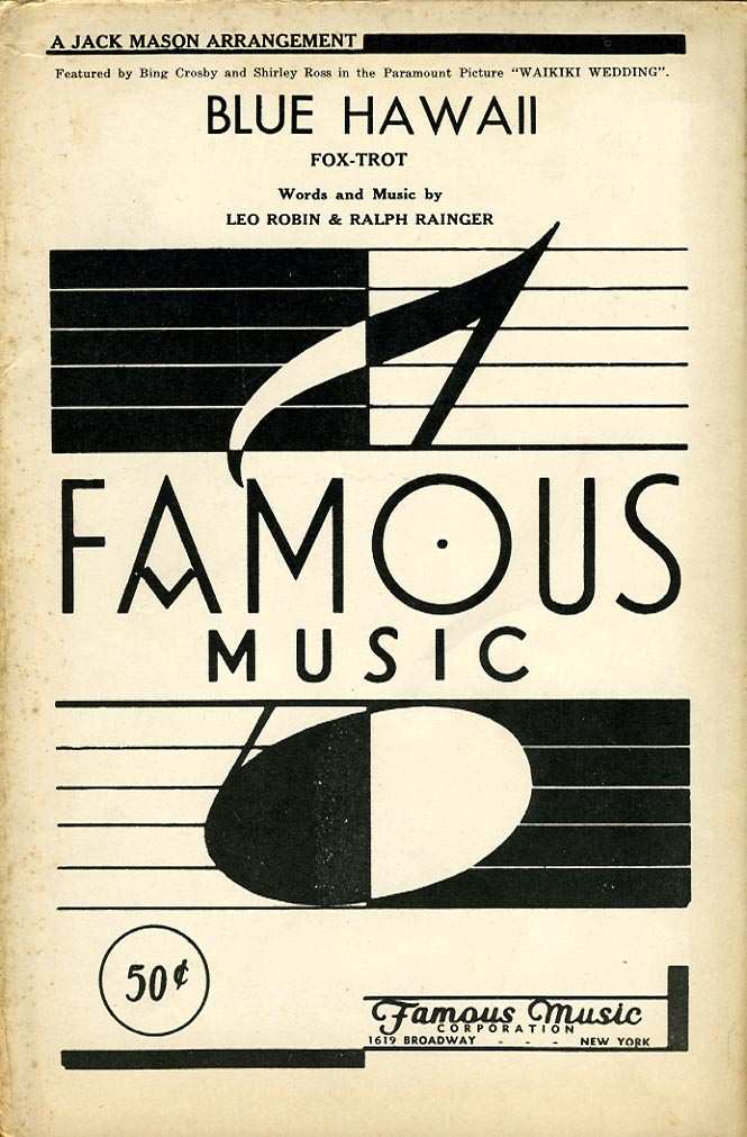
Blue Hawaii (J.Mason) sheet music preview

Blue Hawaii (J.Mason)

Composed by Ralph Rainger, Leo Robin

Arranged by Jack Mason

  • Ensemble: Big Band Dance
  • Style: Foxtrot
  • Pages: 30
  • Instruments (15): 1st Sax. Eb Alto, 2nd Sax. Bb Tenor, 3rd Sax. Eb Alto, 4th Sax. Eb Baritone, 1st Trombone, 2nd Trombone, 1st Trumpet in Bb, 2nd Trumpet in Bb, 3rd Trumpet in Bb, Piano, Guitar or Banjo, Bass, Drums, Violin A-B, Violin C
  • Difficulty: medium
  • Content: Individual Parts
  • Format: PDF Download (Instant)
  • Price: $24.99

"Blue Hawaii," a timeless melody penned by Ralph Rainger and Leo Robin, first graced the silver screen in 1937, famously performed by Bing Crosby in "Waikiki Wedding." Its enduring charm solidified its place as a beloved standard, later reaching an even wider audience through Elvis Presley's iconic 1961 film. This song embodies the romantic escapism and lush, exotic allure associated with the mid-20th century's fascination with Polynesian culture. While not a traditional jazz standard in its inception, its beautiful, flowing melodic lines and harmonic simplicity have made it ripe for interpretation across various genres, including the big band dance orchestra tradition, where its inherent grace can be amplified. J. Mason's arrangement of "Blue Hawaii" reimagines this classic as a sophisticated, medium-tempo Foxtrot, perfectly suited for a big band dance ensemble. The arrangement establishes a smooth, relaxed 4/4 groove from the outset, maintaining a consistent, elegant swing feel throughout. The key of F Major provides a bright yet warm sonic landscape, evoking a sense of nostalgic romance and gentle sway. Mason's distinctive approach is evident in the rich, often close-voiced harmonies, particularly in the saxophone soli sections, which feature lush, sustained chords that float effortlessly over the rhythm section. The overall mood is one of serene beauty and understated elegance, inviting both dancers and listeners into its captivating embrace. The melodic presentation is thoughtfully distributed to highlight the band's various sections. The initial statement of the theme is carried by the lead alto saxophone, often doubled by the lead trumpet, ensuring clarity and warmth. Subsequent melodic phrases are passed between the saxophone section and the brass, creating a conversational texture. J. Mason incorporates a beautifully crafted, lyrical solo for Tenor Saxophone 1, providing an opportunity for expressive improvisation over the song's familiar changes. This solo is supported by subtle, harmonically rich pads from the remaining saxophones and brass, ensuring the soloist remains the focal point without being overshadowed. A standout feature is the full ensemble shout chorus towards the end, which builds dynamically and harmonically, showcasing the band's power and blend before a refined, sustained final chord. This arrangement is ideally suited for college, community, and advanced high school jazz ensembles looking to expand their repertoire with a piece that offers both musical depth and audience appeal. While the technical demands are moderate, requiring solid section playing and good intonation, the true reward lies in achieving a cohesive, expressive performance that captures the elegance and romanticism inherent in the original composition. The balance between ensemble precision and individual musicality, particularly in the tenor solo, makes "Blue Hawaii" a rewarding challenge that will enhance any band's performance. This medium Foxtrot arrangement requires a consistent, relaxed swing feel throughout. Emphasize a light, articulate rhythm section foundation, particularly from the bass and drums, to maintain the danceable groove without becoming heavy. Intonation is paramount in the lush saxophone soli passages; encourage saxophones to listen across the section for precise chord tuning. The Tenor Saxophone 1 solo should be played with a warm, lyrical tone, allowing the melody to breathe. Brass entrances should be clean and blended, avoiding harsh attacks, especially on sustained chords. Dynamics are crucial for shaping the piece; practice the gradual build into the final shout chorus and the controlled decay of the ending. No special techniques like mutes or falls are explicitly notated, allowing the focus to remain on blend, balance, and musicality. Q: What instruments are included in this arrangement? A: This arrangement is scored for a full big band dance ensemble with 17 instruments: Alto Saxophone 1, Alto Saxophone 2, Tenor Saxophone 1, Tenor Saxophone 2, Baritone Saxophone, Trumpet 1, Trumpet 2, Trumpet 3, Trumpet 4, Trombone 1, Trombone 2, Trombone 3, Trombone 4, Piano, Bass, Drums, and Guitar. Q: What is the difficulty level of J. Mason's "Blue Hawaii" arrangement? A: This arrangement is rated as medium difficulty, making it suitable for college, community, and advanced high school jazz ensembles. It requires solid section playing, good intonation, and expressive musicality, but avoids extreme technical demands. Q: What musical style and historical context does this arrangement represent? A: This arrangement presents "Blue Hawaii" as a sophisticated, medium-tempo Foxtrot, reflecting the big band dance orchestra tradition popular from the 1930s through the 1960s. It captures the romantic and elegant mood of the original song, famously associated with Bing Crosby and Elvis Presley. Q: What makes J. Mason's arrangement of "Blue Hawaii" unique? A: J. Mason's distinctive approach is characterized by lush, often close-voiced harmonies in the saxophone soli sections, a beautifully crafted lyrical Tenor Saxophone 1 solo, and a well-constructed full ensemble shout chorus. It reimagines the classic tune with elegance and a refined swing feel. Q: What is the recommended tempo and approximate duration of this piece? A: The recommended tempo for this arrangement is a relaxed medium Foxtrot, around 120-130 beats per minute. Based on this tempo, the approximate performance duration is between 3 minutes and 30 seconds to 4 minutes.

Questions and answers

What is included in the Blue Hawaii (J.Mason) PDF?
The verified current file contains individual parts across 30 pages.
How many instruments or parts are listed for Blue Hawaii (J.Mason)?
The verified instrumentation list contains 15 entries for this Big Band Dance arrangement.
Who is credited for Blue Hawaii (J.Mason)?
Composer: Ralph Rainger, Leo Robin. Arranger: Jack Mason.
What difficulty is listed for Blue Hawaii (J.Mason)?
The verified difficulty level is medium.
What style is listed for Blue Hawaii (J.Mason)?
The catalog lists the style as Foxtrot.
Can I preview Blue Hawaii (J.Mason) before buying?
Yes. The product page provides a preview generated from the current PDF file.
How is Blue Hawaii (J.Mason) delivered?
After successful payment, the digital PDF is made available for download. The displayed price is $24.99.

Musicians Also Search For

Blue Hawaii Jack Mason PDFBlue Hawaii Jack Mason sheet musicBlue Hawaii arranged by Jack MasonJack Mason big band dance chartsJack Mason jazz arrangements PDFBlue Hawaii Ralph Rainger, Leo Robin sheet musicBlue Hawaii Ralph Rainger, Leo Robin big band dance arrangementsRalph Rainger, Leo Robin big band dance chartsBlue Hawaii big band dance arrangementsBlue Hawaii big band dance PDF downloadBlue Hawaii jazz sheet musicbig band dance sheet music downloadBlue Hawaii individual parts downloadBlue Hawaii sheet music PDFBlue Hawaii Foxtrot chartsFoxtrot big band dance arrangementsbuy Blue Hawaii sheet musicdownload Blue Hawaii PDFBlue Hawaii jazz chartsbest Jack Mason big band dance arrangementsRalph Rainger, Leo Robin arranged by Jack MasonBlue Hawaii printable sheet musicbig band dance repertoire PDF

All arrangements by Jack Mason All Ralph Rainger, Leo Robin sheet music