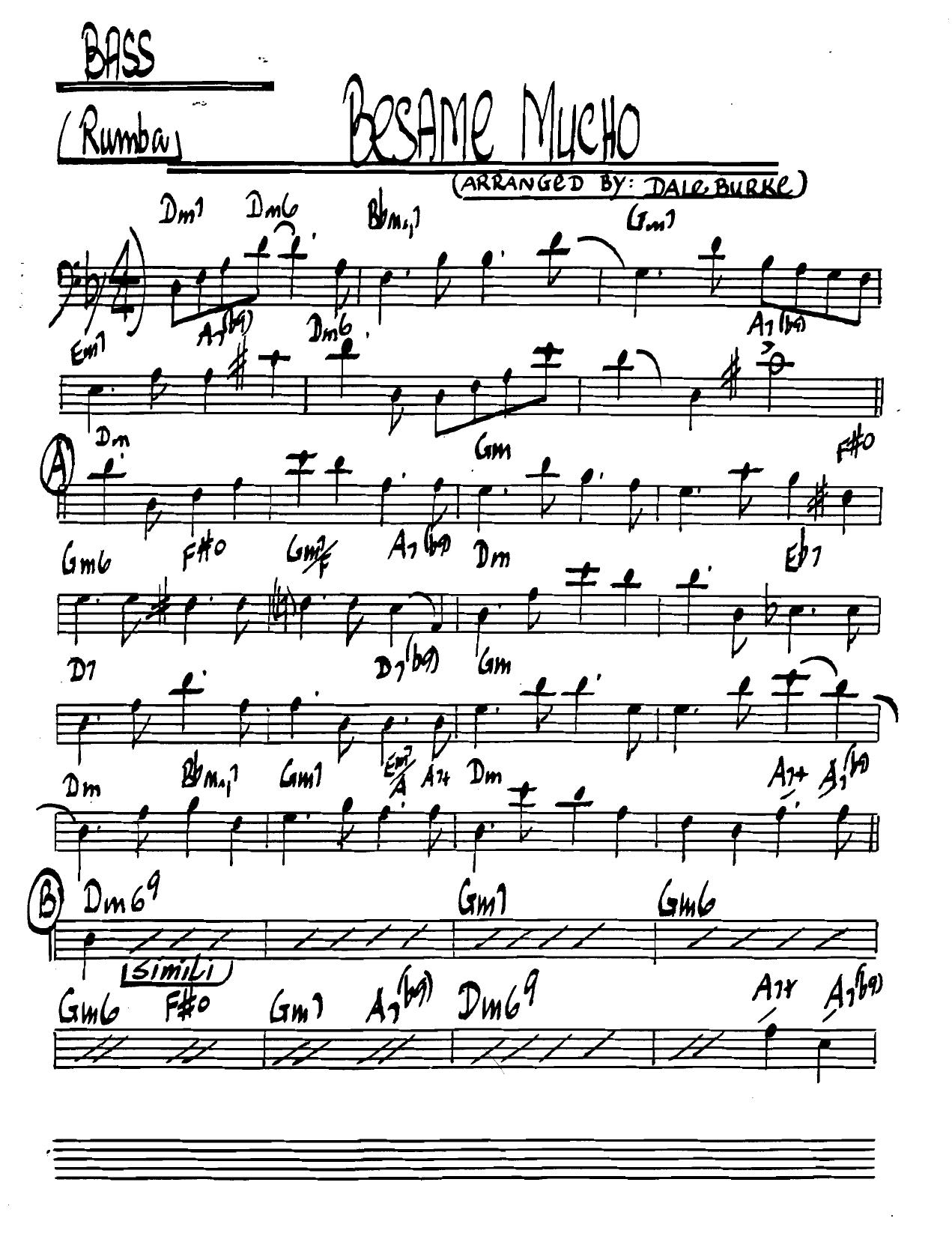
Besamemucho Bass (D.Burke)
Composed by Consuelo Velázquez
Arranged by Dale Burke
- Ensemble: Small Ensemble
- Style: Bossa Nova
- Pages: 3
- Difficulty: easy
- Content: Sheet Music
- Format: PDF Download (Instant)
- Price: $12.99
Consuelo Velázquez's timeless bolero, "Bésame Mucho," composed in 1940, transcends its origins to become one of the most widely recorded and recognized songs in history. While initially a romantic ballad, its enduring melody and sophisticated harmonic structure made it a natural fit for jazz interpretation, particularly within the nascent bossa nova movement of the late 1950s and early 1960s. This era, characterized by its fusion of Brazilian samba rhythms with American jazz harmonies, found "Bésame Mucho" to be a perfect vehicle for its cool, understated elegance. Artists like João Gilberto and Antônio Carlos Jobim frequently explored its lyrical possibilities, cementing its status as a jazz standard and a cornerstone of the bossa nova repertoire. Its melancholic yet inviting melody, often presented in a minor key, evokes a sense of longing and tender passion, making it universally appealing across cultures and generations. Dale Burke's arrangement, "Besamemucho Bass," reimagines this classic through the lens of a small jazz ensemble, specifically highlighting the bass as a melodic and rhythmic anchor. Set in the key of D minor, this arrangement embraces a relaxed, medium bossa nova groove, maintaining the original's inherent romanticism while infusing it with a sophisticated, contemporary jazz sensibility. Burke's signature approach often involves intricate counterpoint and rich harmonic reharmonizations that respect the source material while offering fresh perspectives. Expect elegant voicings that support the bass melody without overpowering it, creating a transparent texture where each instrument contributes meaningfully to the overall tapestry. The mood is one of understated cool and refined introspection, perfect for setting a sophisticated atmosphere. The arrangement features the bass prominently, carrying the primary melodic statements throughout, often with subtle harmonic support from the other ensemble members. While the bass takes center stage, Burke masterfully integrates opportunities for other instruments to shine, perhaps through obbligato lines or carefully placed counter-melodies that weave around the main theme. Technical challenges for the bassist include maintaining a consistent, lyrical tone across the instrument's range, navigating nuanced rhythmic figures inherent to the bossa nova feel, and executing Burke’s often-demanding melodic lines with precision and musicality. For the ensemble, the focus is on blend, balance, and achieving a cohesive, relaxed groove, demanding careful listening and rhythmic accuracy. The reward lies in performing a beloved standard with a fresh, intimate interpretation that showcases the often-understated melodic capabilities of the bass. This arrangement is ideally suited for college-level jazz ensembles, advanced community bands, or professional small groups seeking a sophisticated and engaging piece for their repertoire. Its demands for nuanced phrasing, precise rhythmic execution, and sensitive interplay make it an excellent vehicle for developing musical maturity and ensemble cohesion. The intimate nature of the small ensemble setting allows for individual expression while requiring a high degree of collective musicality. It offers a unique opportunity to explore the bossa nova style with a focus on melodic bass playing, providing a refreshing departure from more traditional ensemble voicings and offering a distinctive sound to any performance program. This arrangement should be approached with a relaxed, medium bossa nova feel, emphasizing a gentle, forward momentum rather than a driving pulse. The tempo should allow for clear articulation of the bass melody and the subtle rhythmic interplay within the ensemble. Key technical challenges include the bassist's lyrical melodic lines, which require a singing tone and precise intonation, particularly in higher registers. Drummers should focus on a light, authentic bossa nova pattern, avoiding overplaying and maintaining dynamic sensitivity. Rehearsal emphasis should be placed on achieving a cohesive ensemble blend and balance, ensuring the bass melody remains prominent without being overwhelmed. Pay close attention to Burke's dynamic markings and phrasing suggestions, as these are crucial for conveying the intended mood and sophistication. Encourage a sense of conversational interplay between instruments rather than a rigid, hierarchical structure. Q: What instruments are included in the "Besamemucho Bass (D.Burke)" arrangement? A: This small ensemble arrangement typically includes parts for bass (carrying the primary melody), piano, drums, and often one or two additional melodic or harmonic instruments such as guitar or a single horn. Specific instrumentation will be detailed on the score. Q: What is the difficulty level of this arrangement? A: This arrangement is considered advanced intermediate to advanced, suitable for college-level ensembles, skilled community bands, or professional small groups. It demands strong musicianship, rhythmic precision, and sensitive ensemble playing, particularly from the bassist. Q: What musical style and historical context does "Besamemucho Bass" represent? A: This arrangement is a bossa nova interpretation of Consuelo Velázquez's classic bolero "Bésame Mucho," originally composed in 1940. It reflects the cool, sophisticated jazz-samba fusion popularized in the late 1950s and early 1960s. Q: What makes Dale Burke's "Besamemucho Bass" arrangement unique? A: Its uniqueness lies in featuring the bass as the primary melodic voice throughout the piece, offering a fresh perspective on a beloved standard. Burke's arrangement combines sophisticated harmonic reharmonizations with a relaxed bossa nova groove, showcasing the bass's lyrical capabilities. Q: What is the typical performance duration or tempo for this arrangement? A: The arrangement is intended for a medium bossa nova tempo, typically around 120-140 beats per minute. The overall performance duration will vary slightly based on tempo and any improvised solos, but generally falls within the 4-6 minute range.
Musicians Also Search For
Besamemucho Bass Dale Burke PDF • Besamemucho Bass Dale Burke sheet music • Besamemucho Bass arranged by Dale Burke • Dale Burke small ensemble charts • Dale Burke jazz arrangements PDF • Besamemucho Bass Consuelo Velázquez sheet music • Besamemucho Bass Consuelo Velázquez small ensemble arrangement • Consuelo Velázquez small ensemble charts • Besamemucho Bass small ensemble arrangement • Besamemucho Bass small ensemble PDF download • Besamemucho Bass jazz ensemble sheet music • small ensemble sheet music instant download • Besamemucho Bass sheet music with parts • Besamemucho Bass Bossa Nova chart • Bossa Nova small ensemble arrangements • buy Besamemucho Bass sheet music online • download Besamemucho Bass PDF • Besamemucho Bass jazz chart • best Dale Burke small ensemble arrangements • Consuelo Velázquez songs arranged by Dale Burke • Besamemucho Bass printable sheet music • small ensemble repertoire PDF