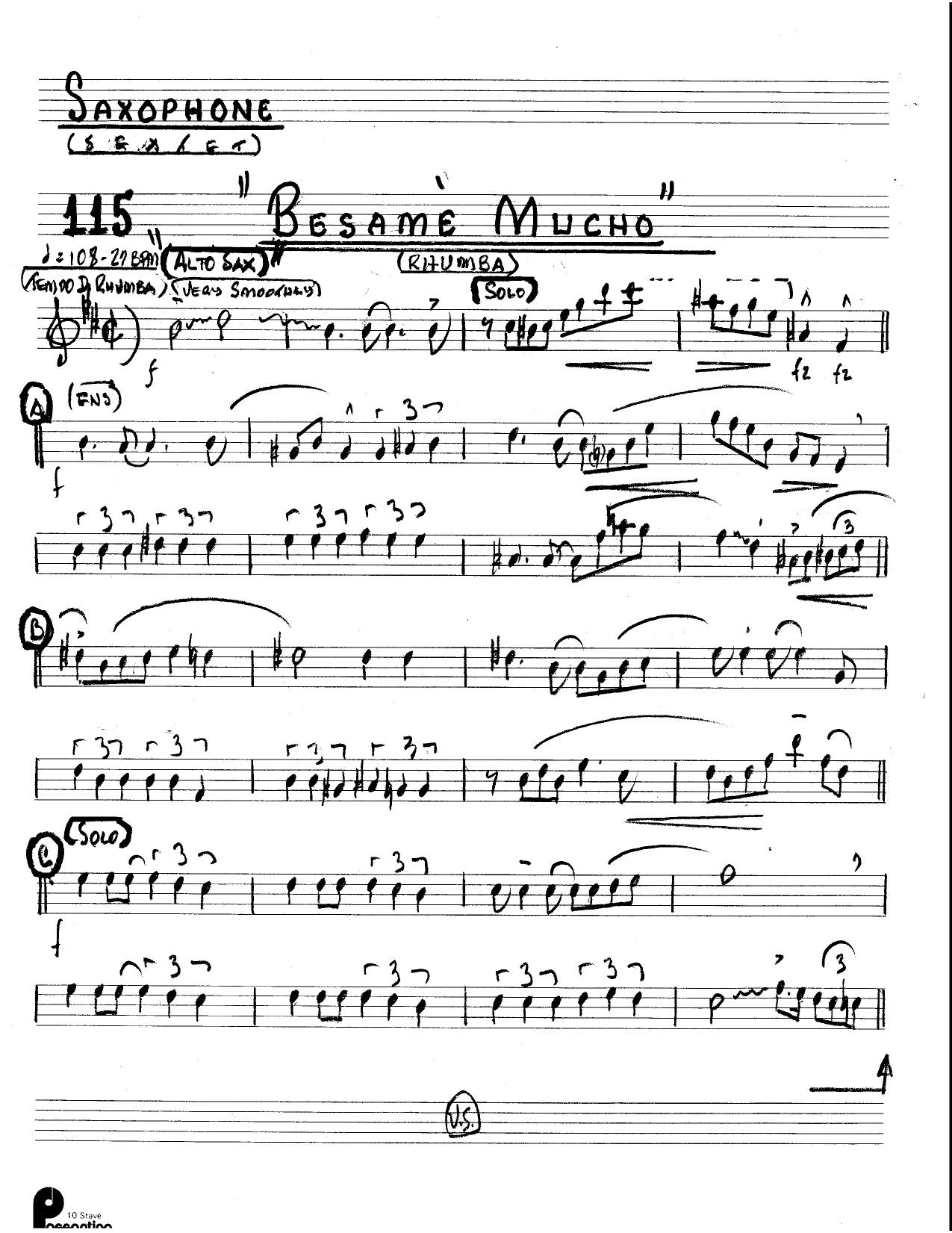
Besame Mucho - 3 horns + Rhythm (comp. Consuelo Velázquez)
Composed by Consuelo Velázquez
Arranged by Mike Tomaro
- Ensemble: Small Ensemble
- Style: Latin Jazz
- Pages: 15
- Instruments (6): Alto Saxophone, Trumpet, Trombone, Piano, Bass, Drums
- Difficulty: easy
- Content: Individual Parts
- Format: PDF Download (Instant)
- Price: $12.99
"Bésame Mucho," a timeless bolero composed by Consuelo Velázquez in 1940, stands as one of the most widely recorded and recognized Latin American songs in history. Its original composition predates the widespread emergence of Latin jazz as a distinct genre, yet its inherent melodic beauty and harmonic richness made it a natural canvas for jazz interpretation. The song gained international fame through countless recordings, crossing cultural and linguistic barriers, and has been embraced by jazz luminaries from Nat King Cole to Diana Krall, solidifying its status as a quintessential jazz standard. Its enduring appeal lies in its passionate, yet melancholic, melody and its evocative lyrical theme of longing and farewell, resonating deeply across diverse musical traditions. This particular arrangement reimagines Velázquez's masterpiece through a vibrant Latin Jazz lens, specifically tailored for a small ensemble featuring three horns and a rhythm section. The musical character is defined by a medium-fast Latin groove, likely a Bossa Nova or Cha-Cha feel, offering a sophisticated yet accessible rhythmic foundation. The arrangement is primarily set in a minor key, enhancing the song's inherent romantic and slightly wistful mood, while injecting an undeniable energy and rhythmic drive typical of the Latin jazz idiom. Expect rich, warm harmonies that expand upon the original's melodic contours, creating a soundscape that is both familiar and refreshingly new, evoking a sense of passionate dance and heartfelt expression. The Unknown Arranger approaches "Bésame Mucho" with a keen understanding of both the song's emotional core and the demands of a compact horn section. Distinctive features likely include tightly voiced horn soli passages that weave intricate counter-melodies around the main theme, showcasing the ensemble's blend and precision. The arrangement probably features a clear melodic statement by one of the horns, possibly the trumpet or alto saxophone, before opening up for improvised solos over the lush harmonic progression. The rhythm section is given ample opportunity to establish and maintain the infectious Latin groove, providing a dynamic interplay with the horns. Technical challenges will include maintaining rhythmic precision within the Latin feel, executing clean horn voicings, and navigating the harmonic language during solo sections. The reward lies in performing a piece that is both musically engaging and deeply expressive, allowing each musician to contribute to a cohesive and vibrant sound. This arrangement is ideally suited for college-level jazz ensembles, advanced community bands, or professional small groups seeking a sophisticated and engaging Latin jazz chart. The demands on rhythmic accuracy, ensemble blend, and improvisational facility make it an excellent vehicle for developing musicianship and stylistic authenticity. Its compact instrumentation makes it versatile for various performance settings, from intimate club gigs to concert stages, offering a rich and satisfying musical experience for both performers and audiences. Conductors should emphasize a precise and consistent Latin groove from the rhythm section, ensuring the bass and drums lock into a unified feel, whether Bossa Nova or Cha-Cha, throughout the piece. Horn players must focus on blend and intonation, particularly in the tightly voiced soli sections, aiming for a warm, unified sound. Pay close attention to articulation markings, as these are crucial for conveying the authentic Latin jazz style; crisp staccatos and smooth legato lines will define the character. The arrangement likely features improvised solos, so encourage soloists to explore the rich harmonic landscape while maintaining stylistic integrity. Rehearsal time should be dedicated to rhythmic precision, especially during transitions and ensemble hits, and to balancing the horn section against the dynamic rhythm section. A medium-fast tempo, around 160-180 BPM, will allow the groove to breathe while maintaining energy. Q: What instruments are included in this arrangement? A: This arrangement is scored for a small ensemble featuring three horns (typically trumpet, alto saxophone, and trombone or tenor saxophone) plus a full rhythm section (piano, bass, drums). Q: What is the difficulty level of this arrangement? A: This arrangement is considered advanced intermediate to advanced, suitable for college-level jazz ensembles, advanced community bands, or professional small groups due to its rhythmic demands, harmonic complexity, and potential for improvisation. Q: What is the musical style and historical context of "Bésame Mucho"? A: "Bésame Mucho" is a classic bolero composed in 1940 by Consuelo Velázquez, reimagined here as a vibrant Latin Jazz piece. It represents a fusion of traditional Latin American romance with modern jazz improvisation and rhythmic drive. Q: What makes this specific arrangement unique? A: This arrangement offers a fresh Latin Jazz interpretation of a timeless standard, featuring sophisticated voicings for a compact three-horn section, a driving Latin groove, and opportunities for improvised solos, all while maintaining the original's passionate essence. Q: What is the recommended tempo and approximate performance duration? A: The recommended tempo is a medium-fast Latin groove, typically between 160-180 BPM. The approximate performance duration will vary depending on the number and length of improvised solos, but generally ranges from 4 to 6 minutes.
Questions and answers
- What is included in the Besame Mucho - 3 horns + Rhythm (comp. Consuelo Velázquez) PDF?
- The verified current file contains individual parts across 15 pages.
- How many instruments or parts are listed for Besame Mucho - 3 horns + Rhythm (comp. Consuelo Velázquez)?
- The verified instrumentation list contains 6 entries for this Small Ensemble arrangement.
- Who is credited for Besame Mucho - 3 horns + Rhythm (comp. Consuelo Velázquez)?
- Composer: Consuelo Velázquez. Arranger: Mike Tomaro.
- What difficulty is listed for Besame Mucho - 3 horns + Rhythm (comp. Consuelo Velázquez)?
- The verified difficulty level is easy.
- What style is listed for Besame Mucho - 3 horns + Rhythm (comp. Consuelo Velázquez)?
- The catalog lists the style as Latin Jazz.
- Can I preview Besame Mucho - 3 horns + Rhythm (comp. Consuelo Velázquez) before buying?
- Yes. The product page provides a preview generated from the current PDF file.
- How is Besame Mucho - 3 horns + Rhythm (comp. Consuelo Velázquez) delivered?
- After successful payment, the digital PDF is made available for download. The displayed price is $12.99.
Musicians Also Search For
Besame Mucho - 3 horns + Rhythm Mike Tomaro PDF • Besame Mucho - 3 horns + Rhythm Mike Tomaro sheet music • Besame Mucho - 3 horns + Rhythm arranged by Mike Tomaro • Mike Tomaro small ensemble charts • Mike Tomaro jazz arrangements PDF • Besame Mucho - 3 horns + Rhythm Consuelo Velázquez sheet music • Besame Mucho - 3 horns + Rhythm Consuelo Velázquez small ensemble arrangements • Consuelo Velázquez small ensemble charts • Besame Mucho - 3 horns + Rhythm small ensemble arrangements • Besame Mucho - 3 horns + Rhythm small ensemble PDF download • Besame Mucho - 3 horns + Rhythm jazz sheet music • small ensemble sheet music download • Besame Mucho - 3 horns + Rhythm individual parts download • Besame Mucho - 3 horns + Rhythm sheet music PDF • Besame Mucho - 3 horns + Rhythm Latin Jazz charts • Latin Jazz small ensemble arrangements • buy Besame Mucho - 3 horns + Rhythm sheet music • download Besame Mucho - 3 horns + Rhythm PDF • Besame Mucho - 3 horns + Rhythm jazz charts • best Mike Tomaro small ensemble arrangements • Consuelo Velázquez arranged by Mike Tomaro • Besame Mucho - 3 horns + Rhythm printable sheet music • small ensemble repertoire PDF