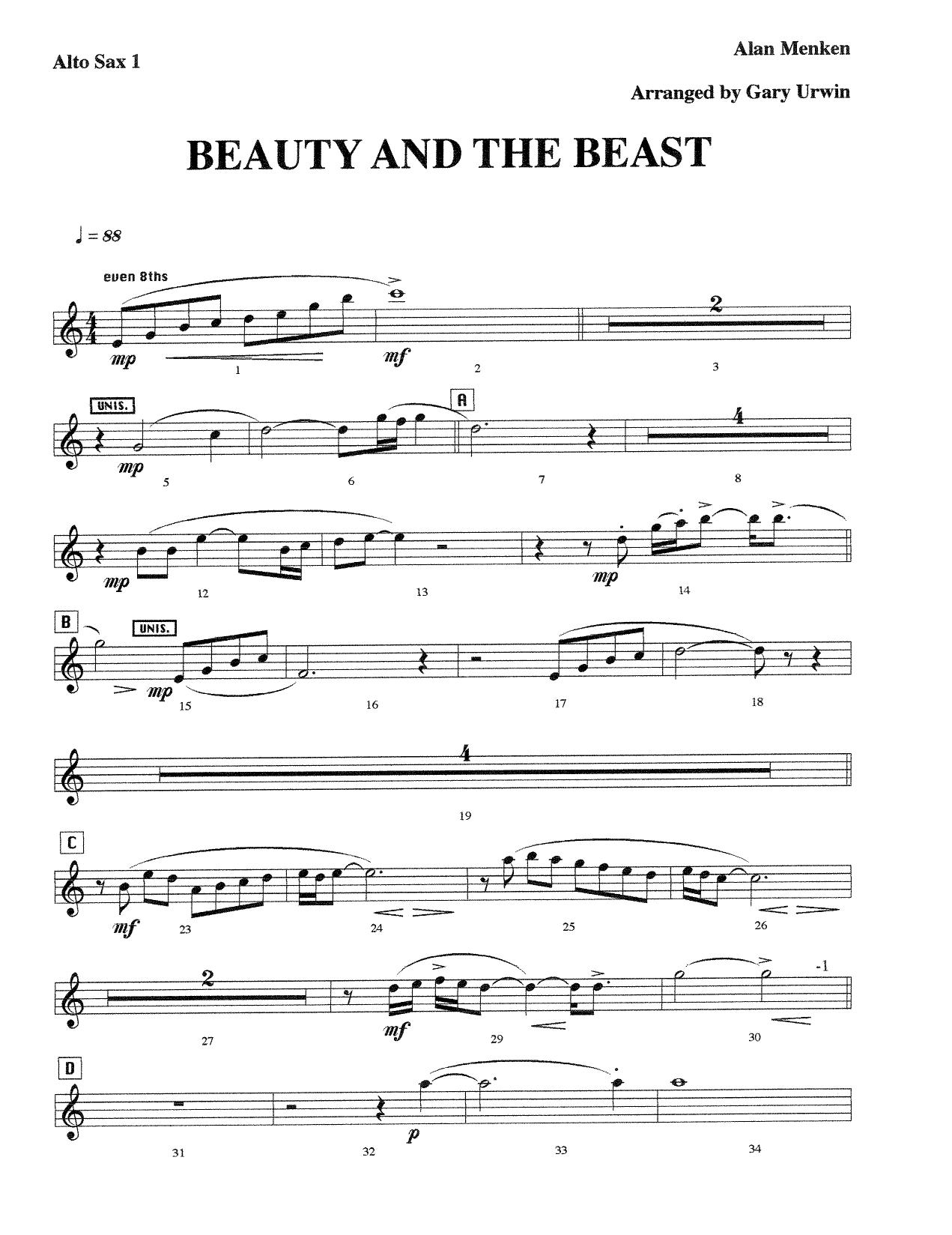
Beauty And The Beast (G.Urwin) sheet music preview

Beauty And The Beast (G.Urwin)

Composed by Wayne Shorter

Arranged by Gary Urwin

  • Ensemble: Big Band
  • Pages: 54
  • Instruments (18): Alto Sax 1, Alto Sax 2, Tenor Sax 1, Tenor Sax 2, Baritone Sax, Trumpet 1, Trumpet 2, Trumpet 3 (Solo Part), Trumpet 4, Trumpet 5 (Optional), Trombone 1, Trombone 2, Trombone 3, Bass Trombone, Piano, Guitar, Bass, Drums
  • Difficulty: advanced
  • Content: Individual Parts
  • Format: PDF Download (Instant)
  • Price: $24.99

Wayne Shorter’s compositional masterwork "Beauty and the Beast," originally introduced to the jazz lexicon on his acclaimed 1974 Columbia album *Native Dancer* alongside Brazilian singer-songwriter Milton Nascimento, stands as a towering pillar of post-bop and fusion experimentation. Merging complex, shifting harmonic landscapes with infectious, folkloric Brazilian rhythms and advanced modal jazz concepts, the piece captures the sophisticated ethos of 1970s jazz exploration. Shorter’s writing thrives on ambiguity, cyclical motion, and lyrical suspension, making the original recording a watershed moment that bridged acoustic modern jazz with global grooves. Over the decades, the composition has evolved into a revered vehicle for adventurous improvisers and large ensembles seeking to stretch beyond standard Tin Pan Alley forms. Gary Urwin’s magnificent big band adaptation transforms Shorter’s intricate masterpiece into a powerhouse showcase for contemporary jazz orchestra. Operating at a vibrant, driving medium-up tempo, the arrangement opens with a shimmering, atmospheric preamble before locking into a pulsing, cross-rhythmic groove that honors the spirit of the *Native Dancer* sessions while expanding the sonic palette for standard 18-piece big band instrumentation. Urwin employs rich, extended post-bop voicings across the brass and saxophones, balancing dense, chromatic chord clusters with soaring, diatonic counterlines. The mood shifts effortlessly from introspective, impressionistic textures in the ensemble pads to explosive, high-energy modal romps that demand absolute precision and rhythmic agility from every section. The architectural brilliance of this chart lies in its masterful distribution of thematic material and dynamic contrast. The woodwind section carries the initial exposed head statements, utilizing tight, delicate harmonies that gradually swell as the brass sections enter with punctuating stinger accents. Featured solo space is thoughtfully integrated into the arrangement, providing ample room for dynamic improvisation over Shorter’s shifting harmonic plateaus, typically spotlighting tenor saxophone and trumpet. A sweeping, multi-tiered shout chorus serves as the emotional apex of the chart, building relentless tension through cascading dynamic swells and sophisticated polyrhythms before resolving into a triumphant restatement of the theme. The intricate interplay between the rhythm section—requiring a nimble, interactive drummer comfortable with Latin-jazz synthesis—and the horn sections ensures that every bar remains intensely engaging for both performers and listeners. Advanced college ensembles, top-tier high school jazz bands, and professional or community big bands will find this arrangement an exceptionally rewarding addition to their repertoire. Because of its sophisticated harmonic language, demanding ensemble blend requirements, and intricate metric feel, it serves as an ideal vehicle for festival competition or headline concert programming. Directors seeking to stretch their ensemble’s stylistic versatility, harmonic awareness, and rhythmic fortitude will discover that Urwin’s treatment of Shorter's classic delivers an unforgettable modern big band experience. Executing Gary Urwin’s arrangement of "Beauty and the Beast" successfully requires meticulous attention to articulation balance and rhythmic synchronization, particularly within the rhythm section. The tempo must remain locked and driving; avoid dragging during the harmonically dense transitions, as the forward momentum is essential to maintaining the piece's hypnotic groove. The drummer should utilize a conversational, lighter touch on the ride cymbal during head statements, integrating subtle Afro-Brazilian percussion colorations rather than relying solely on a rigid swing pattern. Horn players must focus on achieving a seamless blend in the soli sections, ensuring that internal chord voices match the dynamic volume of the lead trumpet and lead alto. Pay close attention to subtle dynamic markings—crescendos and decrescendos are written meticulously to guide the listener through Shorter’s episodic form. No special auxiliary mute effects are required, allowing the natural brilliance of the brass section to project cleanly through the expansive 54-page score. Q: What specific instrumentation and parts are included in this arrangement? A: This chart is scored for a standard 18-piece big band, featuring 5 saxophones (Alto 1, Alto 2, Tenor 1, Tenor 2, Baritone), 4 trumpets, 4 trombones, and a full 4-piece rhythm section (piano, guitar, bass, drums), totaling 54 pages of music. Q: What is the difficulty level of this big band chart? A: This arrangement is graded as advanced, making it best suited for college jazz ensembles, advanced high school bands, and professional or community big bands with strong section players and improvisers. Q: What is the historical style and musical context of the piece? A: The arrangement is a big band adaptation of Wayne Shorter's iconic composition from the 1974 fusion masterpiece *Native Dancer*, blending post-bop harmonic sophistication with infectious Brazilian-influenced grooves. Q: What makes Gary Urwin's arrangement unique compared to standard big band charts? A: Urwin brilliantly translates Shorter's cyclic, modal phrasing and shifting harmonic landscapes into a massive orchestral canvas, utilizing extended chord voicings, intricate counterlines, and a dynamic shout chorus that expands far beyond standard head-solos-head formats. Q: What is the recommended performance tempo and duration for this piece? A: The arrangement is set at a driving, energetic medium-up tempo feel, with an average performance duration of approximately 6 to 7 minutes depending on solo choruses.

Questions and answers

What is included in the Beauty And The Beast (G.Urwin) PDF?
The verified current file contains individual parts across 54 pages.
How many instruments or parts are listed for Beauty And The Beast (G.Urwin)?
The verified instrumentation list contains 18 entries for this Big Band arrangement.
Who is credited for Beauty And The Beast (G.Urwin)?
Composer: Wayne Shorter. Arranger: Gary Urwin.
What difficulty is listed for Beauty And The Beast (G.Urwin)?
The verified difficulty level is advanced.
Can I preview Beauty And The Beast (G.Urwin) before buying?
Yes. The product page provides a preview generated from the current PDF file.
How is Beauty And The Beast (G.Urwin) delivered?
After successful payment, the digital PDF is made available for download. The displayed price is $24.99.

Musicians Also Search For

Beauty And The Beast Gary Urwin PDFBeauty And The Beast Gary Urwin sheet musicBeauty And The Beast arranged by Gary UrwinGary Urwin big band chartsGary Urwin jazz arrangements PDFBeauty And The Beast Wayne Shorter sheet musicBeauty And The Beast Wayne Shorter big band arrangementsWayne Shorter big band chartsBeauty And The Beast big band arrangementsBeauty And The Beast big band PDF downloadBeauty And The Beast jazz sheet musicbig band sheet music downloadBeauty And The Beast individual parts downloadBeauty And The Beast sheet music PDFbuy Beauty And The Beast sheet musicdownload Beauty And The Beast PDFBeauty And The Beast jazz chartsbest Gary Urwin big band arrangementsWayne Shorter arranged by Gary UrwinBeauty And The Beast printable sheet musicbig band repertoire PDF

All arrangements by Gary Urwin All Wayne Shorter sheet music