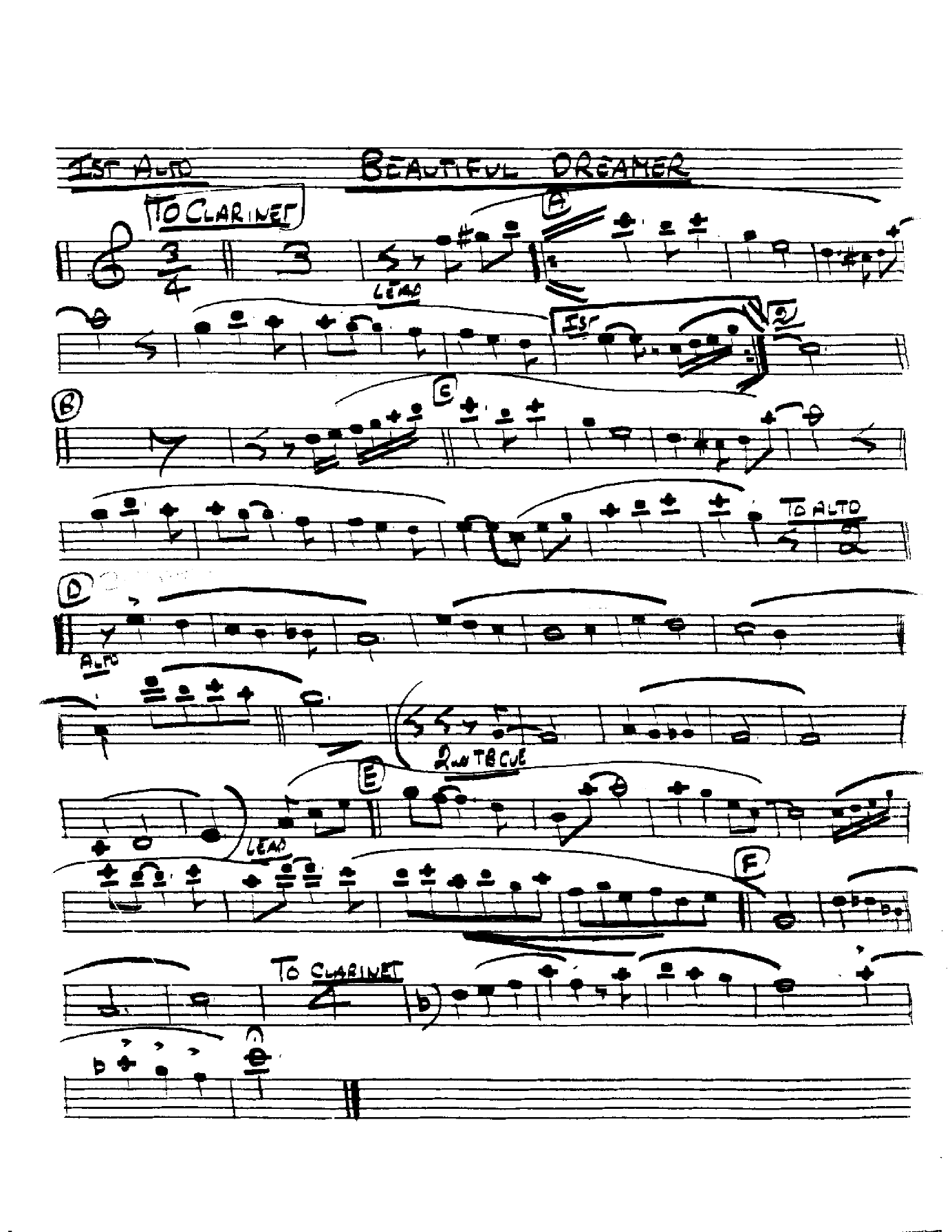
Beautiful Dreamer (J.Farley-G. Miller) sheet music preview

Beautiful Dreamer (J.Farley-G. Miller)

Composed by Stephen Foster

Arranged by J. Farley-G. Miller

  • Ensemble: Big Band
  • Style: Slow Waltz
  • Pages: 19
  • Instruments (17): Alto Saxophone 1, Alto Saxophone 2, Tenor Saxophone 1, Tenor Saxophone 2, Baritone Saxophone, Trumpet 1, Trumpet 2, Trumpet 3, Trumpet 4, Trombone 1, Trombone 2, Trombone 3, Bass Trombone, Piano, Bass, Drums, Guitar
  • Difficulty: easy
  • Content: Individual Parts
  • Format: PDF Download (Instant)
  • Price: $18.99

## SECTION 1: Description Stephen Foster’s "Beautiful Dreamer," penned in 1862, stands as a poignant testament to the enduring power of American parlor songs. While not initially conceived as a jazz standard, its lyrical melody and melancholic harmony have made it a fertile ground for interpretation across various genres, often evoking a sense of nostalgic beauty. This particular arrangement by J. Farley-G. Miller reimagines Foster’s classic as an elegant slow waltz for big band, transforming its inherent tenderness into a sophisticated, yet accessible, jazz experience. The original’s contemplative spirit is preserved, but recontextualized within the lush harmonic and rhythmic landscape of a modern jazz ensemble. This rendition unfolds at a deliberate, flowing tempo, establishing a graceful 3/4 slow waltz feel from the outset. The arrangement is primarily in the key of F major, allowing for rich, open voicings that contribute to its serene and reflective mood. The emotional arc is one of gentle longing and romantic introspection, characterized by sustained lines and carefully sculpted dynamics. Farley-G. Miller's distinctive approach is evident in the artful blend of traditional big band textures with contemporary harmonic sensibilities. Expect sophisticated, often close-position voicings in the saxophone sections, creating a warm, cohesive sound. The brass writing is lyrical and supportive, providing depth without overwhelming the delicate melodic contours. The melody is initially presented by the lead alto saxophone, establishing the iconic theme with a pure, unadorned timbre. This is soon followed by a beautifully crafted saxophone soli, where the entire section takes on the melodic material, harmonized with characteristic Farley-G. Miller warmth and precision. The arrangement features an open solo section over the form, typically offering space for a tenor saxophone or trumpet to improvise, allowing for individual expression within the established waltz framework. A notable feature is the subtle yet effective use of counter-melodies and interwoven lines, particularly in the brass, which add layers of interest without disrupting the overall tranquility. The piece builds to a gently swelling climax before returning to a subdued, reflective close, often featuring a delicate piano or guitar texture. This arrangement is ideally suited for college, community, and advanced high school jazz ensembles. Its technical demands are moderate, focusing more on ensemble blend, dynamic control, and expressive phrasing rather than blistering technical facility. The rewarding aspect lies in the opportunity to cultivate a mature, lyrical sound and to explore the nuances of a slow waltz feel, fostering a deep sense of musicality within the ensemble. The clear melodic presentation and thoughtful harmonic progressions make it an excellent choice for showcasing the band's ability to perform with sensitivity and stylistic integrity. ## SECTION 2: Performance Notes Conductors should emphasize a consistent, flowing 3/4 slow waltz feel, ensuring that the rhythm section maintains a delicate yet firm foundation without rushing or dragging. The primary technical challenge lies in achieving precise ensemble blend and intonation, particularly within the saxophone soli sections, where careful balance is paramount. Encourage brass players to play with a warm, sustained tone, avoiding harsh attacks, especially in the background figures. Dynamics are crucial; guide the band through the subtle crescendos and decrescendos to shape the emotional arc. Rehearsal time should focus on phrasing, ensuring long, lyrical lines, and paying close attention to releases and breath marks. No special mutes or extended techniques are explicitly required, allowing the ensemble to concentrate on pure tone and expressive interpretation. ## SECTION 3: FAQ Q: What instruments and parts are included in this arrangement? A: This big band arrangement includes parts for 17 instruments: Alto Saxophone 1, Alto Saxophone 2, Tenor Saxophone 1, Tenor Saxophone 2, Baritone Saxophone, Trumpet 1, Trumpet 2, Trumpet 3, Trumpet 4, Trombone 1, Trombone 2, Trombone 3, Trombone 4, Piano, Bass, Drums, and Guitar. Q: What is the difficulty level of "Beautiful Dreamer (J.Farley-G. Miller)"? A: This arrangement is considered moderate in difficulty, making it appropriate for advanced high school, college, and community jazz ensembles. It emphasizes musicality, blend, and expressive phrasing over extreme technical demands. Q: What is the musical style and historical context of this arrangement? A: This is a slow waltz arrangement for big band, transforming Stephen Foster's 1862 parlor song "Beautiful Dreamer" into a sophisticated jazz interpretation. It blends historical melodic beauty with modern jazz harmonies and textures. Q: What makes this specific arrangement by J. Farley-G. Miller unique? A: J. Farley-G. Miller's arrangement is distinguished by its elegant slow waltz feel, rich and often close-position saxophone voicings, lyrical brass writing, and a focus on sustained melodic beauty, providing a fresh yet respectful take on the classic. Q: What is the typical performance duration and tempo for this piece? A: The typical performance duration for this arrangement is approximately 4-5 minutes, depending on the length of any improvised solos. It is performed at a deliberate, flowing slow waltz tempo, emphasizing grace and lyricism.

All arrangements by J. Farley-G. Miller All Stephen Foster sheet music