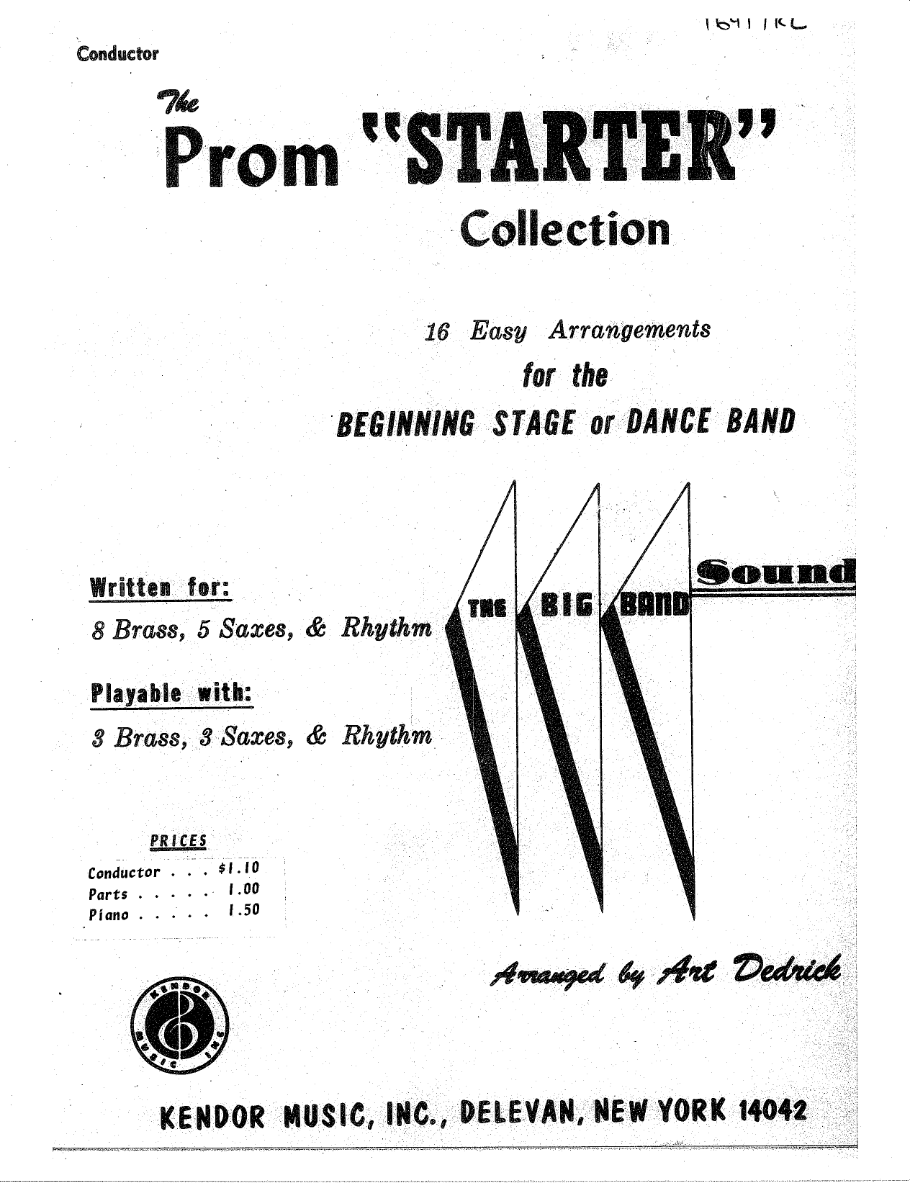
Baby Sitter Blues (A.Dedrick)
Composed by Art Dedrick
Arranged by Art Dedrick
- Ensemble: Big Band
- Style: Jazz Standard
- Pages: 23
- Instruments (18): 1st Eb Alto Saxophone, 2nd Bb Tenor Saxophone, 3rd Eb Alto Saxophone, 4th Bb Tenor Saxophone, 5th Eb Baritone Saxophone, 1st Bb Trumpet, 2nd Bb Trumpet, 3rd Bb Trumpet, 4th Bb Trumpet, 1st Trombone, 2nd Trombone, 3rd Trombone, 4th Trombone, Piano, Guitar, Drum Set, String Bass, Tuba
- Difficulty: medium
- Content: Individual Parts
- Format: PDF Download (Instant)
- Price: $24.99
"Baby Sitter Blues," an original composition by the esteemed Art Dedrick, stands as a quintessential example of mid-20th century big band blues, embodying the sophisticated yet accessible style that defined much of the post-swing era and pre-fusion jazz landscape. While not a traditional "standard" in the sense of being widely covered by numerous artists, Dedrick's prolific output and consistent quality ensured his original works, like this one, became mainstays in educational and community jazz programs. The piece captures the essence of the classic 12-bar blues form, infused with Dedrick’s characteristic melodicism and harmonic ingenuity, making it an enduring favorite for its authentic jazz feel and pedagogical value. It evokes the golden age of big band, reminiscent of the Basie or Herman bands, but with Dedrick's unique compositional voice. Musically, "Baby Sitter Blues" is a medium swing blues in 4/4 time, typically set in a comfortable key that allows for rich brass and reed voicings. The mood is generally relaxed yet grooving, exuding a cool confidence rather than high-octane energy. Its character is defined by a consistent, laid-back swing feel, punctuated by moments of ensemble punch and dynamic contrast. The piece often features a walking bass line and a ride cymbal pattern that drives the rhythm section, providing a solid foundation for the horns. The blues harmonic progression is treated with Dedrick's signature blend of traditional and slightly extended voicings, offering a sound that is both familiar and fresh. Art Dedrick's arrangement of his own "Baby Sitter Blues" showcases his mastery of big band orchestration. He employs clear, articulate voicings that allow each section to shine, often featuring call-and-response patterns between the brass and saxophones. Expect well-crafted soli sections for the saxophones, demonstrating intricate melodic interplay and tight ensemble work. Dedrick's arrangements are known for their logical flow and build-up, and this piece is no exception, likely featuring a dynamic shout chorus that brings the entire band together in a powerful statement before returning to a more subdued closing. The arrangement prioritizes playability while still offering substantial musical rewards, avoiding overly complex technical demands in favor of solid ensemble execution and stylistic authenticity. Performance of "Baby Sitter Blues" typically begins with an ensemble statement of the main blues theme, often carried by the saxophones or a combined brass/sax melody. Solo opportunities are central to the piece, usually featuring a tenor saxophone or trumpet, allowing for improvisation over the blues changes. The technical challenges lie primarily in achieving a cohesive, relaxed swing feel, precise articulation, and excellent blend and balance within the ensemble. The rewarding aspect is the opportunity to truly "swing" together, to navigate classic blues changes, and to engage in the call-and-response dialogue that is so vital to big band jazz. This arrangement is ideally suited for high school, college, and community jazz ensembles seeking to develop their understanding and performance of traditional big band blues in an accessible yet authentic style. To capture the authentic feel of "Baby Sitter Blues," emphasize a relaxed, medium swing tempo, ensuring the eighth notes are properly swung without rushing. The rhythm section should establish a solid, consistent groove with a walking bass line and a driving ride cymbal pattern. Articulation is key: brass should aim for crisp, precise attacks, while saxophones should maintain a smooth, connected legato where indicated, contrasting with sharper accents. Pay close attention to dynamic contrasts, building energy through the shout chorus and returning to a more subdued feel for solos and the outro. Rehearsal should focus on precise ensemble blend in soli sections and ensuring soloists are comfortable navigating the blues changes. Encourage a natural, conversational interplay between sections, particularly in call-and-response phrases. Q: What instruments and parts are included in this arrangement? A: This arrangement includes parts for a standard 17-instrument big band: Alto Saxophone 1, Alto Saxophone 2, Tenor Saxophone 1, Tenor Saxophone 2, Baritone Saxophone, Trumpet 1, Trumpet 2, Trumpet 3, Trumpet 4, Trombone 1, Trombone 2, Trombone 3, Trombone 4, Piano, Bass, Drums, and Guitar. Q: What is the difficulty level of "Baby Sitter Blues (A.Dedrick)"? A: This arrangement is generally considered to be of medium difficulty, making it suitable for high school, college, and community jazz ensembles. It offers engaging musical challenges without requiring advanced technical virtuosity. Q: What is the musical style and historical context of this piece? A: "Baby Sitter Blues" is an original big band blues composition by Art Dedrick, embodying the classic medium swing style of mid-20th century jazz. It reflects the accessible yet sophisticated sound prevalent in educational and community big band literature of that era. Q: What makes Art Dedrick's arrangement of "Baby Sitter Blues" unique? A: Dedrick's arrangement is distinguished by its clear voicings, well-crafted soli sections, and logical melodic development over a classic 12-bar blues form. It provides an authentic big band blues experience with pedagogical value, showcasing his signature compositional and arranging style. Q: What is the approximate performance duration of this arrangement? A: The performance duration for "Baby Sitter Blues" typically ranges from 3 to 4 minutes, depending on the tempo chosen and the number/length of improvised solos taken.
Musicians Also Search For
Baby Sitter Blues Art Dedrick PDF • Baby Sitter Blues Art Dedrick sheet music • Baby Sitter Blues arranged by Art Dedrick • Art Dedrick big band charts • Art Dedrick jazz arrangements PDF • Baby Sitter Blues Art Dedrick big band arrangement • Baby Sitter Blues big band arrangement • Baby Sitter Blues big band PDF download • Baby Sitter Blues jazz ensemble sheet music • big band sheet music instant download • Baby Sitter Blues conductor score PDF • Baby Sitter Blues individual parts download • Baby Sitter Blues sheet music with parts • Baby Sitter Blues Jazz Standard chart • Jazz Standard big band arrangements • buy Baby Sitter Blues sheet music online • download Baby Sitter Blues PDF • Baby Sitter Blues jazz chart • best Art Dedrick big band arrangements • Baby Sitter Blues printable sheet music • big band repertoire PDF