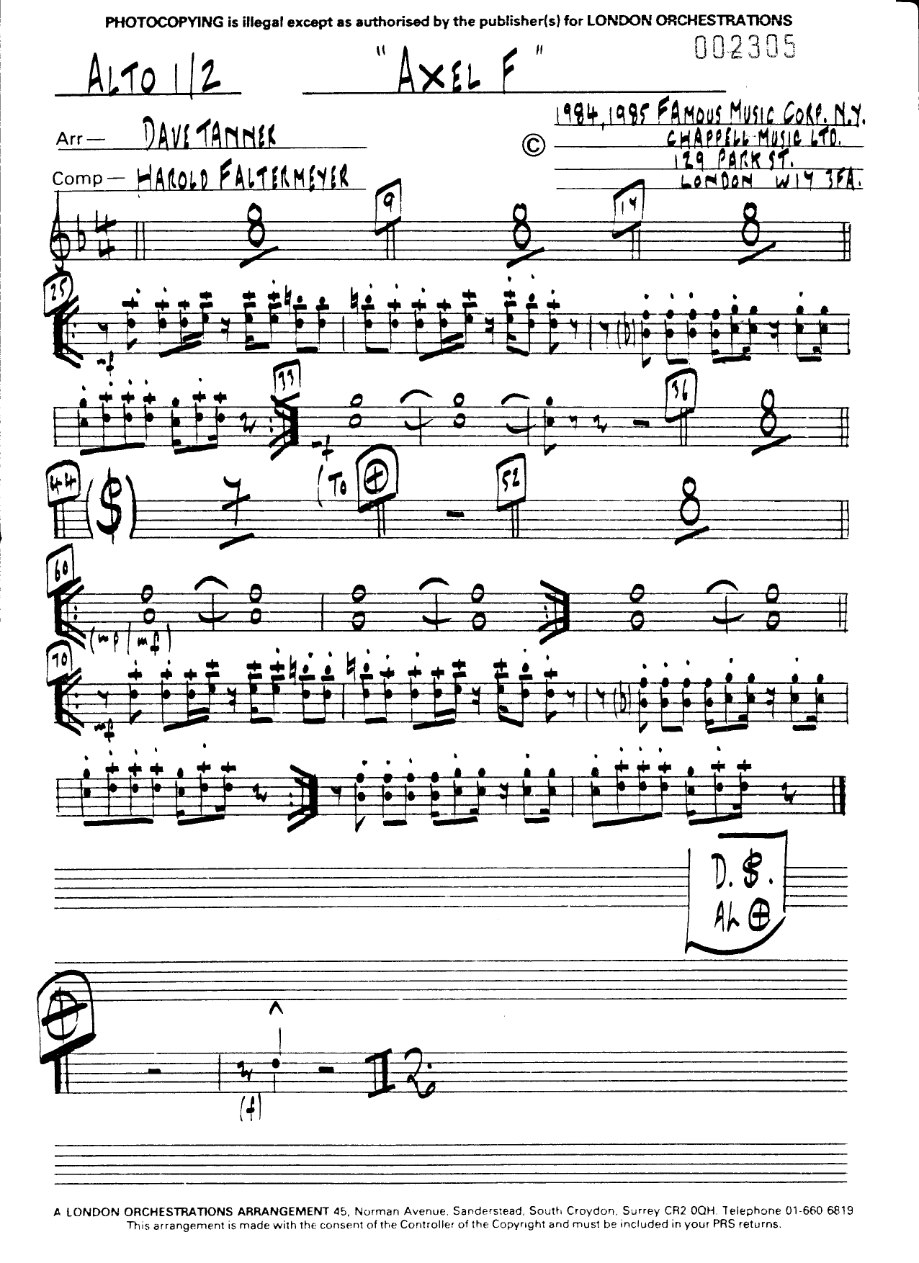
Axel F (D.Tanner) sheet music preview

Axel F (D.Tanner)

Composed by Harold Faltermeyer

Arranged by Dave Tanner

  • Ensemble: Big Band
  • Pages: 14
  • Instruments (10): Alto Saxophone 1/2, Tenor Saxophone 1/2, Baritone Saxophone, Trumpets 1/2/3/4, Trombone 1, Trombone 2/3, Keyboards, Guitar, Bass Guitar (Bass Synth), Drums (Synth)
  • Difficulty: easy
  • Content: Individual Parts
  • Format: PDF Download (Instant)
  • Price: $24.99

Harold Faltermeyer’s iconic synth-pop anthem "Axel F," originally immortalized in the 1984 blockbuster film *Beverly Hills Cop*, receives a sophisticated, high-octane transformation in this dynamic big band chart by arranger Dave Tanner. Capturing the essence of 1980s cinematic nostalgia while filtering it through the rich harmonic and rhythmic vocabulary of modern contemporary jazz, this arrangement bridges the gap between synth-driven pop culture and traditional acoustic ensemble fire. The timeless, insistent ostinato motif that defined the original soundtrack is brilliantly re-imagined, shifting from electronic pulses into punchy, brass-heavy lines and interlocking sax solis that give the familiar melody an entirely fresh, organic vitality. Grooving at an infectious, driving medium-up tempo, the arrangement opens with a rhythmic vamp that sets up a infectious swing-funk hybrid feel. The mood is electric, blending the upbeat, swaggering confidence of the original theme with sophisticated extended harmonies, chromatic passing chords, and crisp, syncopated ensemble hits. Tanner’s characteristic arranging style shines through in the clever distribution of the melodic weight; rather than relying on a single lead voice, the iconic melody is cleverly fragmented and passed between the trumpet and saxophone sections before erupting into a full-ensemble shout chorus. The harmonic language utilizes rich minor-mode extensions, sharp modal shifts, and clever counter-melodies that elevate the chart far beyond a simple novelty cover into a legitimate, swinging powerhouse. Throughout the 14-page score, performers will encounter engaging technical demands that make the chart immensely rewarding for advanced ensembles. The woodwind parts feature intricate bebop-influenced lines, while the brass section is tested with crisp articulation, agile range requirements, and tight ensemble precision during aggressive dynamic swells. Featured solo changes are thoughtfully provided over accessible modal and blues-based vamps, allowing developing improvisers to stretch out while giving advanced players room to explore sophisticated harmonic substitutions. The rhythm section acts as the primary engine, requiring a drummer with a rock-solid pocket who can effortlessly transition between driving backbeats and straight-ahead swing feels, underpinned by a walking or ostinato-driven bassline. Advanced high school, collegiate, and professional community big bands will find this chart to be an absolute showstopper for festival programs, spring concerts, or specialized pops-in-jazz sets. Its instant audience recognition ensures an enthusiastic reception, while its intricate scoring provides conductors with plenty of material to refine section blend, articulation uniformity, and dynamic contrast. Balancing nostalgic appeal with modern big band craftsmanship, Dave Tanner’s treatment of "Axel F" proves to be an unforgettable addition to any contemporary jazz library. Success with Dave Tanner’s arrangement of "Axel F" hinges on maintaining a relentless, driving groove without letting the tempo rush. The rhythm section must establish a crisp, locked-in feel right from the downbeat, balancing the synthesized stiffness of the 1980s original with the loose, elastic momentum of jazz phrasing. Horn players should pay meticulous attention to marked articulations; short notes must be clipped and punchy, while accented lines require a warm, vocal quality that prevents the chart from sounding overly mechanical. In passages featuring the primary theme, ensure the background figures played by the brass or saxophones remain dynamic undercurrents rather than overpowering the lead voices. Trumpets should approach their upper-register entries with controlled brilliance, avoiding forced tones during the climactic shout choruses. Rehearsals should initially focus on isolated section work for the fast, interlocking woodwind lines before integrating the rhythm section's syncopated hits. Encourage the soloist to build their chorus dynamically, starting with motivic references to Faltermeyer's original hook before expanding into extended harmonic territory. Q: What instruments and parts are included in this big band arrangement? A: The chart is scored for a standard 16-instrument big band instrumentation, featuring two alto saxophones, two tenor saxophones, one baritone saxophone, a full brass section, and a complete rhythm section. Q: What is the difficulty level of this arrangement? A: This arrangement is graded as advanced, making it ideal for high-level high school bands, collegiate ensembles, and professional community big bands that are comfortable with syncopated rhythms and extended harmonies. Q: What musical style and historical context does this chart represent? A: It fuses the 1980s synth-pop aesthetic of Harold Faltermeyer’s original *Beverly Hills Cop* theme with a contemporary jazz, swing-funk hybrid groove and sophisticated harmonic structures. Q: What makes Dave Tanner's arrangement unique compared to other versions? A: Tanner uniquely reimagines the famous electronic ostinato by distributing the melodic fragments across different sections, combining modern big band shout choruses with clever modal and harmonic twists. Q: What is the recommended performance duration and tempo for this piece? A: The arrangement is set at an energetic medium-up tempo feel, typically clocking in at an exhilarating performance duration of approximately 3 to 4 minutes depending on solo extensions.

Questions and answers

What is included in the Axel F (D.Tanner) PDF?
The verified current file contains individual parts across 14 pages.
How many instruments or parts are listed for Axel F (D.Tanner)?
The verified instrumentation list contains 10 entries for this Big Band arrangement.
Who is credited for Axel F (D.Tanner)?
Composer: Harold Faltermeyer. Arranger: Dave Tanner.
What difficulty is listed for Axel F (D.Tanner)?
The verified difficulty level is easy.
Can I preview Axel F (D.Tanner) before buying?
Yes. The product page provides a preview generated from the current PDF file.
How is Axel F (D.Tanner) delivered?
After successful payment, the digital PDF is made available for download. The displayed price is $24.99.

Musicians Also Search For

Axel F Dave Tanner PDFAxel F Dave Tanner sheet musicAxel F arranged by Dave TannerDave Tanner big band chartsDave Tanner jazz arrangements PDFAxel F Harold Faltermeyer sheet musicAxel F Harold Faltermeyer big band arrangementsHarold Faltermeyer big band chartsAxel F big band arrangementsAxel F big band PDF downloadAxel F jazz sheet musicbig band sheet music downloadAxel F individual parts downloadAxel F sheet music PDFbuy Axel F sheet musicdownload Axel F PDFAxel F jazz chartsbest Dave Tanner big band arrangementsHarold Faltermeyer arranged by Dave TannerAxel F printable sheet musicbig band repertoire PDF

All arrangements by Dave Tanner All Harold Faltermeyer sheet music