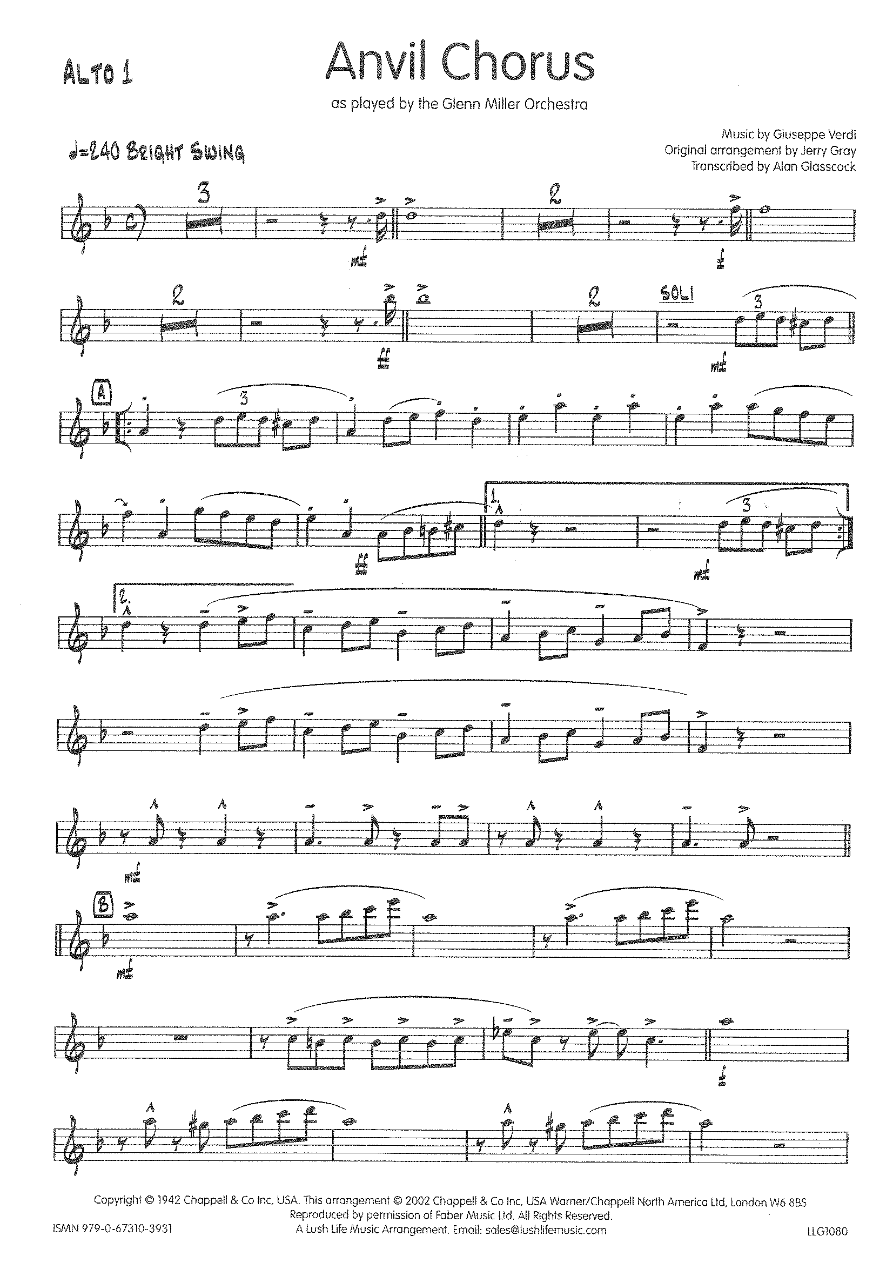
Anvil Chorus (A.Glasscock)
Composed by Giuseppe Verdi
Arranged by Alan Glasscock
- Ensemble: Big Band
- Style: Jazz Standard
- Pages: 66
- Instruments (17): Alto Saxophone 1, Alto Saxophone 2, Tenor Saxophone 1, Tenor Saxophone 2, Baritone Saxophone, Trumpet 1, Trumpet 2, Trumpet 3, Trumpet 4, Trombone 1, Trombone 2, Trombone 3, Bass Trombone, Guitar, Piano, Bass, Drums
- Difficulty: advanced
- Content: Individual Parts
- Format: PDF Download (Instant)
- Price: $24.99
Giuseppe Verdi's iconic "Anvil Chorus" from his 1853 opera *Il Trovatore* is a piece deeply ingrained in Western culture, instantly recognizable for its dramatic, percussive opening and soaring melodic lines. While not a traditional jazz standard in its operatic form, its inherent theatricality and strong melodic structure have made it a compelling canvas for reinterpretation across various genres. The original work, set in 15th-century Spain, captures the robust energy of blacksmiths at work, a theme that lends itself surprisingly well to the rhythmic drive and improvisational spirit of big band jazz. This arrangement by Alan Glasscock reimagines Verdi's masterpiece through a distinctly contemporary jazz lens, transforming the classical drama into a vibrant, swinging big band experience. Glasscock's treatment of "Anvil Chorus" is an exhilarating medium-up swing, primarily set in the key of F minor, though it navigates through several harmonic landscapes. The arrangement opens with a powerful, percussive introduction that cleverly hints at the original's blacksmith theme before launching into a driving swing feel. The mood is one of sophisticated energy and playful reinterpretation, maintaining the grandeur of Verdi while infusing it with the infectious rhythmic vitality of a modern jazz ensemble. Glasscock masterfully uses the full dynamic range of the big band, transitioning from tightly voiced, intricate soli sections to expansive, brassy shout choruses that build to thrilling climaxes. The arrangement is characterized by its clever harmonic extensions, reharmonizing familiar melodies with rich, contemporary voicings that challenge and delight the ear. The melody is primarily carried by the saxophone section in various soli passages, often echoed and punctuated by the brass. There are dedicated improvised solo sections for Alto Saxophone 1 and Trumpet 2, offering opportunities for skilled improvisers to shine over the driving rhythm section. These solos are strategically placed to provide contrast and further develop the musical narrative. Technical challenges include precise articulation in the fast-moving soli lines, maintaining rhythmic integrity in the medium-up tempo, and navigating Glasscock's sophisticated harmonic progressions. The brass sections will need strong endurance and dynamic control, particularly in the powerful shout choruses. What makes this arrangement particularly rewarding is its ability to bridge classical familiarity with jazz innovation, offering both performers and audiences a fresh, engaging perspective on a timeless melody. This arrangement is ideally suited for advanced high school, collegiate, community, and professional big bands. Its demands on ensemble precision, individual instrumental technique, and improvisational skill make it an excellent choice for groups looking to tackle a challenging yet incredibly rewarding piece. The blend of classical gravitas and jazz energy makes it a standout selection for concerts, festivals, and educational performances, providing a unique programming option that showcases the versatility and musicianship of the ensemble. Conductors should establish a consistent, driving medium-up swing feel from the outset, emphasizing a strong rhythmic pulse from the bass and drums. The opening percussive figures require precise rhythmic placement and dynamic control to create the intended dramatic effect. Pay close attention to Glasscock's detailed articulation markings, particularly in the saxophone soli sections, which are crucial for achieving the desired contemporary jazz sound. Brass players will need to focus on clean attacks and releases, especially in the powerful shout choruses, ensuring blend and balance across the sections. Encourage soloists to explore the provided chord changes with creativity and stylistic authenticity. Rehearsal time should be dedicated to balancing the intricate voicings and ensuring dynamic contrast, particularly in the transitions between soli and tutti sections. The arrangement's approximate duration is 4:30. Q: What instruments are included in this arrangement? A: This big band arrangement includes parts for 17 instruments: Alto Saxophone 1, Alto Saxophone 2, Tenor Saxophone 1, Tenor Saxophone 2, Baritone Saxophone, Trumpet 1, Trumpet 2, Trumpet 3, Trumpet 4, Trombone 1, Trombone 2, Trombone 3, Bass Trombone, Guitar, Piano, Bass, and Drums. Q: What is the difficulty level of "Anvil Chorus (A.Glasscock)"? A: This arrangement is considered advanced, suitable for high school, collegiate, community, and professional big bands due to its intricate voicings, demanding soli sections, and requirements for strong individual technique and improvisation. Q: What is the musical style and historical context of this arrangement? A: This is a jazz big band arrangement of Giuseppe Verdi's "Anvil Chorus" from his 1853 opera *Il Trovatore*. It reinterprets the classical piece as a medium-up swing jazz standard. Q: What makes Alan Glasscock's arrangement unique? A: Glasscock's arrangement is distinctive for its clever reharmonization of Verdi's original melodies, sophisticated contemporary jazz voicings, powerful shout choruses, and its successful transformation of a classical opera piece into a driving, swinging big band chart. Q: What is the approximate performance duration and tempo of this piece? A: The approximate performance duration of "Anvil Chorus (A.Glasscock)" is 4 minutes and 30 seconds, maintaining a consistent medium-up swing tempo throughout.
Musicians Also Search For
Anvil Chorus Alan Glasscock PDF • Anvil Chorus Alan Glasscock sheet music • Anvil Chorus arranged by Alan Glasscock • Alan Glasscock big band charts • Alan Glasscock jazz arrangements PDF • Anvil Chorus Giuseppe Verdi sheet music • Anvil Chorus Giuseppe Verdi big band arrangement • Giuseppe Verdi big band charts • Anvil Chorus big band arrangement • Anvil Chorus big band PDF download • Anvil Chorus jazz ensemble sheet music • big band sheet music instant download • Anvil Chorus individual parts download • Anvil Chorus sheet music with parts • Anvil Chorus Jazz Standard chart • Jazz Standard big band arrangements • buy Anvil Chorus sheet music online • download Anvil Chorus PDF • Anvil Chorus jazz chart • best Alan Glasscock big band arrangements • Giuseppe Verdi songs arranged by Alan Glasscock • Anvil Chorus printable sheet music • big band repertoire PDF