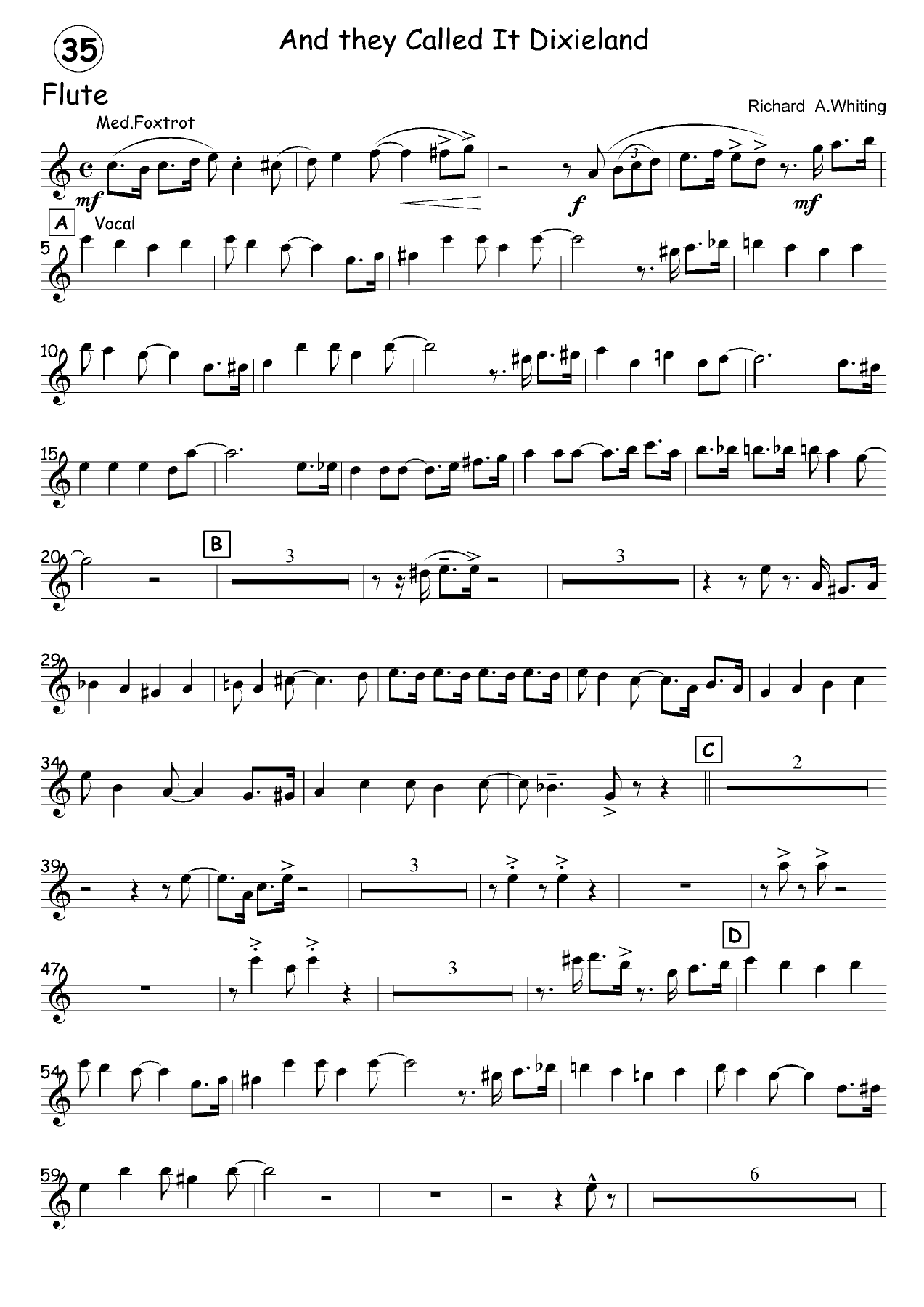
And They Called It Dixieland (R.Whiting)
Composed by Richard A. Whiting
Arranged by Richard Whiting
- Ensemble: Concert Band
- Style: Dixieland
- Pages: 65
- Instruments (28): Flute, Oboe, Clarinet-1, Bb Clarinet-2, Clarinet-3, Bass Clarinet, Alto Saxophone-1, Alto Saxophone-2, Tenor Saxophone, Baritone Saxophone, Soprano Cornet, Trumpet-1, Trumpet-2, Trumpet-3, Eb Horn-1, Eb Horn-2, F Horn-1, F Horn-2, Trombone-1, Trombone-2, Trombone-2 T.C., Euphonium, Euphonium (T.C.), Bb Bass, Eb Bass, Electric Bass, Tuba, Drums
- Difficulty: advanced
- Content: Individual Parts
- Format: PDF Download (Instant)
- Price: $22.99
Richard A. Whiting's classic "And They Called It Dixieland" emerges from the vibrant early jazz era, a period defined by the infectious energy and improvisational spirit of New Orleans and Chicago. Composed by the prolific songwriter Richard A. Whiting, known for Tin Pan Alley hits and film scores, this piece encapsulates the joyous, often raucous, sound that captivated audiences in the 1910s and 20s. While not a traditional "jazz standard" in the bebop sense, its thematic material and celebratory title have made it a recurring touchstone for ensembles looking to evoke the foundational sounds of American jazz. It represents a pivotal moment in music history when syncopation and collective improvisation began to define a new genre, laying the groundwork for all subsequent jazz styles. This arrangement, also by Richard Whiting, presents "And They Called It Dixieland" with an authentic, medium-up tempo Dixieland feel, typically in a bright 4/4 meter. The mood is unequivocally celebratory and high-spirited, designed to transport both performers and listeners to the bustling dance halls and riverboats where this music first thrived. Expect a buoyant, driving rhythm section underpinning a melodic tapestry woven by the winds. The energy is consistently high, characterized by a lively interplay between sections, evoking the collective improvisation synonymous with the style. The arrangement maintains a bright, accessible key signature, likely C or F major, to facilitate the characteristic melodic lines and brassy interjections. Richard Whiting's approach to this Dixieland classic for concert band is marked by a respectful yet imaginative expansion of the original's core elements. While preserving the essential melodic and harmonic framework, he skillfully orchestrates the material to leverage the full dynamic and timbral range of a modern concert band. Expect clear melodic statements, often passed between the cornet/trumpet and clarinet sections, punctuated by trombone glissandi and tuba bass lines. The arrangement features well-crafted soli sections that highlight the distinct voices of the woodwinds and brass, creating a vibrant call-and-response texture. A notable feature will likely be a climactic shout chorus, building in intensity with full brass fanfares and driving percussion, bringing the piece to an exhilarating close. Whiting’s signature is his ability to maintain stylistic integrity while providing rich, full voicings that allow each section to shine. Performance of "And They Called It Dixieland" is rewarding for its sheer exuberance. The primary melody is typically introduced by the trumpets or cornets, then passed to the clarinets, often with countermelodies from the trombones. While specific improvised solos are not the focus of this concert band arrangement, there are often opportunities for individual instruments to step forward with short, melodic fills or embellished phrases. Technical challenges include maintaining a consistent, driving tempo, achieving crisp articulation in the brass, and ensuring rhythmic precision in the woodwind soli passages. The piece is highly suitable for high school, community, and collegiate concert bands looking to explore the roots of jazz in an engaging and accessible format. Its infectious energy and clear structure make it an excellent choice for concert openers or as a vibrant contrast within a varied program. Conductors should emphasize a bright, medium-up tempo (around quarter note = 160-180 BPM) with a consistent, driving 4/4 feel, avoiding any tendency to rush. Articulation is key: brass should aim for crisp, staccato notes where marked, while woodwinds need to maintain a light, flowing legato for melodic lines and clean, rhythmic precision in soli sections. Encourage the trombones to execute glissandi with enthusiasm and precision, adding to the authentic Dixieland flavor. Percussion should focus on a steady, swinging beat, utilizing snare drum rimshots and bass drum accents to propel the ensemble forward. Rehearsal time should be dedicated to balancing the interplay between melodic lines and counter-melodies, ensuring no single voice overwhelms the collective texture. Pay particular attention to the dynamic contrasts, building effectively towards the shout chorus for maximum impact. Q: What instruments are included in this arrangement? A: This arrangement for concert band typically includes full woodwind sections (flute, oboe, clarinet, bass clarinet, saxophone), full brass sections (trumpet/cornet, horn, trombone, euphonium, tuba), and a comprehensive percussion section. Specific instrumentation details are available in the score. Q: What is the difficulty level of "And They Called It Dixieland (R.Whiting)" for concert band? A: This arrangement is generally considered suitable for high school, community, and collegiate concert bands, falling into the medium-easy to medium difficulty range. It presents engaging challenges in articulation and ensemble precision without excessive technical demands. Q: What musical style and historical context does this arrangement represent? A: This piece embodies the Dixieland style of early jazz, originating from the 1910s and 1920s. It captures the celebratory, collective improvisation feel that defined the birth of jazz in New Orleans and Chicago, showcasing its foundational rhythmic and melodic characteristics. Q: What makes Richard Whiting's arrangement of "And They Called It Dixieland" unique? A: Richard Whiting's arrangement stands out for its faithful yet expansive treatment of the Dixieland style for concert band. It features well-orchestrated soli sections, clear melodic statements passed between sections, and a powerful shout chorus, all while maintaining the authentic, high-spirited character of the original. Q: What is the typical performance duration of this arrangement? A: The typical performance duration for "And They Called It Dixieland (R.Whiting)" is approximately 3 to 4 minutes, depending on the chosen tempo and any optional repeats. It maintains a consistent medium-up tempo throughout.
Questions and answers
- What is included in the And They Called It Dixieland (R.Whiting) PDF?
- The verified current file contains a conductor score and individual parts across 65 pages.
- How many instruments or parts are listed for And They Called It Dixieland (R.Whiting)?
- The verified instrumentation list contains 28 entries for this Concert Band arrangement.
- Who is credited for And They Called It Dixieland (R.Whiting)?
- Composer: Richard A. Whiting. Arranger: Richard Whiting.
- What difficulty is listed for And They Called It Dixieland (R.Whiting)?
- The verified difficulty level is advanced.
- What style is listed for And They Called It Dixieland (R.Whiting)?
- The catalog lists the style as Dixieland.
- Can I preview And They Called It Dixieland (R.Whiting) before buying?
- Yes. The product page provides a preview generated from the current PDF file.
- How is And They Called It Dixieland (R.Whiting) delivered?
- After successful payment, the digital PDF is made available for download. The displayed price is $22.99.
Musicians Also Search For
And They Called It Dixieland Richard Whiting PDF • And They Called It Dixieland Richard Whiting sheet music • And They Called It Dixieland arranged by Richard Whiting • Richard Whiting concert band charts • Richard Whiting jazz arrangements PDF • And They Called It Dixieland Richard A. Whiting sheet music • And They Called It Dixieland Richard A. Whiting concert band arrangements • Richard A. Whiting concert band charts • And They Called It Dixieland concert band arrangements • And They Called It Dixieland concert band PDF download • And They Called It Dixieland jazz sheet music • concert band sheet music download • And They Called It Dixieland conductor score PDF • And They Called It Dixieland individual parts download • And They Called It Dixieland sheet music PDF • And They Called It Dixieland Dixieland charts • Dixieland concert band arrangements • buy And They Called It Dixieland sheet music • download And They Called It Dixieland PDF • And They Called It Dixieland jazz charts • best Richard Whiting concert band arrangements • Richard A. Whiting arranged by Richard Whiting • And They Called It Dixieland printable sheet music • concert band repertoire PDF