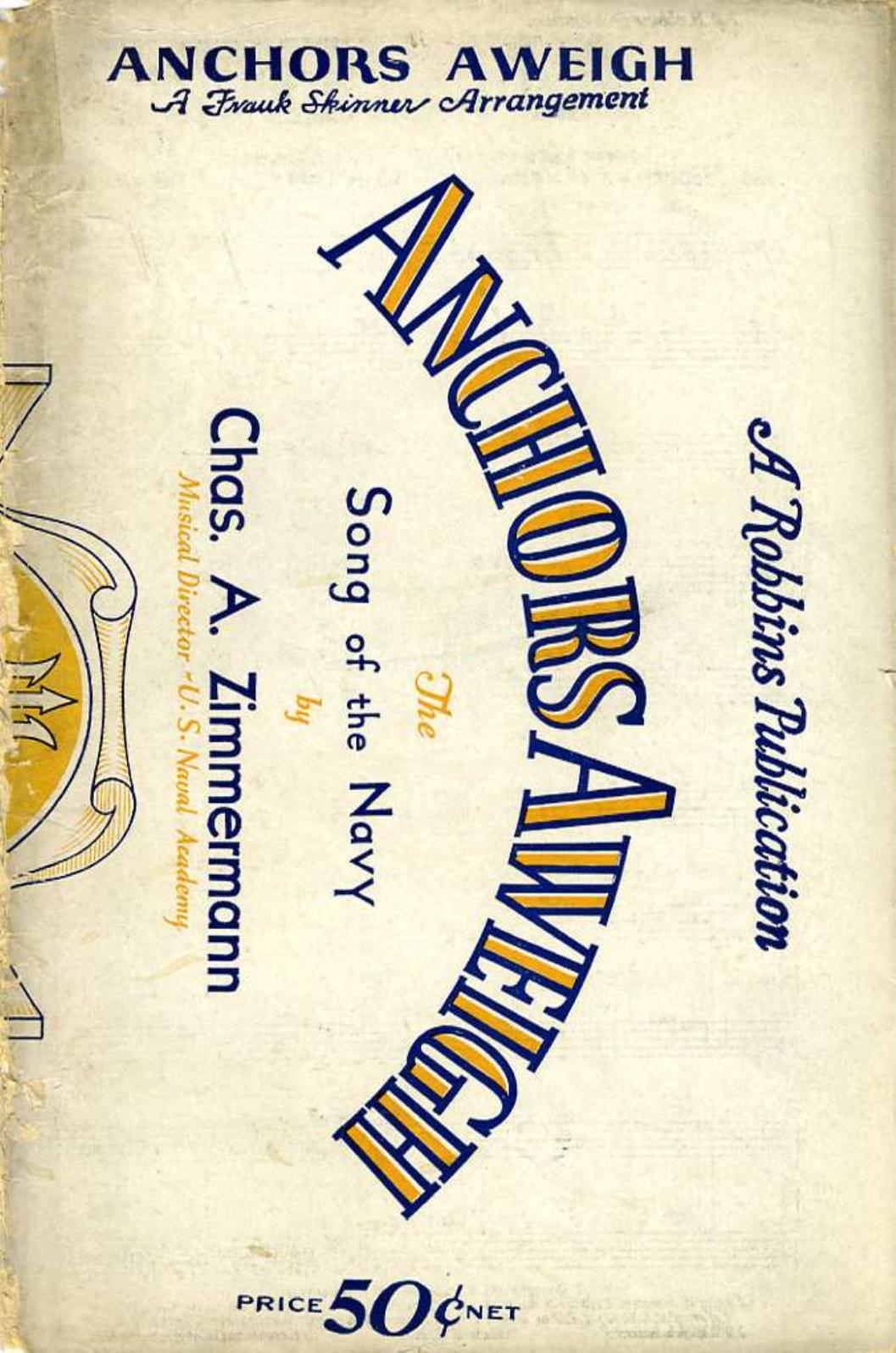
Anchors Aweigh (F.Skinner)
Composed by Charles A. Zimmermann
Arranged by Frank Skinner
- Ensemble: Big Band
- Pages: 39
- Instruments (19): 1st Saxophone Eb Alto, 2nd Saxophone Bb Tenor, 3rd Saxophone Eb Alto, Trombone, 1st Bb Trumpet, 2nd Bb Trumpet, Piano, Tenor Banjo, Bass, Drums, 1st Violin, 2nd Violin, Viola, Cello, Flute, 1st Bb Clarinet, 1st Tenor (Vocal), 2nd Tenor (Vocal), Baritone (Vocal)
- Difficulty: medium
- Content: Individual Parts
- Format: PDF Download (Instant)
- Price: $24.99
Charles A. Zimmermann’s iconic United States Navy fight song, "Anchors Aweigh," written alongside Alfred H. Miles in 1906, underwent a vibrant transformation during the golden age of cinematic jazz and big band orchestration. Originally conceived as a spirited march, the tune gained fresh currency mid-century as Hollywood studios and master arrangers reimagined patriotic and traditional themes through a sophisticated swing lens. This particular iteration captures the buoyant optimism of the World War II and postwar era, blending military precision with the infectious swagger of the American big band tradition, making it a stellar example of patriotic repertoire adapted for the jazz stage. Driving forward with a brisk, energetic medium-swing feel in 4/4 time, this arrangement exudes high-octane enthusiasm and unyielding momentum. The mood is triumphant and celebratory, propelled by crisp, punchy brass accents and a rhythmic foundation that invites a tight, danceable groove. Frank Skinner infuses the traditional thematic material with clever harmonic colorations, utilizing rich dominant extensions and unexpected modulations that elevate a familiar march into a sophisticated jazz chart. The arrangement avoids stale predictability by alternating between crisp, march-like staccato figures and flowing, legato swing lines that give the ensemble plenty of room to breathe and bounce. Skinner’s scoring ingeniously distributes the melodic weight across the 8-instrument ensemble, ensuring that every player has a substantive, engaging role. The saxophones—comprising alto, tenor, and baritone—frequently lock into tight, harmonized solis that mimic the nimble textures of larger sections, while the trumpet and trombone trade fiery counter-melodies and rhythmic stabs. Rhythmic vitality is maintained through clever syncopation, pushing the primary motifs just ahead of the beat to create forward propulsion. The climax builds into an exhilarating shout chorus that showcases the full dynamic range of the band, demanding crisp articulation and absolute rhythmic synchronization from all players. Advanced high school ensembles, collegiate jazz bands, and professional community groups will find this chart to be an exceptionally rewarding addition to their libraries. While the 8-instrument instrumentation requires individual players to cover substantial musical territory without the safety net of a massive section, the payoff is a transparent, highly responsive texture where individual artistry shines. Performers will relish the clever interplay between traditional march cadences and swinging jazz syncopations, ensuring that audiences are treated to a familiar tune delivered with an unmistakably fresh, sophisticated edge. Navigating this arrangement successfully requires careful attention to articulation and stylistic balance, particularly given the compact 8-instrument configuration. The tempo should remain bright and steady—avoid rushing the upbeats during the swung passages. Conductors should emphasize the contrast between the crisp, martial staccato figures and the flowing, relaxed triplet feel of the swing sections. Brass players should utilize subtle cup or basket mutes where indicated to add textural variety, ensuring that background figures never swamp the lead melody. In rehearsal, isolate the syncopated rhythm section figures first to lock in the groove before layering the horns on top. Saxophonists must execute their harmonized soli lines with a unified concept of tone and intonation, matching the lead alto's vibrato and phrasing. Pay close attention to dynamic markings during the transition into the final shout chorus; holding back slightly on the penultimate phrase will maximize the impact of the final, triumphant crescendo. Q: What instruments and parts are included in this 8-instrument arrangement? A: The instrumentation features a compact yet versatile big band setup consisting of Alto Saxophone, Tenor Saxophone, Baritone Saxophone, Trumpet, and Trombone, alongside a full rhythm section framework distributed across the 39-page score and parts. Q: What is the difficulty level of this Frank Skinner arrangement? A: This chart is best suited for advanced high school, collegiate, and professional small big bands or jazz ensembles that possess strong sight-reading skills and precise stylistic control. Q: What is the historical context and musical style of this chart? A: Written originally as a 1906 naval march by Charles A. Zimmermann, this setting is reimagined in a classic mid-century jazz big band style by Hollywood arranger Frank Skinner, blending swing-era harmonic sophistication with patriotic fervor. Q: What makes this specific arrangement unique compared to other versions of "Anchors Aweigh"? A: Skinner uniquely bridges traditional military march structures with advanced swing syncopation, utilizing clever harmonic substitutions and tightly woven horn solis tailored specifically for an agile 8-piece ensemble. Q: What is the recommended performance tempo and duration for this piece? A: The arrangement is designed to be played at a brisk, energetic medium-swing tempo, resulting in a performance duration of approximately 2.5 to 3 minutes depending on the chosen swing feel.
Questions and answers
- What is included in the Anchors Aweigh (F.Skinner) PDF?
- The verified current file contains individual parts across 39 pages.
- How many instruments or parts are listed for Anchors Aweigh (F.Skinner)?
- The verified instrumentation list contains 19 entries for this Big Band arrangement.
- Who is credited for Anchors Aweigh (F.Skinner)?
- Composer: Charles A. Zimmermann. Arranger: Frank Skinner.
- What difficulty is listed for Anchors Aweigh (F.Skinner)?
- The verified difficulty level is medium.
- Can I preview Anchors Aweigh (F.Skinner) before buying?
- Yes. The product page provides a preview generated from the current PDF file.
- How is Anchors Aweigh (F.Skinner) delivered?
- After successful payment, the digital PDF is made available for download. The displayed price is $24.99.
Musicians Also Search For
Anchors Aweigh Frank Skinner PDF • Anchors Aweigh Frank Skinner sheet music • Anchors Aweigh arranged by Frank Skinner • Frank Skinner big band charts • Frank Skinner jazz arrangements PDF • Anchors Aweigh Charles A. Zimmermann sheet music • Anchors Aweigh Charles A. Zimmermann big band arrangements • Charles A. Zimmermann big band charts • Anchors Aweigh big band arrangements • Anchors Aweigh big band PDF download • Anchors Aweigh jazz sheet music • big band sheet music download • Anchors Aweigh individual parts download • Anchors Aweigh sheet music PDF • buy Anchors Aweigh sheet music • download Anchors Aweigh PDF • Anchors Aweigh jazz charts • best Frank Skinner big band arrangements • Charles A. Zimmermann arranged by Frank Skinner • Anchors Aweigh printable sheet music • big band repertoire PDF