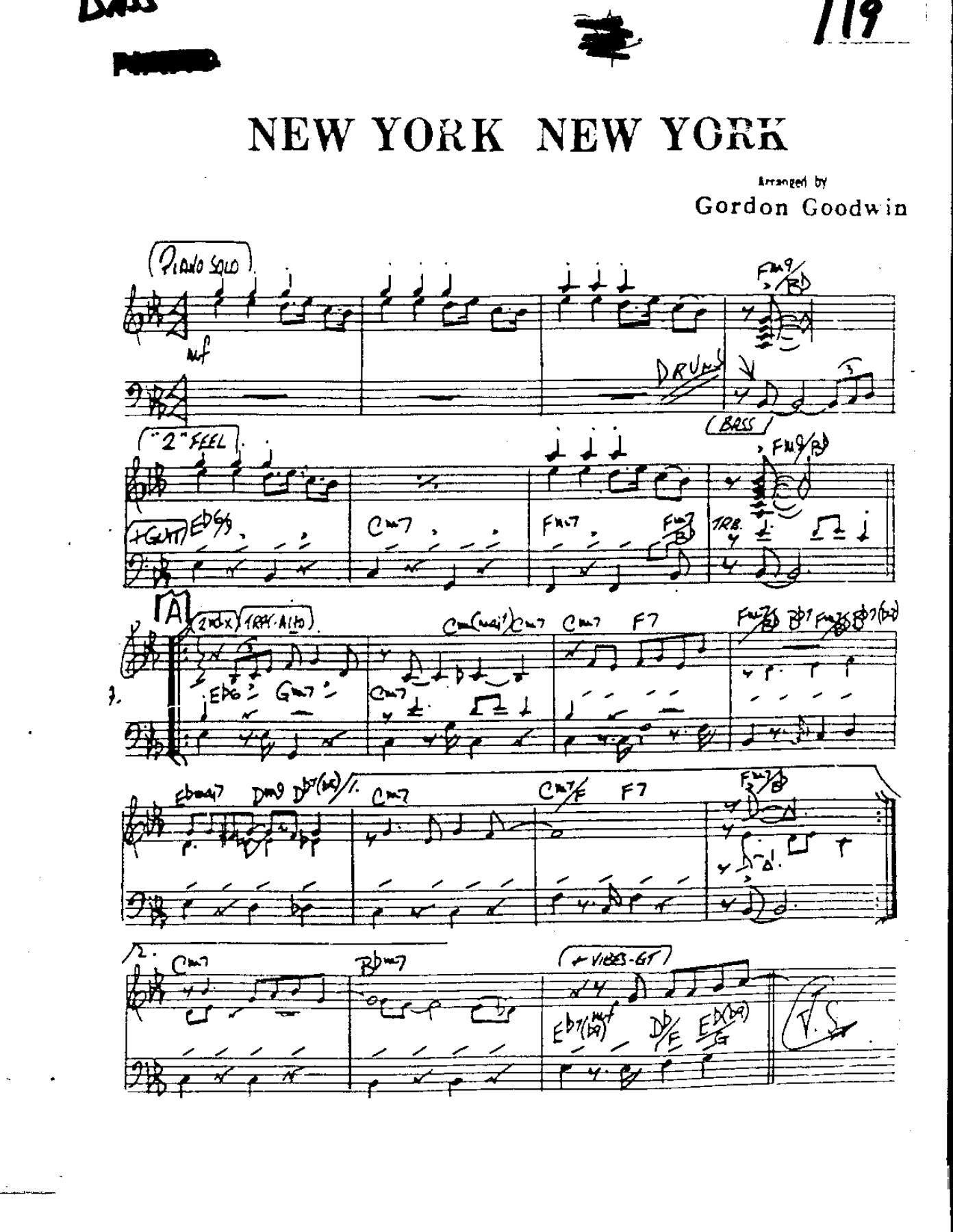
New York New York-Bass (N.York)
Composed by John Kander
Arranged by New York New York
- Ensemble: Small Ensemble
- Style: Musical Theatre
- Pages: 4
- Difficulty: easy
- Content: Sheet Music
- Format: PDF Download (Instant)
- Price: $12.99
The iconic anthem "New York, New York," originally composed by John Kander with lyrics by Fred Ebb, burst onto the scene in 1977 as the theme song for Martin Scorsese's film of the same name. While the film version, sung by Liza Minnelli, garnered initial acclaim, it was Frank Sinatra's definitive 1979 recording that cemented its status as a global phenomenon and an unofficial anthem for New York City. This powerful ballad, steeped in the grand tradition of Broadway show tunes and big band era pop, embodies the ambition, grit, and romantic allure of the metropolis. Its enduring popularity stems from its aspirational lyrics and a melody that perfectly captures both the struggle and the ultimate triumph of making it in the "city that never sleeps," making it a staple in pop culture and a frequently requested standard for jazz and pop ensembles alike. This particular arrangement, "New York New York-Bass (N.York)," by the arranger New York New York, offers a sophisticated and rhythmically compelling interpretation of the classic, tailored for a small ensemble. The arrangement maintains a driving, medium-up swing feel throughout, primarily in the key of F Major, which contributes to its bright and optimistic character. The mood is one of confident exuberance, building from a spirited initial statement to a powerful, climactic finish. The arranger's approach is characterized by intelligent counterpoint and a focus on rhythmic precision, ensuring that each instrument contributes meaningfully to the overall texture without overcrowding the sound. Expect well-crafted melodic lines that weave through the arrangement, providing both support and moments of individual brilliance. The arranger, New York New York, is known for their ability to infuse familiar tunes with fresh rhythmic vitality and harmonic interest, often utilizing crisp articulations and dynamic contrasts to propel the music forward. In this arrangement, the bass takes center stage, carrying the primary melodic responsibilities for significant sections, allowing for a deep, resonant interpretation of the famous tune. There are ample opportunities for the ensemble to shine through tightly arranged soli sections that showcase the interplay between instruments. While specific solo sections are not explicitly notated as open solos, the arrangement provides melodic features for various parts, demanding strong individual musicianship. Technical challenges include maintaining a consistent, driving swing feel, precise articulation, and navigating dynamic shifts that build the emotional arc of the piece. The reward lies in performing a beloved song with a fresh, energetic perspective, allowing the ensemble to convey the song's aspirational message with clarity and conviction. This arrangement is ideally suited for college-level jazz ensembles, advanced community bands, or professional small groups seeking a vibrant and engaging chart. Its thoughtful construction and demands for rhythmic accuracy and articulate playing make it an excellent vehicle for developing ensemble cohesion and individual expression. High school bands with strong rhythm sections and proficient instrumentalists could also tackle this arrangement, provided they dedicate rehearsal time to the nuances of swing feel and dynamic control. The arrangement's four pages suggest a concise yet impactful performance, perfect for setting an energetic tone in a concert program or as a memorable encore. Conductors should emphasize a consistent, medium-up swing feel from the outset, ensuring the rhythm section lays down a solid, grooving foundation. The tempo should be energetic but allow for clarity in the melodic lines, avoiding any rush. Key technical challenges include precise articulation, particularly in the brass and woodwind soli sections, where crisp attacks and releases are paramount to achieving the desired punch. Encourage musicians to dig into the swing eighth notes, maintaining a relaxed yet propulsive feel. Dynamic contrasts are crucial; build from a strong mezzo-forte to a powerful fortissimo in the climactic sections, then pull back for moments of contrast. Rehearsal time should focus on rhythmic accuracy, ensuring all ensemble members are locked into the groove and executing the syncopated figures with unified precision. Pay close attention to the bass line, as it often carries significant melodic weight and dictates the rhythmic pulse for the ensemble. Q: What instruments or parts are included in the "New York New York-Bass (N.York)" arrangement? A: This arrangement is designed for a small ensemble, with the specific instrumentation indicated by the "Bass" in the title suggesting a prominent role for the bass instrument, likely within a standard jazz combo or small big band configuration. The full instrumentation would typically include bass, drums, piano, and potentially a few horn parts (e.g., trumpet, saxophone, trombone). Q: What is the difficulty level of this arrangement? A: This arrangement is rated as suitable for college-level jazz ensembles, advanced community bands, and professional small groups. It demands strong rhythmic precision, articulate playing, and a solid understanding of swing feel, making it moderately challenging. Q: What is the musical style and historical context of this piece? A: The piece is rooted in the musical theatre tradition, specifically from the 1977 film "New York, New York," and was made famous by Frank Sinatra. This arrangement presents it with a medium-up jazz swing feel, blending its show tune origins with a classic jazz ensemble sound. Q: What makes this specific arrangement by New York New York unique? A: This arrangement is distinctive for its focus on the bass carrying significant melodic responsibilities, its driving medium-up swing feel, and the arranger's characteristic use of intelligent counterpoint and rhythmic vitality to refresh a classic tune for a small ensemble. Q: What is the typical performance duration or tempo for this arrangement? A: Given its four-page length and medium-up swing feel, a typical performance duration would be approximately 3-4 minutes. The tempo should be energetic and consistent, allowing for clear articulation and a strong groove.
Musicians Also Search For
New York New York-Bass New York New York PDF • New York New York-Bass New York New York sheet music • New York New York-Bass arranged by New York New York • New York New York small ensemble charts • New York New York jazz arrangements PDF • New York New York-Bass John Kander sheet music • New York New York-Bass John Kander small ensemble arrangement • John Kander small ensemble charts • New York New York-Bass small ensemble arrangement • New York New York-Bass small ensemble PDF download • New York New York-Bass jazz ensemble sheet music • small ensemble sheet music instant download • New York New York-Bass sheet music with parts • New York New York-Bass Musical Theatre chart • Musical Theatre small ensemble arrangements • buy New York New York-Bass sheet music online • download New York New York-Bass PDF • New York New York-Bass jazz chart • best New York New York small ensemble arrangements • John Kander songs arranged by New York New York • New York New York-Bass printable sheet music • small ensemble repertoire PDF